12W Wireless Solar Traffic Signal for Off-Grid Road Control
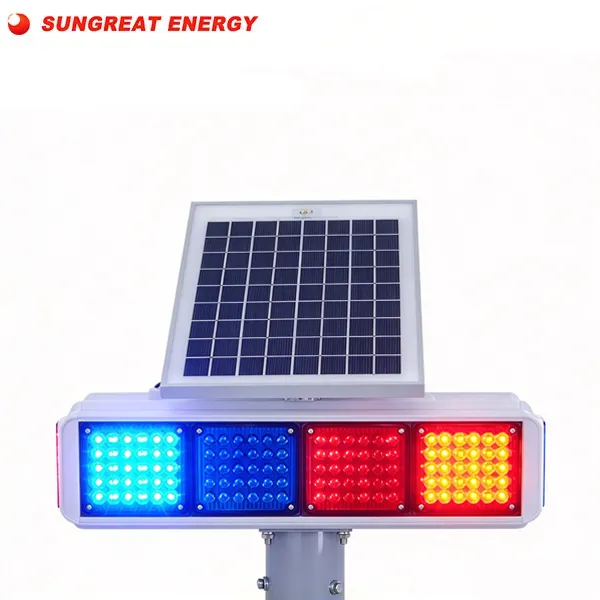
The Sungreat Energy TL Series is a 12W wireless solar traffic signal platform for off-grid solar road-lighting projects where grid connection or inter-pole cabling is difficult. The configuration combines a 12W signal unit, 9V 7.6W monocrystalline solar panel, 6.4V 24Ah LiFePO₄ battery and wireless synchronization between selected signal points. Independent solar supply can reduce the need for roadside trenching, while wireless communication can simplify coordination across separated poles.
Selection should start with the traffic-control function rather than the 12W rating alone. Flashing warnings, temporary work zones and multi-approach intersections may require different signal colours, head quantities, controllers and timing programs. Engineering teams should confirm approach layout, pole spacing, sight distance, seasonal solar conditions, shading, phase sequence and local road-authority requirements.
Battery autonomy and wireless performance should then be checked against the approved operating schedule and site layout before production.
Solar Powered Traffic Signal Light TL Series Technical Specifications & Datasheet
| Model |
TL |
| Watts(w) |
12W |
| Lifepo4 Battery |
6.4V 24Ah |
| Solar Panel |
9V 7.6W |
| CCT(K) |
2700-6500K(customized) |
| Charging Time |
6-8 Hours |
| Rainy Days |
5-7 cloudy/ rainy days |
| Work Temperature |
-20℃-+80℃ |
| Frequency |
150-250 Time Change |
| Material |
Iron+Aluminum+PC+ABS |
| Warranty |
3/5 Years |
Get Your TL 12W Wireless Solar Traffic Signal Project Quote
6.4V 24Ah LiFePO4 Battery | 9V 7.6W Solar Panel | Wireless Synchronization | Less Road Trenching
How TL Series Solar Traffic Signal Lights Are Made | Factory Production Video
Solar Powered Traffic Signal Light TL Series Project & Application Cases
The TL Series can be considered for off-grid road-warning and traffic-control projects where grid access or communication cabling between poles is difficult.
| Reference application |
Typical configuration |
Main control requirements |
Site conditions to confirm |
| Two-approach roadwork section |
Synchronized units manage traffic through one open lane |
Phase sequence, clearance time and emergency response |
Work-zone length, vehicle speed, gradient, queue clearance and side access |
| Three- or four-approach rural junction |
Signal heads and controller grouping matched to each approach |
Signal colours, phase sequence and detection inputs |
Sight distance, pole spacing, solar conditions, shading and local authority requirements |
| Standalone hazard or warning point |
One or two flashing signal heads |
Flash pattern, operating schedule and local traffic standard |
Lens size, mounting position, visibility distance and maintenance access |
These scenarios illustrate selection logic rather than completed TL installations. For rural-road projects that need roadway illumination rather than signal control, review the FN Series integrated solar street light for rural roads as a separate lighting option. Final configuration depends on the approved traffic plan, controller logic, signal grouping, seasonal solar conditions, reserve-day requirements and road-authority approval.
Solar Powered Traffic Signal Light TL Series Production Process
Configuration Lock & BOM Matching
Production begins with an order-specific BOM review. The signal function, signal colour, head quantity, controller program and wireless grouping are matched with the approved components, including the 12W signal module, 6.4V 24Ah LiFePO₄ battery, 9V 7.6W monocrystalline solar panel, housing parts, brackets and cables. For multi-approach or synchronized orders, units can be identified by signal group or pole position to prevent similar-looking assemblies from being mixed during production.
Electrical & Synchronization Testing
After assembly, technicians check the solar charging path, battery connection, controller output and programmed signal sequence. Synchronized units are paired and operated together to review phase changes, communication response and recovery after a power restart. Lens alignment, connectors, fasteners, seals and external surfaces are also inspected before packing. These checks follow the approved traffic-control logic for the order.
QC Records & Traceable Release
Test duration, sampling ratio and acceptance limits follow the order-specific quality control plan. Results are recorded against the model, signal function and controller grouping, rather than applying an unsupported fixed 72-hour test to every unit. This creates a traceable link between production records and the intersection setup, giving EPC teams clearer information for installation, commissioning and acceptance.
Solar Powered Traffic Signal Light TL Series Overview & Details
The TL Series combines a 12W signal module, 9V 7.6W monocrystalline solar panel, 6.4V 24Ah LiFePO₄ battery and wireless synchronization. The following points should be reviewed before configuration:
| Decision area |
What to confirm |
Why it matters |
| Traffic function |
Warning point, roadwork section or multi-approach junction |
Determines signal heads, controller grouping and timing logic |
| Energy demand |
Signal duty cycle, controller standby use, daily operating schedule and reserve days |
Helps verify battery autonomy under actual operating conditions |
| Wireless layout |
Pole spacing, line of sight, obstacles and possible interference |
Determines whether wireless synchronization requires a site test |
| Mechanical installation |
Pole condition, mounting hardware, panel orientation, wind exposure and maintenance access |
Confirms the installation scope and long-term service conditions |
For projects that need mains-powered roadway illumination instead of solar traffic control, review the LA Series mains-powered LED street light as a separate lighting product. Its AC-powered architecture is not a direct replacement for the TL solar signal.
Final selection should treat the signal program, energy system, wireless communication and mechanical layout as one project, rather than relying on the 12W rating alone.
Solar Powered Traffic Signal Light TL Series Packaging & Delivery
TL Series packaging treats physical protection and group identification as one part of project delivery. Signal heads, solar panels, LiFePO₄ batteries, controllers, brackets, cables and mounting accessories may look similar but can belong to different approaches or controller groups.
| Package Group |
Protection and Identification |
Delivery Check |
| Signal heads and optical parts |
Protect lenses and sun visors from pressure, with the signal colour and head group clearly identified |
Match head quantity and signal colour with the approved BOM |
| Solar panels and mounting hardware |
Protect panel edges and glass faces with corner protection, while securing brackets and fasteners separately |
Check the panel group, bracket set, cable set and mounting accessories |
| Batteries, controllers and cables |
Secure batteries and connectors against movement and short-circuit risk during handling |
Confirm the battery model, controller group, cable configuration and route-specific documents |
| Multi-unit orders |
Label cartons and packing lists by controller group, pole or approach position, signal colour and accessory set |
Keep paired wireless units together during unloading and roadside staging |
| Shipping plan |
Confirm carton size, pallet arrangement and container quantity after the final product mix and installation plan are approved |
Confirm battery marks, documents and state-of-charge preparation for the selected carrier and destination |
Outer labels and packing lists should match the approved order so installers can identify each group without sorting similar-looking parts beside an active road. Lithium-battery markings, transport documents and any applicable certificates are confirmed according to the specific battery, shipping method, carrier and destination route. This approach helps EPC teams receive, check and stage the equipment before installation without relying on generic packing or shipping assumptions.
FAQ of Solar Powered Traffic Signal Light TL Series