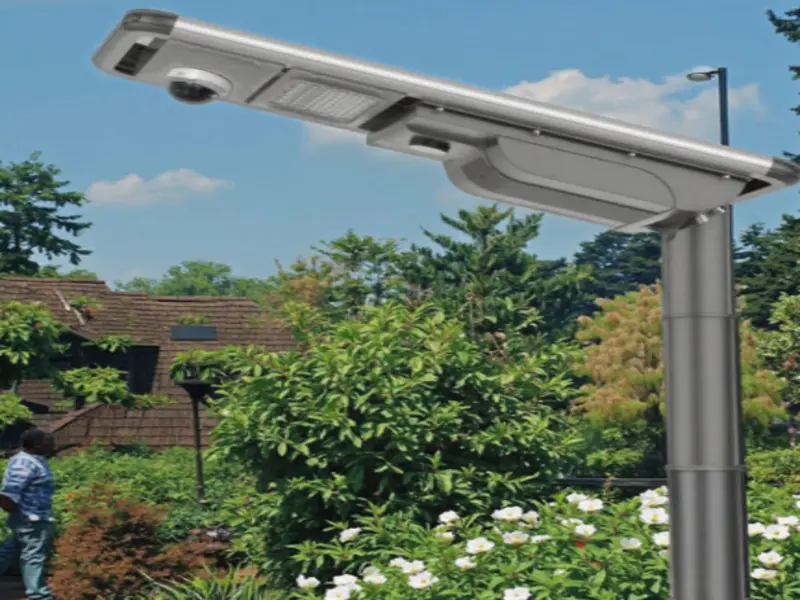
FNC Integrated Solar Street Light with 4G/WiFi PTZ CCTV Camera for Off-Grid Security Projects
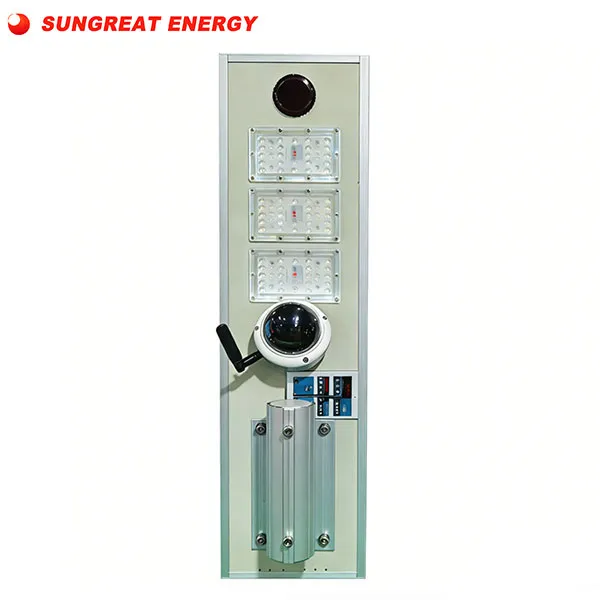
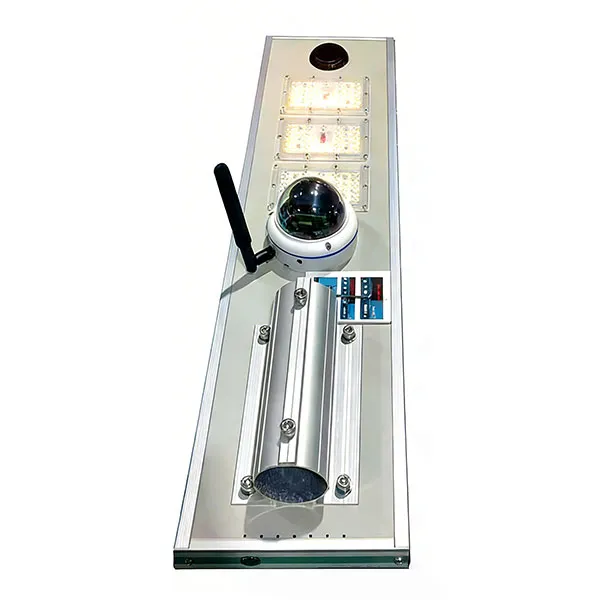
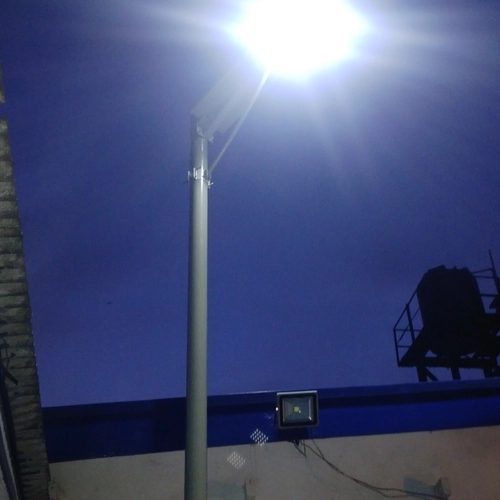
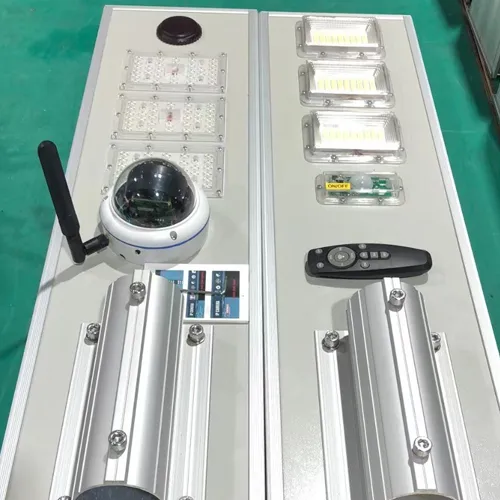
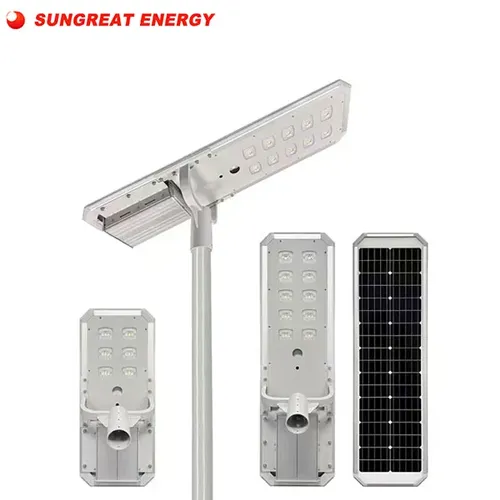
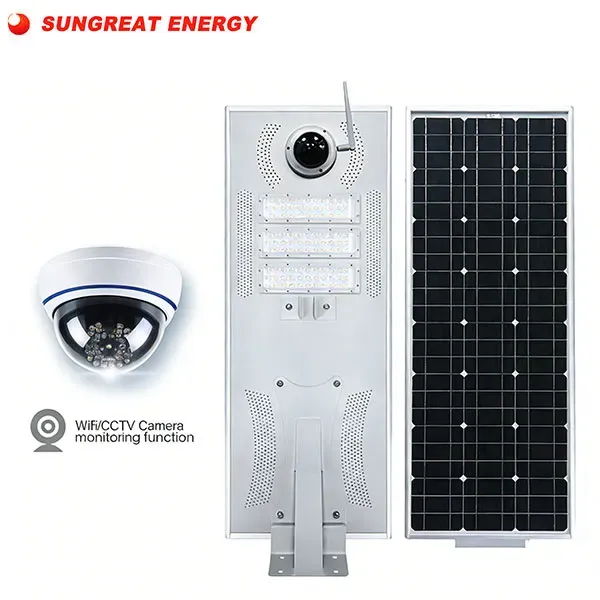
The FNC Series is designed for roads, residential communities, warehouse perimeters and remote sites that require nighttime lighting and continuous video monitoring without convenient grid power or wired network access. Its integrated aluminium housing combines the solar panel, LiFePO4 battery, LED modules, MPPT controller and a 2MP PTZ CCTV camera in one pole-mounted lamp.
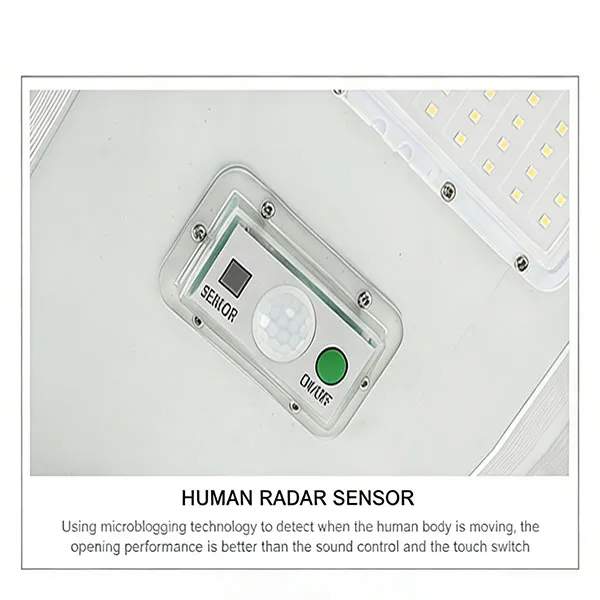
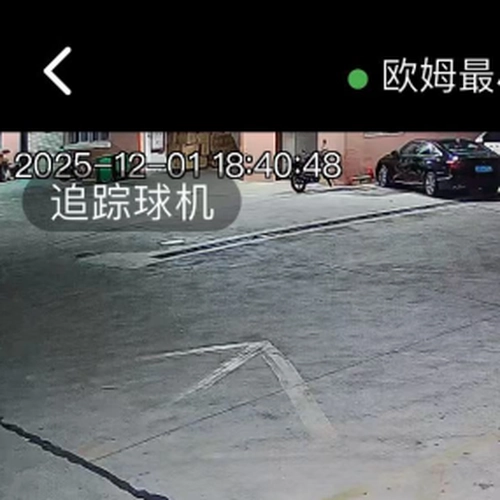
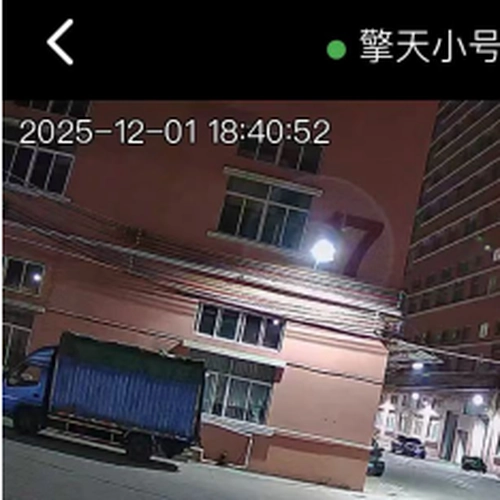
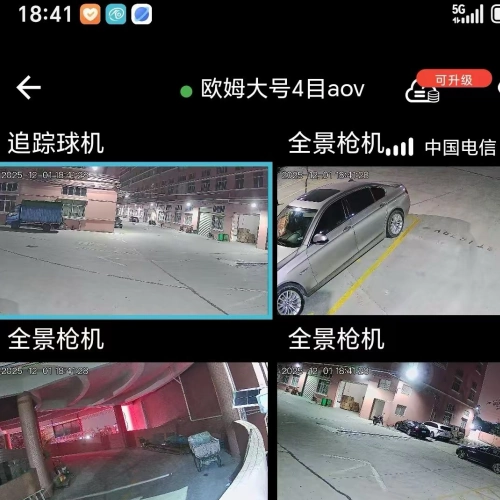
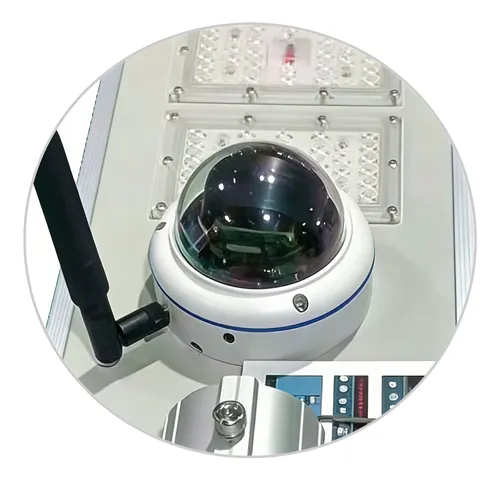
The camera supports 4G or WiFi connectivity, 360° remote rotation, night vision and live viewing through mobile or PC, helping authorized teams check site conditions from a distance. Five lighting configurations from 50W to 250W provide 9,000–55,000 lm for recommended 3–6m mounting heights, while automatic ON/OFF, time dimming and motion sensing manage nighttime energy use.
Before procurement, confirm local 4G or WiFi coverage, camera viewing requirements, recording duration, SIM and data costs, pole position, target illumination, nightly operating schedule and local solar conditions.
Integrated Solar Street Light 4G WiFi PTZ CCTV Camera FNC Series 50W–250W Technical Specifications & Datasheet
| Model |
FNC |
| Watts(w) |
50W |
100W |
150W |
200W |
250W |
| Lumens(Lumens) |
9000-11000LM |
18000-22000LM |
27000-33000 |
36000-44000LM |
45000-55000LM |
| Lifepo4 Battery(AH) |
3.2V 11.25AH |
3.2V 18AH |
3.2V 25AH |
3.2V 30AH |
3.2V 35AH |
| Solar Panel |
6V 16W |
6V 22W |
6V 32W |
6V 36W |
6V 42W |
| LED Chip |
Philips/Osram/USA Bridgelux |
| CCT(K) |
2700-6500K(customized) |
| CRI |
>70 |
| Lighting Efficiency |
180-220lm/w |
| Rainy Days |
5-7 cloudy/ rainy days |
| Work Temperature |
-25℃-+65℃ |
| Work Mode |
Auto ON/OFF, Time Dimming, Motion Sensor |
| Material |
Aluminium alloy |
| Pole Upper Diameter |
φ70-φ76mm |
| Controller |
MPPT |
| IP Rating/IK Class |
IP66/IK09 |
| Camera Information |
Wifi/4G, 24-hour working, night vision, 64G memory card, 2M pixel |
| Mounting Height(Recommend) |
3-4m |
3-4m |
4-6m |
4-6m |
4-6m |
| Space between poles(Recommend) |
10-15m |
10-15m |
15-25m |
15-25m |
15-25m |
| Warranty |
5 Years |
Need 24-Hour Remote Monitoring Without Grid Power or Network Cabling?
2MP PTZ Camera | 360° Remote Rotation | 4G/WiFi Access | 50W–250W Solar Lighting
FNC 4G/WiFi PTZ CCTV Solar Street Light 50W–250W | 360° Remote Monitoring Video
Integrated Solar Street Light 4G WiFi PTZ CCTV Camera FNC Series 50W–250W Project & Application Cases
FNC application planning starts with camera coverage, network availability and lighting requirements rather than lamp wattage alone. The following are application references for preliminary selection and should not be presented as completed Sungreat Energy project claims.
Community Roads and Residential Perimeters
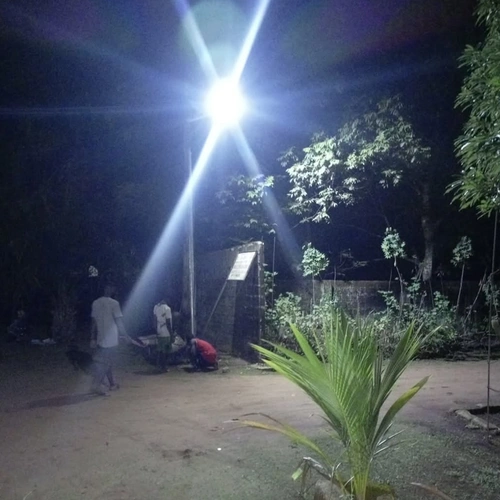
FNC 50W and 100W models are listed for recommended 3–4m mounting heights and preliminary 10–15m lighting spacing. The 2MP PTZ camera supports 360° remote rotation, night vision and live viewing through mobile or PC. WiFi is suitable where a stable site network reaches every pole, while 4G requires compatible local coverage, frequency bands, SIM cards and data plans.
Warehouses, Industrial Yards and Remote Entrances
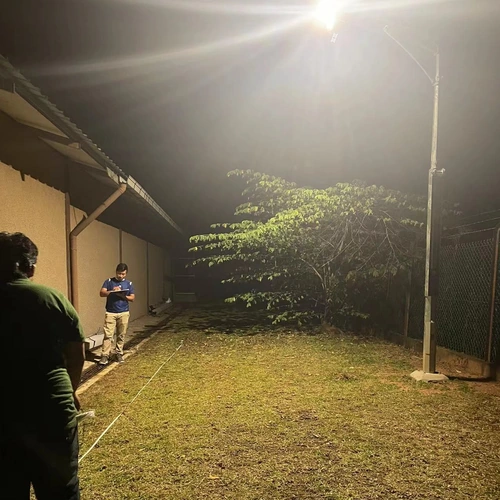
FNC 150W–250W models are listed for recommended 4–6m mounting heights and preliminary 15–25m lighting spacing. These configurations can be evaluated for warehouse perimeters, industrial yards, farm entrances, construction access roads and similar off-grid security applications in East Africa, the Middle East and Southeast Asia.
500m Perimeter Planning Example
Using a preliminary lighting spacing of 20m, a 500m one-side perimeter has 25 intervals and may require approximately 26 poles when both endpoints are included. This calculation only estimates lighting quantity. Camera locations must be checked separately for viewing direction, corners, gates, walls, trees, blind spots and the required level of image detail.
Before final selection, confirm the project location, road or perimeter dimensions, target illumination, operating schedule, camera viewing requirement, network coverage, SIM cost, recording duration and local solar conditions. Pole spacing that meets the lighting requirement does not automatically provide complete camera coverage.
Integrated Solar Street Light 4G WiFi PTZ CCTV Camera FNC Series 50W–250W Production Process
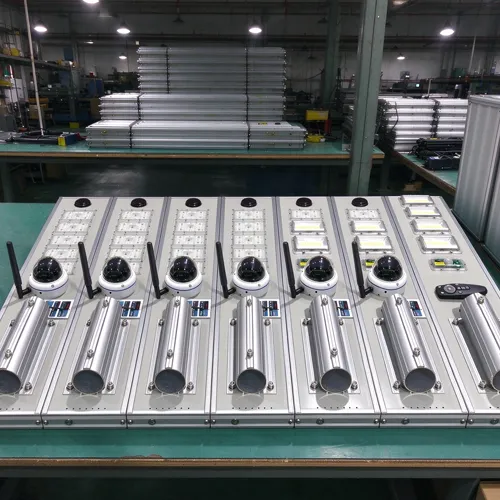
Production starts with the approved FNC order configuration rather than a generic lamp assembly. Sungreat Energy matches the selected 50W, 100W, 150W, 200W or 250W lighting model with the corresponding solar panel, LiFePO₄ battery, MPPT controller and 2MP PTZ camera configuration.
Before assembly, the LED module, solar panel, battery, controller, PTZ camera, antenna, aluminium housing and required accessories are checked against the approved order. Particular attention is given to the 4G or WiFi version because an incorrect communication version may prevent remote access after installation.
During whole-system checking, the inspection items cover solar charging response, LED operation, Auto ON/OFF, time dimming, motion sensing, PTZ rotation, night vision, 4G or WiFi connection, mobile or PC viewing and local recording. The finished units are then checked against the approved model, network version, labels, accessories and order quantity before packing.
If an EPC tender requires a defined aging duration, 4G signal record, battery SOC report, waterproof test document, inspection sampling level or customized labels, these requirements should be confirmed before production approval. They should not be assumed from general catalogue information.
Integrated Solar Street Light 4G WiFi PTZ CCTV Camera FNC Series 50W–250W Overview & Details
he Sungreat Energy FNC Series combines remote PTZ surveillance and solar road lighting in one integrated pole-mounted lamp. The following details connect the current configuration range with the checks EPC contractors should complete before ordering.
| System Area |
Current FNC Configuration |
Buyer Check |
| PTZ Camera |
2MP camera, 360° remote rotation, night vision and 24-hour working mode |
Confirm viewing direction, required image detail, blind spots and monitoring schedule |
| Network Access |
4G or WiFi connection with mobile and PC viewing |
Check local carrier bands, signal strength, SIM data cost or WiFi coverage |
| LED Lighting |
Five 50W–250W models with listed outputs of 9,000–55,000 lm and 180–220 lm/W |
Confirm road width, target lux, uniformity and nightly dimming schedule |
| Solar System |
6V 16W–42W solar panels, 3.2V 11.25Ah–35Ah LiFePO₄ batteries and MPPT control |
Complete an energy calculation using local sunlight and actual lighting hours |
| Lighting Control |
Auto ON/OFF, time dimming and motion sensing |
Approve the operating program before production |
| Installation |
Recommended 3–6m mounting, 10–25m preliminary spacing and Φ70–76mm pole interface |
Verify pole position, foundation, wind load and final IES or DIALux layout |
| Video Recording |
Local memory-card recording is available |
Confirm storage capacity, resolution, recording mode and required retention time |
The camera and lighting layouts should be checked separately. Pole spacing that satisfies the required road illumination does not automatically guarantee complete surveillance coverage, image recognition or the removal of camera blind spots.
Integrated Solar Street Light 4G WiFi PTZ CCTV Camera FNC Series 50W–250W Packaging & Delivery
FAQ of Integrated Solar Street Light 4G WiFi PTZ CCTV Camera FNC Series 50W–250W