


Complete Hybrid Solar Power System 1kW-50kW SY Series for Home Full Kit
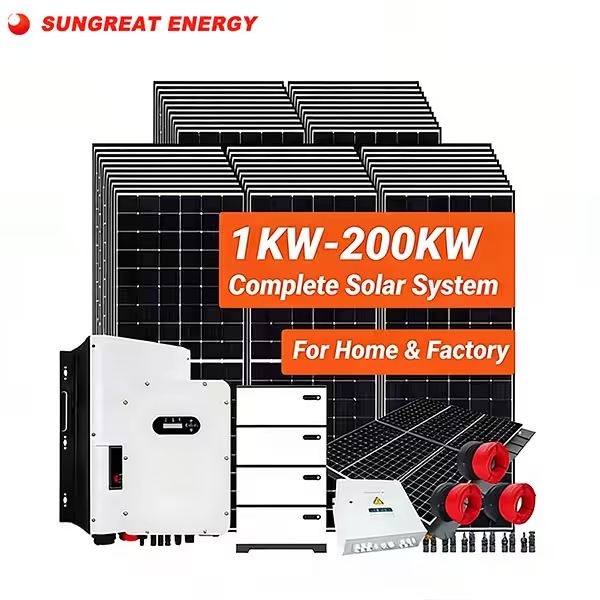
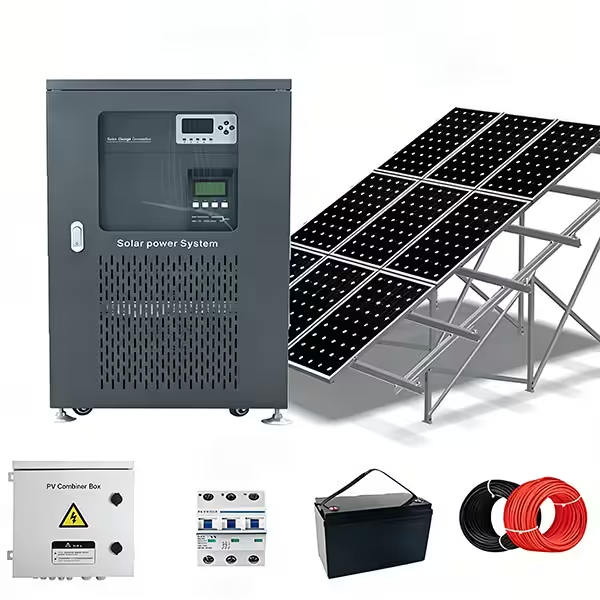
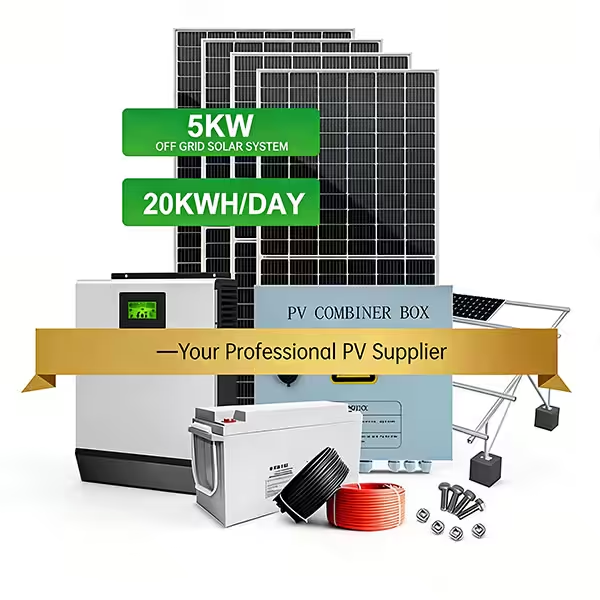
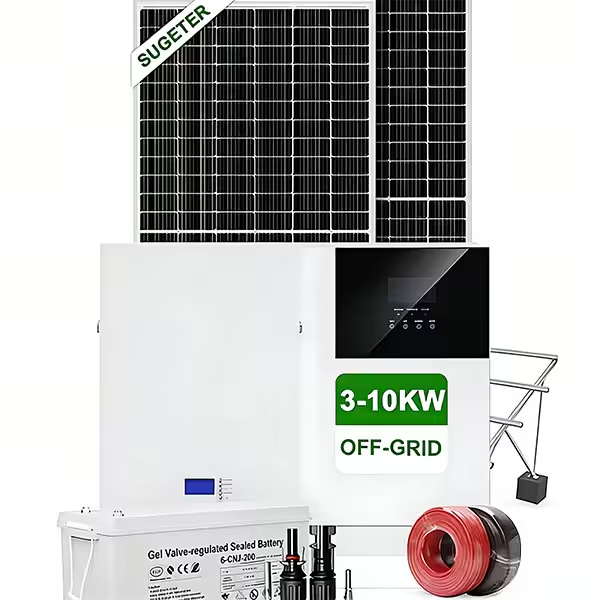
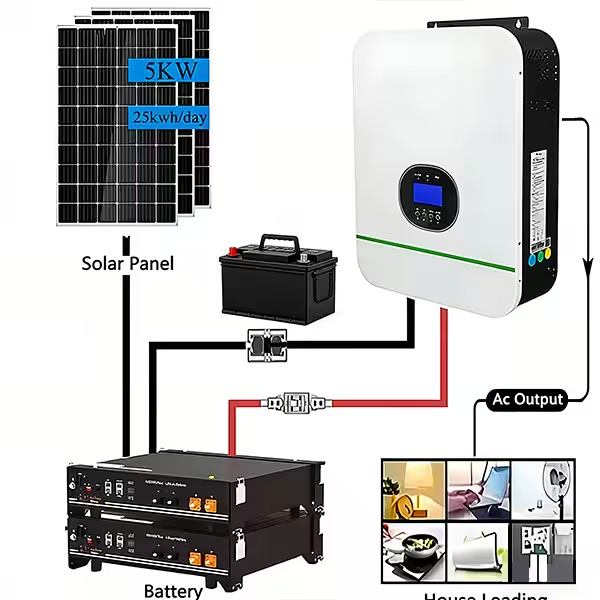
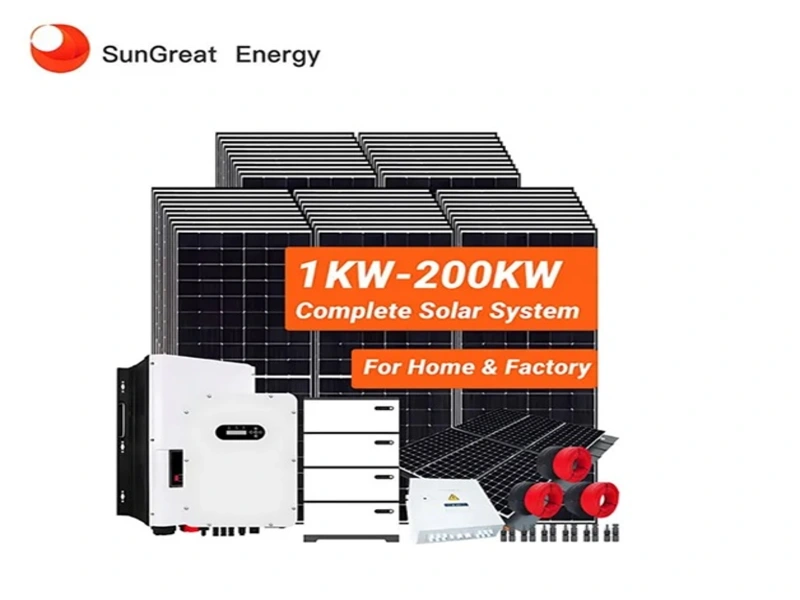
Project-matched 1 kW–50 kW hybrid solar power systems combine N-type PV panels, hybrid inverters, LiFePO₄ storage and matched components for residential, commercial and EPC projects.
- 1 kW–50 kW configurations matched to residential and commercial loads
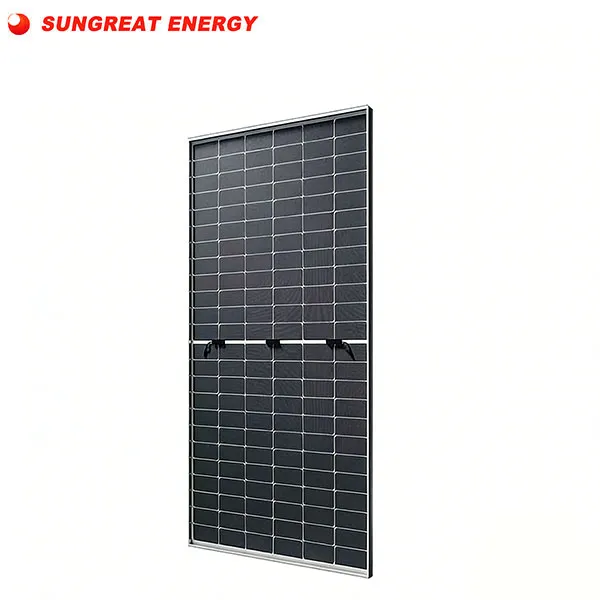
- 550 W N-type PV panels in standard configurations for daytime generation
- 1.28–20.48 kWh standard LiFePO₄ storage options for backup planning
- 12 V, 24 V or 48 V inverter platforms matched to system size
- 220/230 V single-phase or 380/400 V three-phase output at 50/60 Hz
SY Series 1–50kW Complete Hybrid Solar Power System
Selecting panels, batteries, inverters and mounting accessories separately can lead to mismatched ratings, extra installation work and missing items on site. Sungreat Energy’s SY Series combines N-type PV panel options with a hybrid inverter, LiFePO₄ storage, mounting structures, protection devices and matched cables in one project-matched package for residential, commercial and turnkey EPC projects from 1 to 50 kW.
The configuration is reviewed against continuous load, motor-starting demand, daily energy use, local peak sun hours, required backup time and installation conditions. Depending on the selected model, the system can use 12 V, 24 V or 48 V inverter platforms with 220/230 V single-phase or 380/400 V three-phase output. The final PV array, battery capacity, protection ratings and cable lengths are confirmed in the approved BOM because the SY Series is configured for each site rather than supplied as one fixed kit.
Complete Hybrid Solar Power System 1kW-50kW SY Series for Home Full Kit Technical Specifications & Datasheet
| Model | SY | |||||||||
| Type | 1kW | 1.5kW | 1.6kW | 3kW | 4.2kW | 6.2kW | 8.2kW | 10.2kW | 12.4kW | 16.4kW |
| LiFePO₄ Battery | 12.8V / 100Ah | 25.6V / 100Ah | 12.8V / 220Ah | 25.6V / 150Ah | 25.6V / 200Ah | 51.2V / 120Ah | 51.2V / 200Ah | 51.2V / 300Ah | 51.2V / 120Ah×2 | 51.2V / 200Ah×2 |
| Battery Capacity | 1.280kWh | 2.560kWh | 2.816kWh | 3.840kWh | 5.120kWh | 6.144kWh | 10.240kWh | 15.360kWh | 12.288kWh | 20.480kWh |
| Battery BMS | 100A | 100A | 100A | 100A | 120A | 150A | 150A | 150A | 150A | 150A |
| N-type PV Panel | 1 × 550W | 2 × 550W | 2 × 550W | 3 × 550W | 3 × 550W | 4 × 550W | 5 × 550W | 6 × 550W | 8 × 550W | 10 × 550W |
| PV Power | 0.55 kW | 1.10 kW | 1.10 kW | 1.65 kW | 1.65 kW | 2.20 kW | 2.75 kW | 3.30 kW | 4.40 kW | 5.50 kW |
| MPPT Inverter | 12V/1.0kW/80A | 24V/1.5kW/80A | 12V/1.6kW/80A | 24V/3.0kW/80A | 24V/4.2kW/80A | 48V/6.2kW/120A | 48V/8.2kW/120A | 48V/8.2kW/120A | 48V/6.2kW/120A × 2 | 48V/8.2kW/120A × 2 |
| Inverter Output | 220/230 V AC single-phase or 380/400 V AC three-phase, 50/60 Hz | |||||||||
| PV Cable | 2 rolls of 4 mm² red and black PV cable with MC4 connectors | Total 20 meters or customized | Total 20 meters or customized | Total 20 meters or customized | Total 30 meters or customized | Total 30 meters or customized | Total 30 meters or customized | Total 40 meters or customized | Total 50 meters or customized | Total 60 meters or customized | Total 100 meters or customized |
| Package | Standard packing or OEM | |||||||||
| Warranty | 3 years | |||||||||
Free Quote for 1–50kW Hybrid Solar Systems!
Share your load profile and backup target. Sungreat Energy will match the PV array, inverter and LiFePO₄ storage to reduce mismatches before you order.
SY Series 1–50 kW Complete Hybrid Solar Power System | System Overview
Complete Hybrid Solar Power System 1kW-50kW SY Series for Home Full Kit Project & Application Cases
For a hybrid solar project, the difficult part is not simply choosing an inverter. Buyers need to know whether a pump or refrigerator can start, how much energy must remain for nighttime loads, whether the PV array can recharge the battery before the next outage, and whether the correct cables and protection devices will arrive with the system.
The SY Series is configured for 1 kW–50 kW hybrid and off-grid projects in homes, villas, shops, offices, clinics, schools, farms, small businesses and turnkey EPC projects. The final system is confirmed against the actual load and site conditions.
A confirmed Nigeria project supplied 100 independent 5 kW off-grid solar systems. Each system included 10 × 550 W PV panels, a 5 kW inverter with 10 kVA surge capacity and a 10 kWh LiFePO₄ battery. The configuration supported lighting, refrigeration, water pumps and office equipment in areas with frequent grid outages. See the Nigeria 5 kW off-grid project case study for the project background and configuration.
A 5 kW package cannot fit every site. Running load, motor-starting demand, daily energy use, local peak sun hours, required backup time, installation conditions and cable distance all affect the design. Sungreat Energy matches the PV array, hybrid inverter, LiFePO₄ battery, mounting structure, protection devices and cables, then checks the final configuration against the approved BOM.
This approach addresses common problems such as batteries running empty at night, failed motor starts, slow recharging, oversized equipment and missing accessories at installation. The same design logic can be adapted to different countries and site conditions, but the final configuration must be confirmed from project data rather than a general country list.


Complete Hybrid Solar Power System 1kW-50kW SY Series for Home Full Kit Production Process
A complete hybrid system can become difficult to install when the PV array, inverter, battery and small accessories are specified separately. Sungreat Energy’s production process keeps the system tied to the approved project design from the first load review to shipment release.
System design and BOM matching
The design stage reviews running load, motor-starting power, daily energy use, local Peak Sun Hours and mounting conditions. Sungreat Energy then matches the PV array, 12 V/24 V/48 V inverter platform, LiFePO₄ battery, protection devices, cables and mounting brackets as one configuration. This helps avoid insufficient charging, motor-starting failure, incompatible components and parts that do not match the installation.
Pre-configuration and testing
Before shipment, the selected inverter settings, battery voltage, BMS communication and charging parameters are prepared for the approved configuration. The model, quantity, cable size, connector type and accessories are checked against the approved BOM. Selected units undergo 48-hour aging and load testing to check charging, discharging, AC output and protection functions.
Shipment release and installation documents
Wiring diagrams, component labels and installation sub-kits are prepared according to the project configuration. The final release check focuses on missing accessories, incorrect connections and mismatched labels, helping installers avoid delays when the system arrives on site. The shipment is released after the configured equipment and supporting installation materials match the approved project documents.


Complete Hybrid Solar Power System 1kW-50kW SY Series for Home Full Kit Overview & Details
The SY Series is supplied as a project-matched hybrid solar system rather than a box of separate components. PV panels, hybrid inverter, LiFePO₄ storage, mounting structure, protection devices and cables are selected together around the load, backup target and installation conditions. This matters when a project includes pumps, refrigerators or other loads with high starting current, or when the battery must recharge before the next outage.
For 51.2 V storage configurations, the LB Series LiFePO₄ battery storage reference provides separate information about battery capacity, communication and installation options.
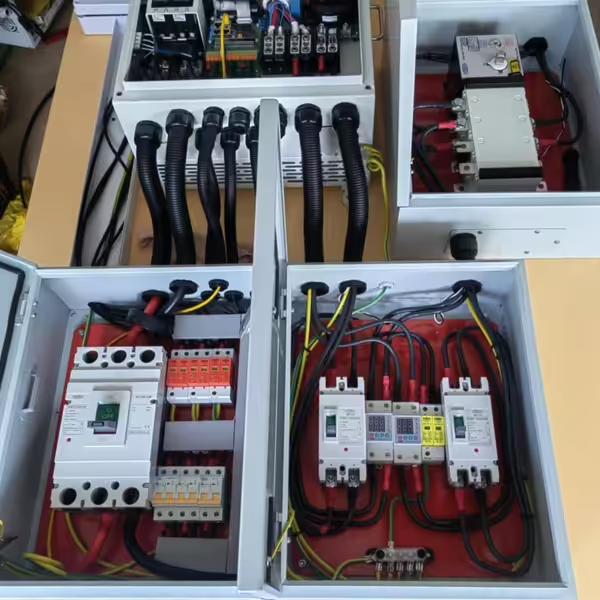
Mounting design starts with actual site information. For tile roofs, metal roofs, flat concrete roofs and ground installations, send site photos, roof or ground dimensions, module layout and local wind or snow requirements. Sungreat Energy can then prepare bracket dimension drawings, an installation layout and a matched BOM. The final bracket size and fixing method depend on the selected module, mounting surface and local design requirements, so one bracket arrangement should not be assumed for every project.
The inverter LED display provides local information on PV generation, battery status, load and operating status. It helps installers check whether the system is charging, what loads are running and whether the operating mode is normal. For configurations with battery communication, the interface, protocol, cable or pinout, and charging or discharging settings are confirmed with the selected inverter; nominal battery voltage alone does not prove compatibility.
WiFi or GPRS monitoring can be specified according to the selected configuration. When the required network connection is available, users and installers can review solar generation and battery status from a smartphone, identify abnormal operation earlier and reduce unnecessary site visits. WiFi requires a compatible local network, while GPRS depends on cellular coverage, a SIM card and active data service. Remote monitoring does not replace on-site inspection.
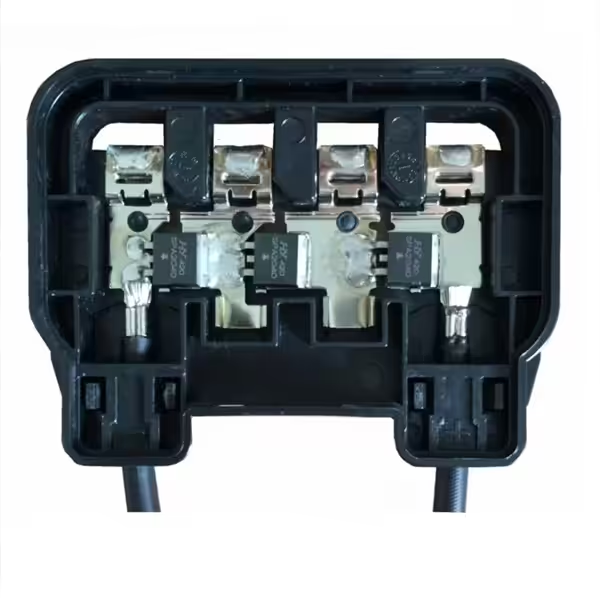
The bracket dimensions, interface layout, monitoring function and required accessories are confirmed in the final project BOM before shipment.


Complete Hybrid Solar Power System 1kW-50kW SY Series for Home Full Kit Packaging & Delivery
Shipping a hybrid solar system involves more than putting the main equipment into boxes. A damaged panel, mixed model, missing connector or incomplete battery document can delay installation, customs clearance and commissioning. Sungreat Energy organizes packing and shipment around the approved system configuration and destination route.
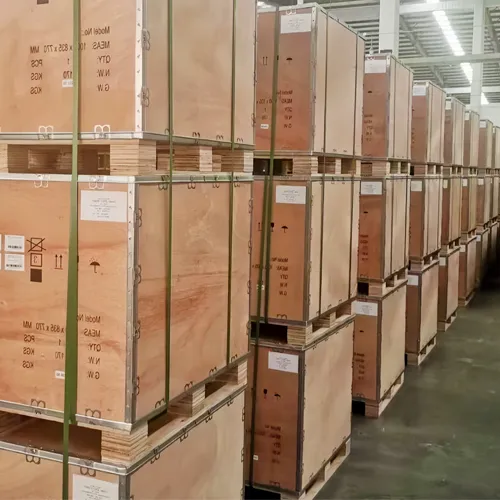
Solar panels are secured on reinforced export pallets with corner protection. LiFePO₄ batteries and inverters are packed in shock-resistant cartons or wooden cases according to the selected configuration and transport requirements. Mounting brackets, PV cables, breakers, connectors and other accessories are grouped into clearly labeled sub-kits. Kit names and quantities are checked against the approved BOM before dispatch to reduce transit damage, missing parts and mixed-model deliveries.
Lithium battery documents are prepared according to the confirmed battery configuration, shipping mode and destination requirements. For projects using the LB Series LiFePO₄ battery storage, the selected battery model, capacity and communication requirements should be confirmed before the packing list and shipping documents are prepared. Depending on the route, the document set may include the UN38.3 test summary, MSDS/SDS, transport appraisal, Dangerous Goods certificates, commercial invoice, packing list and dangerous-goods declaration. The final document list is confirmed with the carrier or freight forwarder because requirements vary by route.
Production and delivery schedules are confirmed after the system size, battery quantity, custom mounting structure, destination and shipment plan are known. Before dispatch, package dimensions, gross weights, pallet arrangement, loading plan, packing photos and shipping documents are checked against the approved order. Depending on carrier acceptance, customs requirements and site schedule, the order may use LCL, FCL or separate battery and standard-component shipments. Production time, transit time, customs clearance and inland delivery are confirmed separately.


FAQ of Complete Hybrid Solar Power System 1kW-50kW SY Series for Home Full Kit
The SY Series is supplied as a project-matched package. Depending on the confirmed configuration, it can include N-type PV panels, a hybrid inverter, LiFePO₄ battery storage, mounting structures, PV cables, MC4 connectors, protection devices and installation accessories. The exact models, quantities, cable lengths and configuration-specific accessories are listed in the approved project BOM. A 1 kW–50 kW system should not be treated as one fixed kit.
For a preliminary size check, please provide:
- Appliance list and maximum simultaneous running load
- Motor or compressor nameplate data and starting demand
- Daily operating hours and essential nighttime energy use
- Required backup time and loads that must remain powered
- Local Peak Sun Hours, installation area, system voltage, phase and cable distance
Use the inverter rating to cover the maximum simultaneous load and starting surge, the battery capacity to cover the required backup energy, and the PV array to supply daytime loads and recharge the battery.
As a preliminary reference:
Required nominal battery capacity ≈ required AC backup energy ÷ (usable battery fraction × inverter efficiency)
PV array size ≈ daily energy demand ÷ (Peak Sun Hours × overall system factor)
These are planning estimates, not guaranteed runtime or output figures. Final sizing depends on the selected equipment, battery limits, operating temperature, reserve capacity and site conditions.
The mounting structure should be selected according to the roof or ground structure and the PV module, not from the roof type alone. Tile roofs, metal roofs, flat concrete roofs and ground installations use different fixing methods, bracket arrangements and accessory quantities.
To confirm the correct configuration, please provide site photos, roof or ground dimensions, the selected PV module model or dimensions, installation type and local wind or snow requirements. Sungreat Energy can then prepare bracket dimension drawings, an installation layout and a matched BOM.
The final bracket size, fixing method and accessory list should be confirmed before installation. A bracket that looks similar to the one used on another project may not fit the selected module, mounting surface or local design conditions.
Possibly, but the 2.5 kVA rating alone is not enough to confirm it. A 1 HP rating does not show the appliance’s actual electrical input. Many conventional 1 HP pumps or fixed-speed air conditioners may use about 800–1,500 W while running, while their starting demand can be several times higher.
A 2.5 kVA inverter can run the appliance only when its continuous output, surge power and surge duration are sufficient. The battery must also deliver the required starting current without excessive voltage drop. Inverter-type air conditioners, variable-speed pumps and soft-start motors may have lower starting demand than conventional equipment.
The PV array mainly affects daily energy generation and battery recharge; it does not by itself guarantee that a motor can start. Do not use a blanket 5 kW rule. Please send the appliance nameplate photo, rated voltage, input power or current, phase, daily operating hours, other simultaneous loads and required backup time. Sungreat Energy can then confirm the inverter output, surge capacity, battery storage and PV array for the project.
Choose the battery according to the energy required after sunset or during a power outage, not according to the inverter rating alone. An 8 kWh nominal battery may suit essential loads such as lights, fans, a refrigerator and a Wi-Fi router for a shorter backup period. A 16 kWh nominal battery provides a larger energy reserve for higher nighttime consumption or longer outages, but it also needs enough PV input to recharge.
For a reference comparison, using an assumed 80% usable battery fraction and 90% inverter efficiency:
8 kWh × 0.80 × 0.90 = 5.76 kWh usable AC energy
16 kWh × 0.80 × 0.90 = 11.52 kWh usable AC energy
At a 600 W average load, these figures represent approximately 9.6 hours and 19.2 hours. At a 1.2 kW average load, they represent approximately 4.8 hours and 9.6 hours. These are reference estimates, not guaranteed runtime. Actual results change with appliance cycling, inverter standby consumption, cable losses, battery temperature, battery age and motor-starting demand.
Before confirming the battery, check nighttime energy use, maximum simultaneous load, starting loads, required backup time, local Peak Sun Hours and the battery’s discharge limit. A larger battery without enough PV capacity may take longer to recharge after an outage or cloudy period.
Yes, a properly designed hybrid solar system needs coordinated protection, but the exact devices and ratings must match the confirmed configuration. They should not be selected from the inverter power alone.
On the PV side, a correctly rated DC isolator or circuit breaker allows safe disconnection. String fuses may be required for parallel PV strings, and a DC surge protection device may be needed according to the PV voltage, short-circuit current, string arrangement, cable length and local lightning risk.
On the battery side, a correctly rated DC fuse or breaker and isolation device help protect the battery cables and inverter against high fault current. The BMS provides electronic monitoring and protection, but it should not be treated as a replacement for external short-circuit protection.
On the AC side, input and output breakers, AC surge protection and RCD or RCBO protection may be required depending on the inverter manual, grounding arrangement and local electrical rules. A PV-side SPD does not correct unstable grid voltage; grid-side problems require correctly selected AC protection and inverter settings.
To confirm the protection configuration, provide the project city, grid voltage and phase, PV module model, string arrangement, inverter model, battery voltage and capacity, and approximate cable distances. The final protection BOM and wiring diagram are matched to these project conditions.
Remote monitoring can be included when the selected inverter, communication module and monitoring platform support it. It is not automatically identical for every 1 kW–50 kW configuration.
Depending on the selected equipment, the system may show PV generation, battery state of charge, load consumption, grid status, operating mode and alarms. WiFi monitoring requires a compatible local network. GPRS monitoring depends on cellular coverage, a suitable SIM card and active data service. The available data, update frequency, alarm notifications and remote-control functions depend on the inverter, communication module and software platform.
Before ordering, confirm the installation country, preferred network method, local coverage and whether remote parameter adjustment is required. Some platforms provide monitoring only, while others allow authorized installers to adjust selected settings remotely. The selected communication module and monitoring accessories should be listed in the final project BOM.
The inverter’s local display can still provide basic PV, battery and load information if remote monitoring is temporarily offline. Remote monitoring does not replace on-site inspection and maintenance.
Related Products


Related News
Transitioning to solar energy often comes with a major hurdle: complexity. Matching the right inverter to a battery or finding […]

Before canton fair we should know As the global energy transition accelerates, thousands of international EPC contractors, importers, and renewable […]

(Practical advice for international buyers, with special focus for solar EPCs, wholesalers and project contractors) The 140th Canton Fair (China […]
The global solar photovoltaic (PV) market is experiencing a massive technological shift. For over a decade, P-Type Passivated Emitter and […]
If you’ve ever stood inside a utility-scale solar farm at mid-day, you’ve likely noticed something striking: the ground underneath the […]
Solar panels generate electricity when sunlight is available, but solar energy production does not always match when electricity is needed. […]