






Hybrid Solar Air Conditioner AC/DC Mini Split System SAC Series 9000–36000 BTU
SAC Series 9,000–36,000 BTU AC/DC hybrid solar air conditioner with direct PV, grid backup and optional battery storage for EPC projects
- 9,000–36,000 BTU options help match capacity to different rooms and project cooling loads
- 80–380V direct PV input with AC grid backup and optional battery supports hybrid operation
- Integrated AC/DC conversion connects compatible PV panels without a separate external solar inverter
- SEER up to 6.6 and SCOP up to 4.6 pair with a DC rotary compressor for efficient temperature control
-
Indoor noise starts at 41 dB(A), while built-in WiFi supports remote settings and energy-use monitoring
SAC Series Hybrid Solar Air Conditioner: Direct PV, Grid Backup and Optional Battery
The SAC Series is a 9,000–36,000 BTU AC/DC hybrid solar air conditioner for residential, commercial and EPC projects. Its integrated AC/DC power-conversion system accepts 80–380V DC from a compatible PV array, allowing direct solar operation without an external solar inverter. When solar output is insufficient, compatible AC grid power can support operation. A matched LiFePO4 battery can be added for nighttime cooling, backup power or off-grid applications.
The variable-speed DC rotary compressor delivers SEER up to 6.6 and SCOP up to 4.6, while indoor noise starts at 41 dB(A), depending on model and operating conditions. Built-in WiFi supports remote temperature, mode and schedule control. Sungreat Energy can configure the SAC unit with PV panels, LiFePO4 batteries, protection devices and installation accessories according to room size, local climate, operating hours, solar conditions and required backup.
Hybrid Solar Air Conditioner AC/DC Mini Split System SAC Series 9000–36000 BTU Technical Specifications & Datasheet
| Model | SAC | ||||
| Items | 9GW | 12GW | 18GW | 24GW | 30GW |
| Rated Input AC | 220- 240V/50Hz/60Hz, 110- 120/60Hz |
220- 240V/50Hz/60Hz, 110- 120/60Hz |
220- 240V/50Hz/60Hz | 220- 240V/50Hz/60Hz | 220- 240V/50Hz/60Hz |
| Rated Input DC | DC80-380V MAX.15A | DC80-380V MAX.15A | DC80-380V MAX.15A | DC80-380V MAX.20A | DC80-380V MAX.20A |
| Rated Capacity (Cooling) | 2500W/9000BTU | 3500W/12000BTU | 5200W/18000BTU | 7200W/24000BTU | 8500W/30000BTU |
| Rated Capacity (Heating) | 2750W/9500BTU | 3860W/13000BTU | 5200W/18000BTU | 7200W/24000BTU | 8500W/30000BTU |
| Rated Power Consumption (Cooling) | 690W | 980W | 1520W | 2100W | 2500W |
| Rated Power Consumption (Heating) | 713W | 1030W | 1550W | 2180W | 2600W |
| Rated Running Current (Cooling) | 3A | 4.5A | 6.9A | 9.3A | 11.3A |
| Rated Running Current (Heating) | 3.1A | 4.7A | 7A | 9.6A | 11.8A |
| Max. Input Power | 1450W | 1870W | 2860W | 3800W | 4000W |
| Max. Input Current | 6.6A | 8.5A | 13A | 17.2A | 19A |
| Energy Efficiency (SEER/SCOP) | 6.6/4.6 | 6.6/4.6 | 6.6/4.0 | 6.6/4.0 | 6.6/4.0 |
| Refrigerant | R32/R410a | ||||
| Refrigerant Charged | 900g | 900g | 920g | 1260g | 1290g |
| Air Flow Volume | 650m3/h | 650m3/h | 900m3/h | 1200m3/h | 1300m3/h |
| Noise level (INDOOR/OUTDOOR) | 41dB(A)/50dB(A) | 42dB(A)/50dB(A) | 45dB(A)/52dB(A) | 48dB(A)/56dB(A) | 51dB(A)/58dB(A) |
| Evaporator and Condenser | blue open window hydrophilic fin(X-type);Internal threaded pipe, double row | ||||
| Fan motor | All copper wire manufacturing,DC brushless | ||||
| Refrigeration compressor | DC drive,Rolling Rotor Type | ||||
| Compressor brand | GMCC | GMCC | LAMDA | GMCC | GMCC |
| Indoor unit weight (Net ) | 12Kg | 12Kg | 15Kg | 17.5Kg | 18.5Kg |
| Outdoor unit weight (Net ) | 38Kg | 40Kg | 43Kg | 55Kg | 57Kg |
Need Reliable Cooling with Less Grid Dependence?
9,000–36,000 BTU · 80–380V Direct PV · AC Grid Backup · Optional LiFePO4 Battery
SAC Series 9,000–36,000 BTU AC/DC Hybrid Solar Air Conditioner | 80–380V Direct PV Without an External Inverter
Hybrid Solar Air Conditioner AC/DC Mini Split System SAC Series 9000–36000 BTU Project & Application Cases
The SAC Series is designed for projects with high daytime cooling demand, high electricity costs, or unstable utility power. It combines 80–380V DC direct PV input with compatible grid backup and optional battery-supported operation.
With capacities from 9,000 to 36,000 BTU, the SAC Series can be configured for residential, commercial, EPC, and remote cooling projects. The current product data also lists SEER up to 6.6, SCOP up to 4.6, and model-specific power consumption from 690W to 2,500W in the Technical Specifications.
Potential Market and Application Reference
| Market Condition | Typical Countries | Suitable Applications | Recommended System Direction |
|---|---|---|---|
| Hot and dry regions | Libya, Saudi Arabia, UAE, Oman, Kuwait | Villas, offices, shops, hotels, clinics | Solar + Grid or Solar + Battery + Grid |
| Hot and humid regions | Philippines, Malaysia, Indonesia, Thailand, Vietnam | Homes, retail stores, restaurants, classrooms, small hotels | Direct PV + Grid hybrid system |
| Grid-constrained markets | Nigeria, Ghana, Kenya, Tanzania, Senegal | Homes, clinics, telecom rooms, shops, remote facilities | Solar + Battery + Grid or off-grid configuration |
| Latin America and the Caribbean | Mexico, Brazil, Colombia, Peru, Jamaica | Homes, resorts, workshops, and remote properties | Hybrid solar or battery-supported system |
These country groups are potential application markets, not a list of completed projects. Final system design should be confirmed according to the building, local climate, electrical conditions, and project requirements.
Middle East and North Africa
In countries such as Libya, Saudi Arabia, the UAE, Oman, and Kuwait, strong daytime solar availability often overlaps with high cooling demand. The SAC Series can use direct PV power during the day, while compatible grid or battery power supports operation when solar output becomes insufficient.
For high-temperature locations, the final BTU capacity should be checked against room dimensions, ceiling height, insulation, building orientation, outdoor temperature, occupancy, and daily operating hours.
Southeast Asia
In the Philippines, Malaysia, Indonesia, Thailand, and Vietnam, the SAC Series can be used for homes, retail stores, restaurants, classrooms, and small commercial buildings. Direct PV operation during the day can reduce dependence on grid electricity, while grid backup can support operation during cloudy or rainy periods and after solar production decreases.
Local voltage and frequency must be confirmed before ordering. The current Technical table lists 220–240V/50–60Hz configurations for most models, with 110–120V/60Hz options shown for the 9GW and 12GW models.
Africa and Remote Areas
For areas with unstable grid power or frequent blackouts, a Solar + Battery + Grid system can provide daytime solar cooling and additional backup. For sites without reliable utility access, the SAC Series can be configured as a fully off-grid cooling system with suitable PV and battery capacity.
A related reference is Sungreat Energy’s 1,000-household solar air conditioner installation in Qatar. This project used a separate off-grid solar air conditioner configuration, so it should be treated as a related Sungreat solar-cooling project reference rather than automatically as the same SAC AC/DC model.
Latin America and the Caribbean
In Mexico, Brazil, Colombia, Peru, Jamaica, and other potential markets, the SAC Series can be considered for homes, resorts, workshops, commercial spaces, and remote properties. Hybrid solar or battery-supported configurations can be planned according to grid availability, operating hours, local solar conditions, and the required backup period.
How to Choose Your System
The system should not be selected only by country, room size, or BTU capacity. Before confirming the air conditioner and complete solar setup, check:
- Room dimensions, ceiling height, insulation, and building layout
- Direct sunlight on windows, walls, and the roof
- Maximum outdoor temperature, humidity, and local weather conditions
- Number of occupants and daily operating hours
- Daytime and nighttime cooling requirements
- Grid availability and the required battery backup period
- Selected BTU capacity, PV string voltage, panel quantity, battery capacity, cables, and protection devices
For example, the current Technical table lists the 18GW model at 1,520W rated cooling consumption and 2,860W maximum input power. This is why the PV array and battery should be matched to the selected model instead of being sized from BTU capacity alone.


Hybrid Solar Air Conditioner AC/DC Mini Split System SAC Series 9000–36000 BTU Production Process
Sungreat Energy starts production by confirming the SAC model, BTU capacity, voltage, AC/DC power arrangement, and order configuration. The series supports 80–380V DC PV input and 220–240V grid backup. The current Technical Specifications also show 110–120V/60Hz options for the 9GW and 12GW models, so the electrical setup is checked before assembly begins.
Production reference for the current Technical models:
| Model | Rated Cooling Power Consumption | Max. Input Power | Refrigerant Charge | Airflow |
|---|---|---|---|---|
| 9GW / 9,000 BTU | 690W | 1,450W | 900g | 650m³/h |
| 12GW / 12,000 BTU | 980W | 1,870W | 900g | 650m³/h |
| 18GW / 18,000 BTU | 1,520W | 2,860W | 920g | 900m³/h |
| 24GW / 24,000 BTU | 2,100W | 3,800W | 1,260g | 1,200m³/h |
| 30GW / 30,000 BTU | 2,500W | 4,000W | 1,290g | 1,300m³/h |
The DC PV input is listed as 80–380V, with a maximum PV current of 15A for the 9GW–18GW models and 20A for the 24GW–30GW models. These differences determine the compressor settings, refrigerant charge, airflow arrangement, electrical protection, and AC/DC control parameters used during production.
Component Selection & Configuration Matching
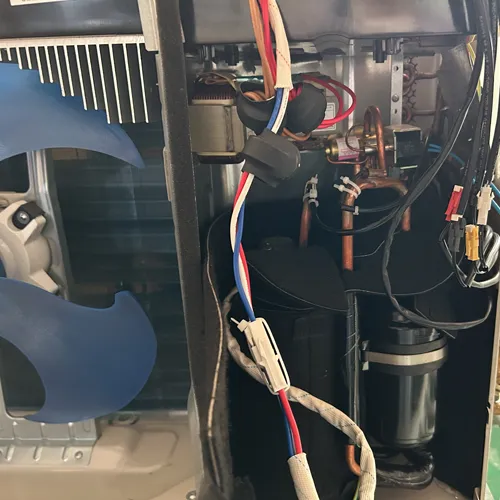
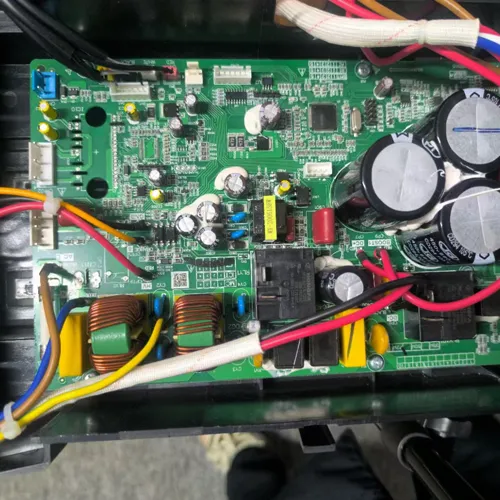
Production begins by confirming the approved SAC model and matching the DC-driven rolling-rotor compressor, DC brushless fan motor, evaporator, condenser, AC/DC control board, sensors, and electrical protection components to the selected cooling capacity.
The 9,000–30,000 BTU models use different power, airflow, refrigerant, and current settings. Production therefore follows the selected Technical Specification instead of using one common setup for every capacity.
Indoor and Outdoor Unit Assembly
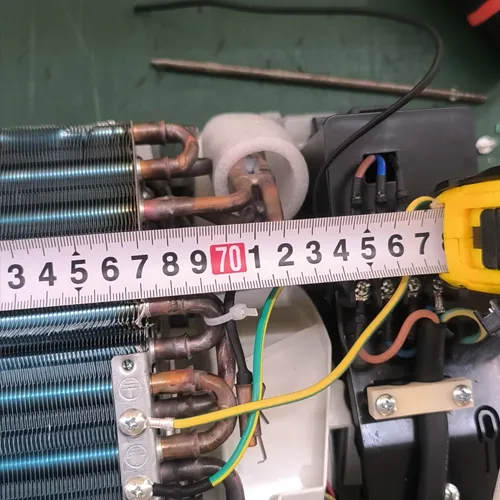
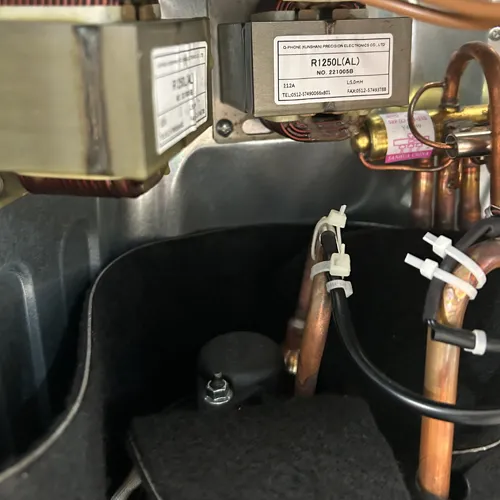
The indoor and outdoor units are prepared as a matched set. Assembly includes the heat exchangers, compressor, fan motor, refrigerant piping, wiring, control-board connections, drainage system, and electrical terminals.
Connection details are checked against the Installation Manual of Solar Air Conditioner and the selected Off-Grid Solar Air Conditioner instruction or On-Grid Solar Air Conditioner instruction.
AC/DC System & Function Check
After assembly, the refrigeration circuit, compressor operation and safety, fan operation, temperature sensing, electrical protection, cooling, heating, and AC/DC control system are checked.
For example, the 18GW model is listed with 1,520W rated cooling consumption and 2,860W maximum input power, while the 30GW model is listed with 2,500W rated cooling consumption and 4,000W maximum input power. These model differences are used to verify the correct electrical and control configuration.
For additional information about compressor operation and safety, technicians can review the related Sungreat Energy technical article.
Quality Review Before Packing
Before the system enters the packaging stage, the main mechanical connections, electrical wiring, appearance, accessories, and model identification are checked again.
The indoor unit, outdoor unit, remote controller, installation accessories, technical documents, BTU capacity, voltage, frequency, and selected AC/DC configuration are matched against the order requirements. This helps reduce mismatched units, missing accessories, incorrect electrical settings, and installation problems at the project site.


Hybrid Solar Air Conditioner AC/DC Mini Split System SAC Series 9000–36000 BTU Overview & Details
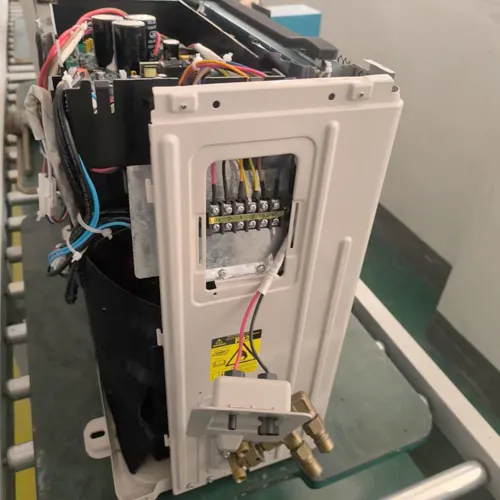
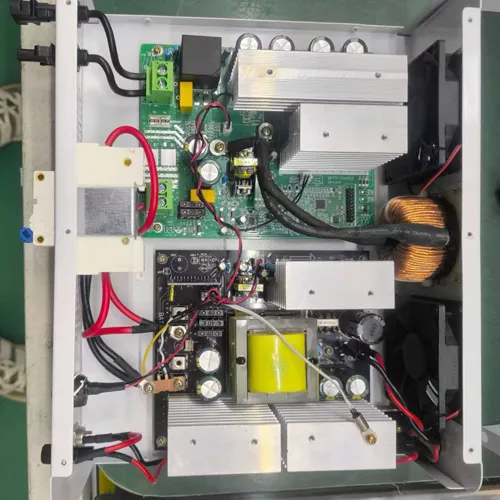
The SAC Series is an AC/DC hybrid mini-split system for solar-assisted cooling and heating. A dedicated PV control box manages the solar input before it reaches the outdoor unit, providing a clear connection and inspection point for the PV array. The system accepts 80–380V DC PV input and supports direct solar operation without requiring a separate external solar inverter.
When solar power is available, the AC/DC control system gives it priority. If solar output is not sufficient for the compressor load, grid or battery power can support continued operation. This makes the SAC Series suitable for on-grid, off-grid, and hybrid solar cooling projects. For complete solar system projects, Sungreat can match the air conditioner with PV panels, LiFePO4 batteries, protection devices, and related accessories.
| System Area | Main Function |
|---|---|
| Solar connection | Dedicated PV control box with 80–380V DC PV input and direct-PV operation |
| Power priority | Solar power first, with grid or battery support when solar output is insufficient |
| Installation access | Separate electrical terminals, refrigerant-pipe connections, and wiring diagrams |
| WiFi and app control | Remote on/off control, temperature setting, cooling/heating selection, scheduling, and system-status checks |
| Energy monitoring | Daily, monthly, and yearly electricity-use records |
Built-in WiFi connects the unit to a mobile app, allowing users to control operation remotely and review the system status. The energy-monitoring function helps homeowners, businesses, and project teams compare electricity use across different periods and assess solar performance during the day.
Real-time operating information and fault-status identification help technicians review the basic system condition before arranging an on-site inspection. This supports more efficient troubleshooting and can reduce unnecessary service visits.
For installation and maintenance, technicians can use the separate terminals, refrigerant connections, wiring diagrams, and the cooling-efficiency troubleshooting guide linked on the product page. Final PV array, AC input, battery, protection, and installation details should be checked according to the selected model, site conditions, and local electrical requirements.
Hybrid Solar Air Conditioner AC/DC Mini Split System SAC Series 9000–36000 BTU Packaging & Delivery
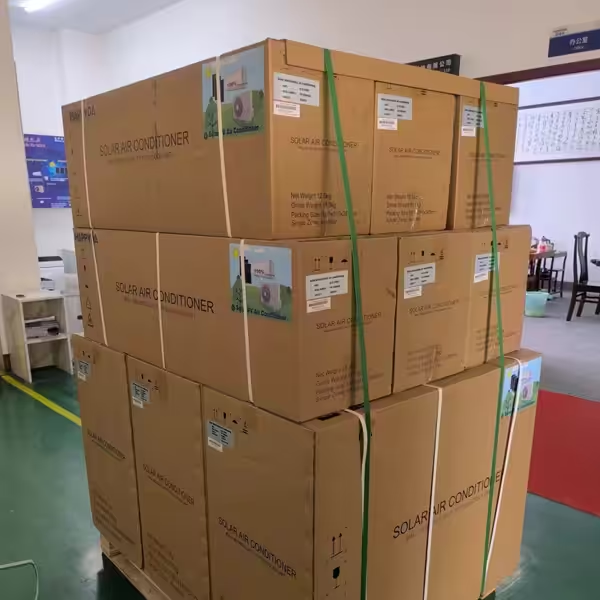
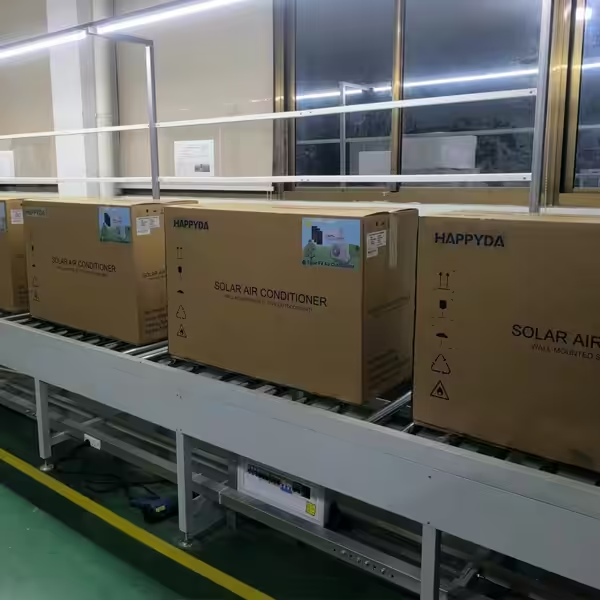
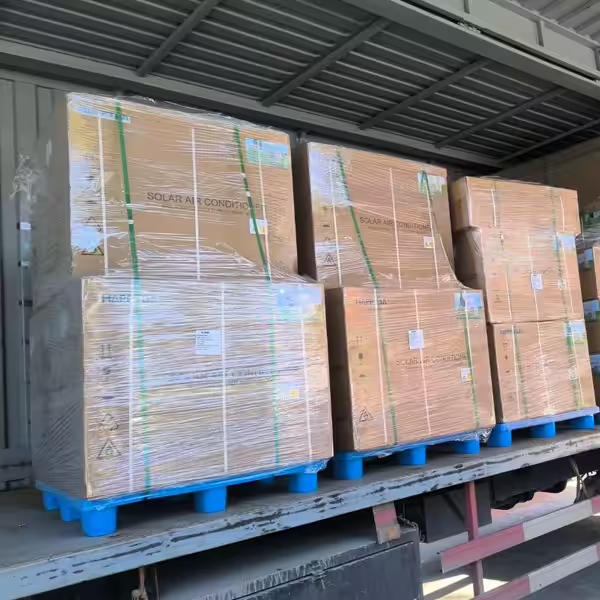
The SAC Series is prepared for two common order types: a matched air-conditioner set or a complete solar cooling package. Indoor and outdoor units, BTU capacity, voltage, frequency and related components are checked against the confirmed order before packing. This helps EPC teams receive and distribute the correct equipment at the project site.
Standard carton packing is available for matched indoor and outdoor sets. Wooden-crate packing can be arranged according to the order and transport requirements. Where specified in the confirmed packing plan, internal separators, corner protection, EPE protection, separate accessory packaging and pallet packing can also be arranged.
Packing Reference
| Item | Current Website Reference | Packing or Ordering Note |
|---|---|---|
| Matched 9,000–24,000 BTU set | Approximately 0.32–0.61 CBM and 50–72 kg with carton packing | Reference range by model |
| Wooden-crate matched set | Approximately 0.57–0.82 CBM and 70–95 kg | Depends on model and transport requirements |
| 550W PV module | Approximately 2280 × 1135 × 30 mm | Final data depends on the selected panel model and quantity |
| Grid-connected safety control box | Approximately 300 × 220 × 120 mm and 3 kg | Used according to the selected system configuration |
| Off-grid charging manager | Approximately 410 × 340 × 160 mm and 6.5 kg | Used for selected off-grid configurations |
The packing figures above are current reference ranges. Final packing data for 30,000 BTU units, other capacities, complete solar kits and customized configurations is confirmed according to the actual order.
Project Order Handling
- Order matching
The model number, BTU capacity, voltage, frequency, indoor/outdoor unit identification and accessory list are checked against the confirmed order to reduce warehouse and installation mix-ups.
- Component separation
For complete solar air-conditioning systems, PV modules, control equipment and related accessories are packed according to the selected configuration. Battery systems, mounting structures and other project components follow the confirmed system and shipping plan.
- Installation documents
Remote controllers, connection accessories and packing-list items are prepared according to the confirmed configuration. Installation manuals, electrical diagrams, PV connection drawings and operating instructions can be provided for AC/DC connection, installation and commissioning.
- Pre-shipment information
For mixed-model or complete-system orders, the final carton or crate dimensions, gross weight, total CBM, pallet requirements and loading quantity can be confirmed before shipment. This gives project teams clearer information for warehouse receiving, container planning and site distribution.
Stock and Production Timing
Some SAC models may be available from stock and can be prepared for shipment after order confirmation. Models requiring production normally need around 2–3 days for sample orders. Bulk orders generally require approximately 2–4 weeks, depending on the model, order quantity, complete system configuration and current production schedule.
Production lead time is separate from freight transit, customs clearance and inland delivery. The final delivery schedule is confirmed according to the destination, transport route and order configuration.


FAQ of Hybrid Solar Air Conditioner AC/DC Mini Split System SAC Series 9000–36000 BTU
Yes. The SAC Series has integrated AC/DC power conversion and accepts 80–380V DC input from a correctly configured solar PV array. This allows the solar panels to supply the air conditioner directly without a separate external solar inverter.
During daytime operation, solar power can be used as the primary energy source. If PV output becomes insufficient because of clouds, shading, high module temperature or late-afternoon sunlight, the compatible AC grid input for the selected model can support the remaining load.
A battery is not required for normal direct-PV daytime operation. A matched LiFePO4 battery can be added for nighttime cooling, backup operation or fully off-grid applications.
The potential grid-energy offset depends on the selected BTU capacity, rated cooling consumption, solar operating hours and the average percentage of the load supplied by PV.
Grid-energy offset ≈ rated cooling consumption × solar operating hours × average PV contribution
For example, an 18,000 BTU model has a rated cooling consumption of 1.52kW. If solar power supplies an average of 80% of the cooling load for 6 hours:
1.52kW × 80% × 6 hours = 7.30kWh per day
This equals approximately 219kWh over 30 days. This is a calculation example rather than a guaranteed saving. Actual results depend on local solar irradiation, PV orientation, shading, module temperature, outdoor temperature, room insulation, temperature settings, compressor modulation and daily operating hours.
For the currently listed SAC models with confirmed technical data, the following configurations are preliminary references:
| SAC Cooling Capacity | Rated Cooling Consumption | Preliminary 550W PV Configuration | Installed PV Capacity |
|---|---|---|---|
| 9,000 BTU | 690W | Approximately 4 panels | 2.20kWp |
| 12,000 BTU | 980W | Approximately 4–5 panels | 2.20–2.75kWp |
| 18,000 BTU | 1,520W | Approximately 6 panels | 3.30kWp |
| 24,000 BTU | 2,100W | Approximately 7–8 panels | 3.85–4.40kWp |
| 30,000 BTU | 2,500W | Approximately 8 panels | 4.40kWp |
These figures are for preliminary system selection, not fixed installation rules. The SAC PV input operates within 80–380V DC. The maximum PV input current is 15A for the 9,000–18,000 BTU models and 20A for the 24,000–30,000 BTU models.
Before confirming the final quantity, installers should check the selected panel’s Voc, Vmp, operating current, series-string voltage, shading, roof orientation, local solar conditions and expected cooling hours. Two 550W panels may have different Voc and Vmp values, so their allowable series configuration may also differ.
A battery is not required when compatible grid power is available at night. For battery-backed or fully off-grid operation, the initial battery calculation should be based on the air conditioner’s expected energy demand:
Required AC energy ≈ rated cooling consumption × required operating hours
For example, a 12,000 BTU model has a rated cooling consumption of 0.98kW. At rated load for 4 hours:
0.98kW × 4 hours = 3.92kWh
This 3.92kWh represents the air-conditioner load energy only. The final nominal battery capacity must also allow for usable depth of discharge, battery reserve, power-conversion losses and cable losses.
Actual consumption may decrease after the room reaches the set temperature, but high outdoor temperatures, poor insulation, strong solar heat gain or a low temperature setting may keep the cooling load higher. Final battery sizing should also consider daytime PV recharge, local solar conditions, required backup hours, operating schedule and grid availability. The example is not a guaranteed full-night or multi-day backup result.
Room size is only a starting point. The following ranges are preliminary references for one room or cooling zone under standard ceiling height, ordinary insulation, moderate window exposure and typical residential occupancy:
- 9,000 BTU: approximately 20–30 m² (215–323 ft²)
- 12,000 BTU: approximately 25–40 m² (269–431 ft²)
- 18,000 BTU: approximately 40–60 m² (431–646 ft²)
- 24,000 BTU: approximately 50–80 m² (538–861 ft²)
- 30,000 BTU: approximately 70–100 m² (753–1,076 ft²)
These figures are for preliminary communication, not fixed sizing rules. Rooms with poor insulation, high ceilings, large windows, strong roof or wall heat gain, high occupancy, kitchen equipment or outdoor temperatures around 45–50°C may require a larger BTU capacity or a formal cooling-load calculation.
After confirming the BTU capacity, the complete solar configuration should be matched according to daily cooling hours, local Peak Sun Hours, available grid power, PV installation area, nighttime operation and required battery backup. A multi-room house should be assessed by individual cooling zones rather than total floor area alone.
Yes. Sungreat Energy can supply the SAC air conditioner together with the main components required for a Solar + Grid, Solar + Battery + Grid or fully off-grid configuration.
A complete system may include:
- SAC Series hybrid AC/DC air conditioner for the selected BTU capacity
- Approximately 4–8 × 550W solar panels, equal to about 2.20–4.40kWp for preliminary configurations
- LiFePO4 battery storage for nighttime, backup or off-grid operation
- PV control, charging and power-management equipment
- DC and AC breakers, isolators and protection devices
- Solar cables, connectors and other electrical accessories
- Solar-panel mounting structure
- Indoor and outdoor unit installation accessories
- Wiring diagrams, installation instructions and commissioning documents
The SAC Series accepts 80–380V DC PV input through its integrated AC/DC power-conversion system. In a Solar + Grid configuration, the compatible AC grid can support the air conditioner when solar power is insufficient, without requiring a separate external solar inverter for direct PV operation.
For quotation, the project should confirm the country and city, room or cooling-zone area, expected BTU capacity, voltage and frequency, daily operating hours, grid availability, nighttime backup requirement, solar-panel model and quantity. The final PV string, battery capacity, cables and protection devices should be matched to the selected SAC model and site conditions.
Related Products

Related News
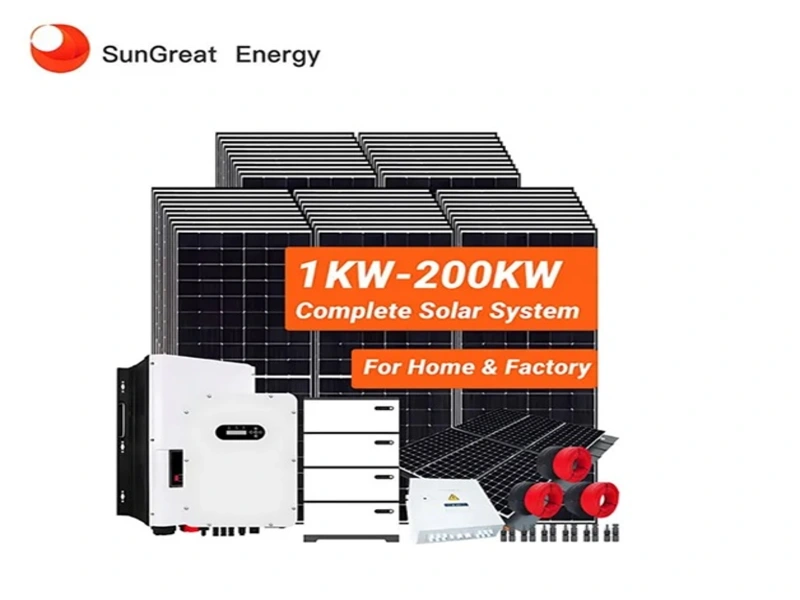
Transitioning to solar energy often comes with a major hurdle: complexity. Matching the right inverter to a battery or finding […]
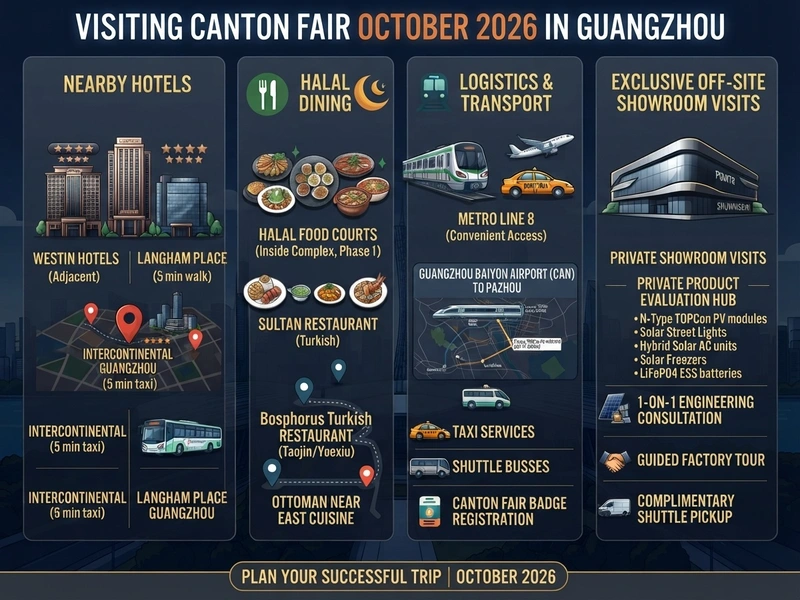
Before canton fair we should know As the global energy transition accelerates, thousands of international EPC contractors, importers, and renewable […]
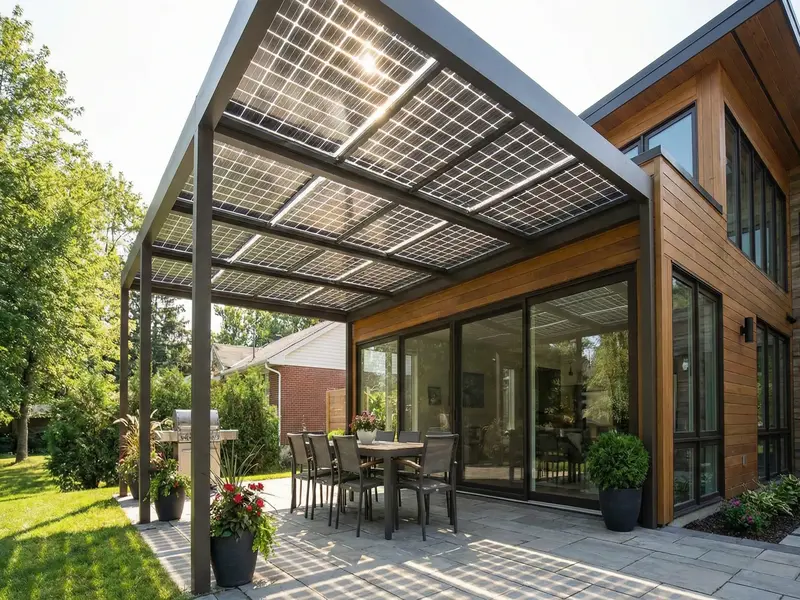
If you’ve ever stood inside a utility-scale solar farm at mid-day, you’ve likely noticed something striking: the ground underneath the […]
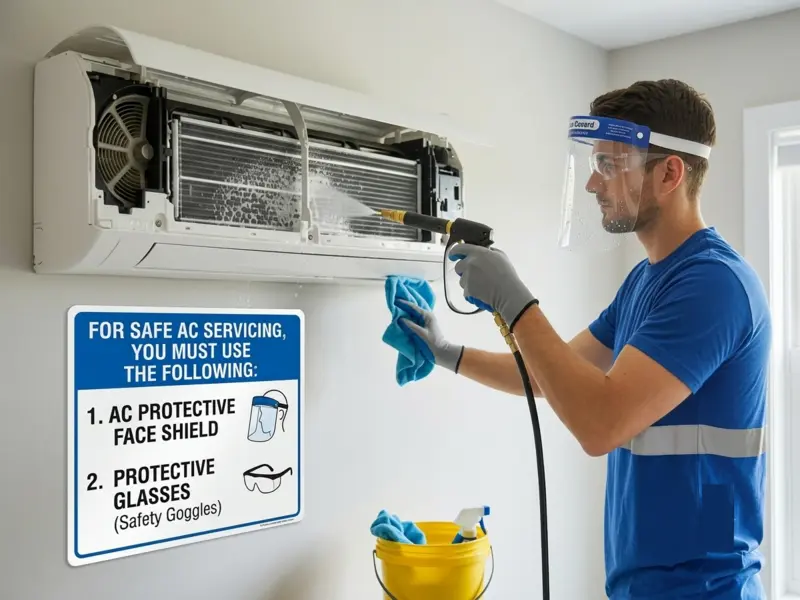
Solar air conditioners are a new kind of energy–efficient cooling system that helps reduce the impact of rising temperatures while […]
As global temperatures continue to break records, the air conditioner (AC) has transitioned from a luxury to a survival necessity. […]

Meta Description: Discover how a hybrid solar air conditioner works to slash daytime cooling costs by up to 100%. Explore […]