




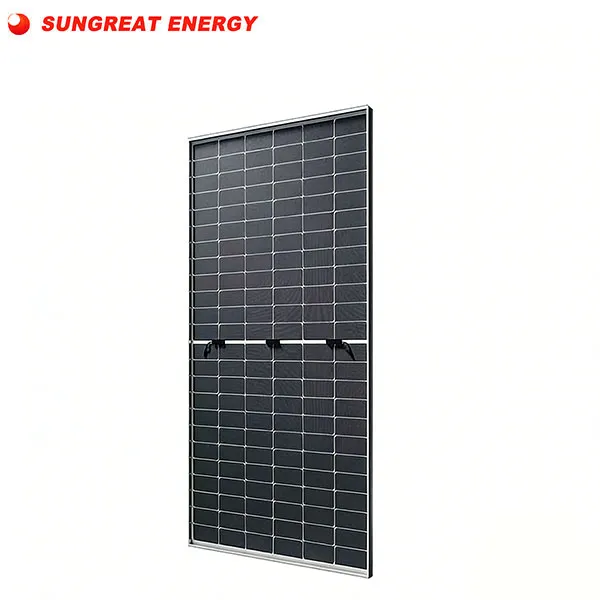

Solar panels generate electricity when sunlight is available, but solar energy production does not always match when electricity is needed. A high-performance solar battery solves this problem by storing excess solar energy and making it available later, such as at night, during periods of low solar production, or during a power outage.
But how does a solar battery work with solar panels and an inverter?
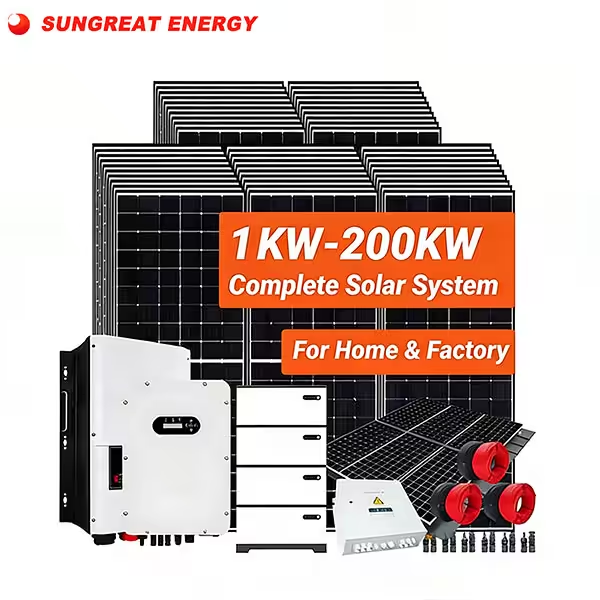
In a typical solar-plus-storage system, solar panels generate DC electricity, the inverter manages and converts the electricity, and the battery stores excess energy for later use. The exact way these components work together depends on whether the system is on-grid, off-grid, or hybrid, as well as how the system is configured.
1. Key Takeaways

- Solar panels convert sunlight into DC electricity.
- A solar inverter converts and manages electricity for the loads, battery, and utility grid where applicable.
- A solar battery stores surplus solar energy for use when solar production is insufficient.
- Hybrid and off-grid inverters can manage energy flow between solar panels, batteries, loads, and the grid.
- LiFePO4 batteries are widely used for solar storage because of their long cycle life, high usable capacity, and good thermal stability.
- Modern LiFePO4 batteries can achieve 6,000+ charge and discharge cycles under specified operating conditions.
- Depth of Discharge (DoD) determines how much of a battery’s rated capacity can be used.
- A battery and inverter must be properly matched in terms of voltage, power, charging and discharging limits, and communication compatibility.
- A properly designed hybrid solar system can provide backup power during grid outages or brownouts, when supported by the inverter and backup configuration.
2. Main Types of SPS
Before understanding how a solar battery works, it helps to understand the three main types of solar power systems—on-grid, off-grid, and hybrid—and the role of net metering in grid-connected systems.
2.1. On-Grid Solar System
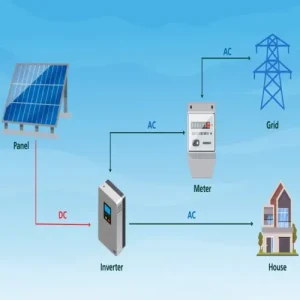
An on-grid solar system is connected to the utility grid. Solar panels generate electricity during the day, and the inverter converts it into AC power for household or commercial loads.
When solar production is higher than the building’s electricity demand, surplus electricity can be exported to the utility grid. In regions where net metering or a similar grid-export program is available, the exported electricity may be credited according to the local utility’s rules.
When solar production is insufficient, electricity can be drawn from the grid to meet the building’s demand.
Traditional on-grid systems generally do not require a battery because the utility grid can provide electricity when solar generation is insufficient. However, a standard on-grid system without battery backup typically cannot continue powering loads during a grid outage or brownout.
2.2. Off-Grid Solar System
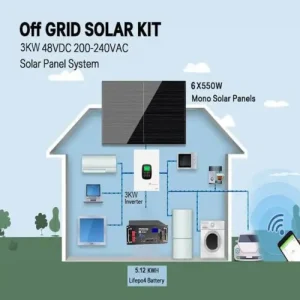
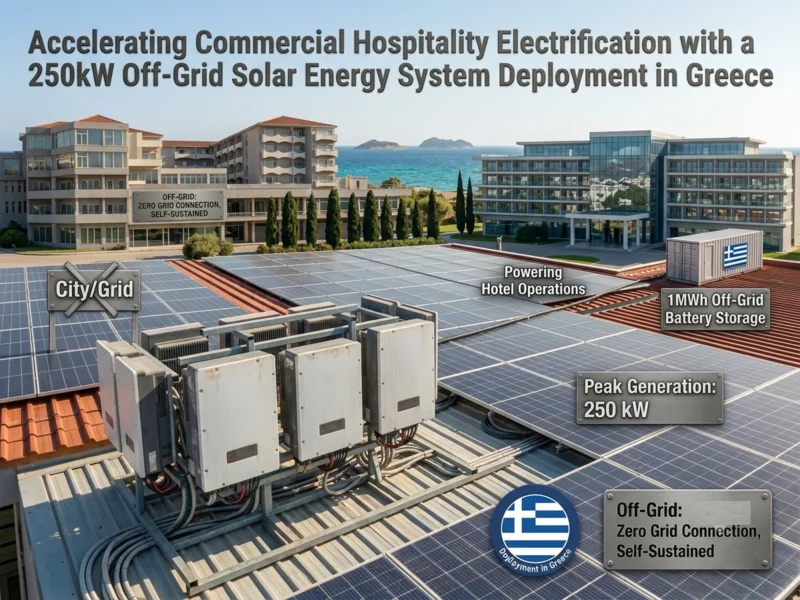
An off-grid solar system operates independently of the utility grid. It is commonly used in remote areas where grid electricity is unavailable or unreliable.
Because there is no grid to provide electricity after sunset or during periods of low solar production, an off-grid system normally requires solar panels, batteries, and an inverter.
The battery stores energy generated during periods of good sunlight and supplies electricity when the solar panels cannot produce enough power.
For locations without reliable grid access, an appropriately sized off-grid solar system can provide a more independent source of electricity.
2.3. Hybrid Solar System
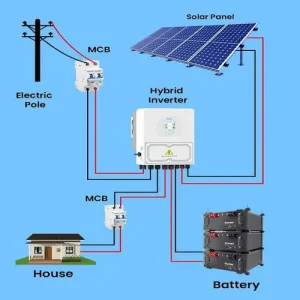
A hybrid solar system combines solar panels, battery storage, an inverter, and a grid connection.
During the day, solar energy can power the loads and charge the battery. When solar generation is insufficient, the system can use stored battery energy or electricity from the grid, depending on the system configuration and operating settings.
A hybrid system can provide greater energy flexibility and may also provide backup power during grid outages or brownouts, when supported by a suitable inverter and backup configuration.
3. SPS Types at A Glance
Comparison of on-grid, off-grid, and hybrid solar power systems, showing the role of solar panels, batteries, inverters, and the utility grid.
Among these three system types, batteries are particularly important in off-grid and hybrid solar systems.
So, how does the battery actually work with the solar panels and inverter?
4. How Do Each Part Work ?
A solar-plus-storage system can be understood through the flow of electricity:
Solar panels → Inverter → Electrical loads
When the solar panels generate more electricity than the loads currently need:
Excess solar energy → Battery → Stored energy
Later, when solar production decreases:
Battery → Inverter → Electrical loads
The inverter acts as the central energy management component, controlling how electricity moves between the solar panels, battery, loads, and grid where applicable.
4.1. Generation of Electricity
Solar panels use photovoltaic cells to convert sunlight into electrical energy. The electricity generated by PV panels is direct current (DC). However, most household and commercial appliances use alternating current (AC).
The solar panel capacity and actual energy production depend on several factors, including:
- PV system capacity
- Solar irradiation
- Peak sun hours
- Panel orientation and tilt
- Shading
- Temperature
- System efficiency and losses
For example, a residential solar system may use multiple high-efficiency solar panels to generate enough electricity for daytime appliances while also producing surplus energy for battery charging.
However, simply installing more solar panels does not automatically guarantee better system performance. The PV array needs to be properly matched with the inverter and battery.
4.2. Conversion of Energy
The inverter is one of the most important components in a solar energy storage system.
A conventional grid-tied inverter primarily converts DC electricity from solar panels into AC electricity. A hybrid inverter, however, can perform additional energy management functions.
Depending on the system design, a hybrid inverter can manage electricity flowing between:
- Solar panels
- Solar battery
- Household or commercial loads
- Utility grid
For example, when solar panels are generating sufficient power, the inverter can prioritize solar energy for the loads. If there is excess solar production, it can direct the surplus electricity to the battery for charging.
When solar production decreases, the inverter can draw electricity from the battery and convert it into usable AC power.
Many hybrid and off-grid inverters also use MPPT (Maximum Power Point Tracking) technology to optimize the operating point of the solar panels and extract available solar power efficiently.
4.3. Stores Excess Energy
The solar battery is the energy storage component of the system. During sunny periods, solar panels may generate more electricity than the building is consuming. Instead of using all of this electricity immediately, the surplus can be used to charge the battery.
For example:
Solar panels generate 6 kW → Loads use 3 kW → Approximately 3 kW is available for battery charging
The actual charging power will depend on the inverter, battery, PV output, and system configuration.
Later in the evening:
Solar production decreases → Battery discharges → Inverter supplies the loads
This allows electricity generated during daylight hours to be used after sunset.
5. Battery at Night?
After sunset, solar panels normally stop generating meaningful electricity. In a battery storage system, the inverter can draw stored energy from the battery and convert it into AC electricity for connected loads.
For example, a home may use stored battery energy to operate essential appliances such as:
- LED lighting
- Refrigerators and freezers
- Fans
- Air conditioners
- Wi-Fi routers
- Computers
- Televisions
- Other household appliances
Air conditioners deserve particular attention when sizing a solar battery system. In hot climates and during summer, an air conditioner can become one of the largest electricity consumers in a home. Its compressor may also require higher power when starting, so both the inverter’s continuous and surge output and the battery’s discharge capability should be considered.
Whether a solar battery can operate an air conditioner, and for how long, depends on the air conditioner’s power consumption, operating hours, battery capacity, inverter capacity, and the energy available from the solar panels.
How long the battery can power other loads also depends on the battery capacity, inverter efficiency, load power, usable battery capacity, and operating conditions. This is why battery capacity should not be selected based only on the number of appliances. Their actual energy consumption and operating hours are also important.
6. Grid Outage or Brownout?
One of the main reasons homeowners and businesses add batteries to solar systems is backup power.
In a suitable hybrid solar system, the inverter can isolate designated backup loads from the utility grid during an outage or brownout and continue supplying them with solar and battery energy.
During the daytime, solar panels may supply the loads while also charging the battery. At night or when solar production is insufficient, the battery can provide stored electricity.
However, not every solar inverter provides backup power automatically. The inverter must support backup or off-grid operation, and the system needs to be designed with the appropriate backup circuits and protection equipment.
It is also important to understand that a battery backup system does not necessarily mean that every appliance in the building can continue operating during a power outage. Many systems use a backup or essential-load circuit so that high-priority appliances receive power while non-essential or high-power loads remain disconnected.
7. Batteries Popular for SES?
LiFePO4 (lithium iron phosphate) batteries are widely used in modern residential and commercial solar energy storage systems. Compared with traditional lead-acid batteries, properly designed LiFePO4 systems can offer advantages such as:
- Long cycle life: Modern LiFePO4 batteries can achieve 6,000+ charge and discharge cycles, depending on the battery design, operating conditions, and Depth of Discharge (DoD).
- High usable capacity: LiFePO4 batteries can typically operate at a high Depth of Discharge (DoD), allowing a greater portion of the battery’s rated capacity to be used.
- Stable performance: LiFePO4 chemistry provides consistent performance over many charge and discharge cycles.
- Good thermal stability: LiFePO4 is known for its stable chemistry and good thermal characteristics.
- Low maintenance requirements: Unlike lead-acid batteries, LiFePO4 batteries generally require minimal routine maintenance.
- Compact energy storage: They can provide substantial energy storage capacity in a relatively compact and lightweight package.
8. What Is Depth of Discharge ?
Depth of Discharge (DoD) refers to the percentage of a battery’s usable capacity that has been discharged.
For example, if a 10 kWh battery operates at 80% DoD, approximately 8 kWh of its rated capacity can be used before recharging.
A higher usable DoD means more of the battery’s stored energy can be utilized without requiring a larger battery bank. LiFePO4 batteries are therefore well suited to solar energy storage, where batteries are regularly charged during the day and discharged at night or during periods of low solar generation.
Battery cycle life and DoD are also closely related. In general, operating a battery at a lower DoD can help reduce stress on the cells and potentially extend its cycle life. Therefore, the actual service life of a LiFePO4 battery depends not only on its rated cycle count, but also on factors such as DoD, temperature, charging and discharging rates, and battery management.
A lithium battery also requires a Battery Management System (BMS). The BMS monitors important battery parameters such as cell voltage, temperature, and charging and discharging conditions, helping protect the battery and maintain safe and reliable operation.
For reliable operation, the battery should also be compatible with the selected inverter. Depending on the equipment, communication through CAN or RS485 may be required for battery monitoring, state-of-charge reporting, and coordinated charging and discharging.
Sungreat Energy provides LiFePO4 solar batteries for residential and commercial energy storage applications, with different battery capacities available for different system requirements.
9. Right Solar Battery and Inverter?
Correct system sizing is essential for reliable solar energy storage.
- Calculate Daily Energy Consumption: Determine how much electricity the home or business uses each day, normally measured in kilowatt-hours (kWh). Daily energy consumption helps determine how much energy the solar panels need to generate and how much battery storage may be required.
- Calculate the Peak Load: Determine the maximum power that may be required when multiple appliances operate at the same time. This is normally measured in kilowatts (kW) and is particularly important for selecting the inverter. Air conditioners, refrigerators, pumps, and other motor-driven equipment may also have higher startup power, so the inverter’s surge capacity should be considered.
- Determine the Required Backup Time: Decide how long the battery needs to power essential loads during the night or a grid outage. For example, a homeowner may want enough stored energy to operate essential appliances for 5, 8, or 12 hours.
- Size the Solar PV System: The solar panels should generate enough energy to supply daytime loads and recharge the battery within the available solar window. Local solar irradiation and peak sun hours should be considered when estimating the required PV capacity.
- Select the Appropriate Inverter: The inverter’s continuous output and surge capacity should be sufficient for the connected loads. The inverter should also be suitable for the selected system type, whether on-grid, off-grid, or hybrid.
- Check Battery and Inverter Compatibility: Battery voltage, charging parameters, maximum charge and discharge current, communication protocols, and BMS compatibility should all be checked before installation. Using a battery and inverter that are not properly matched can affect system performance and communication.
10. One Integrated System
A solar energy storage system works because each component performs a different but connected function:
- Solar panels generate electricity.
- The inverter converts and manages electricity.
- The battery stores excess energy.
- The inverter delivers stored energy to the loads when needed.
On-grid systems can operate without batteries in many applications, while batteries are essential to most off-grid systems and are an important component of hybrid systems designed for energy storage and backup power.
When properly sized and matched, a solar panel, LiFePO4 battery, and hybrid inverter system can help households and businesses make better use of renewable energy, reduce dependence on grid electricity, and maintain access to power when solar generation or grid supply is unavailable.
If you are planning a solar energy storage system, start by evaluating your daily energy consumption, peak load, required backup hours, available solar resources, and grid conditions. These factors provide the foundation for selecting the appropriate solar panel capacity, battery size, and inverter.
11. References
- International Renewable Energy Agency (IRENA). Renewable Power Generation Costs in 2023. Abu Dhabi: IRENA.
- International Energy Agency (IEA). Renewables 2023: Analysis and forecast to 2028. Paris: IEA Publications.
- National Renewable Energy Laboratory (NREL). U.S. Solar Photovoltaic System and Storage Cost Benchmarks. Golden, CO: NREL Technical Report.
- SolarPower Europe. Global Market Outlook for Solar Power 2024–2028. Brussels: SolarPower Europe.
- BloombergNEF (BNEF). Energy Storage System Outlook and Lithium-ion Battery Price Survey. London: Bloomberg Finance L.P.