





Engineering a resilient, continuous-power solar panel installation to mitigate Cape Town load-shedding risks, suppress healthcare operational expenses, and future-proof critical medical infrastructure.
1. Executive Summary
1.1. Project Background
Located in Durbanville, Cape Town, the medical facility operates as a vital community health hub providing continuous outpatient services, emergency stabilization, and cold-chain vaccine storage. Operating under South Africa’s increasingly volatile municipal grid conditions, the clinic required an ultra-reliable, utility-grade clean energy infrastructure capable of eliminating operational downtime caused by severe Stage 4 to Stage 6 load-shedding protocols.
1.2. Technical Problem
Grid instability across the Western Cape exposed critical healthcare infrastructure to frequent power outages, causing significant reliance on costly diesel generator fallback systems. The escalating costs of fuel, combined with diesel engine maintenance overheads and noise pollution near patient care areas, demanded an immediate transition toward a grid-tied clean energy asset. Furthermore, intense high-irradiance conditions paired with elevated ambient summer temperatures in Cape Town required high-efficiency module technology with optimized thermal coefficients to prevent thermal degradation during peak production hours.

2. System Architecture
2.1. PV Array Specifications
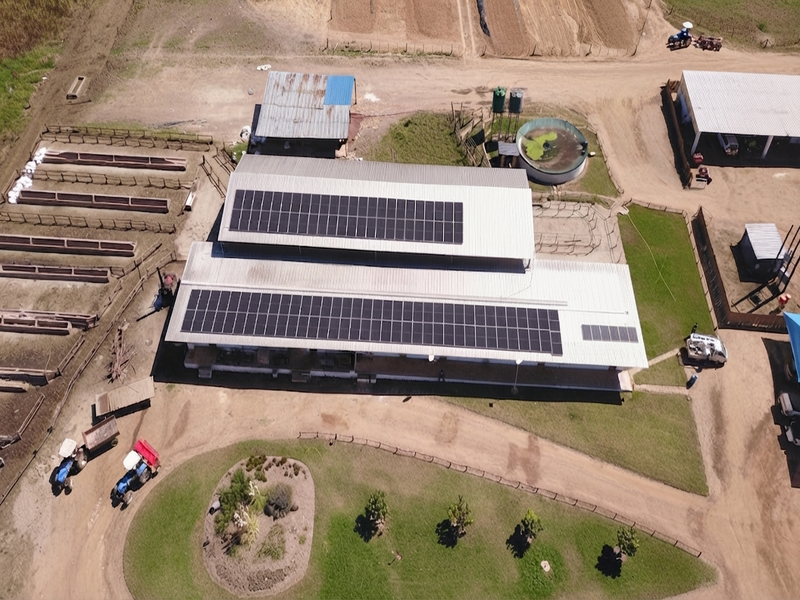
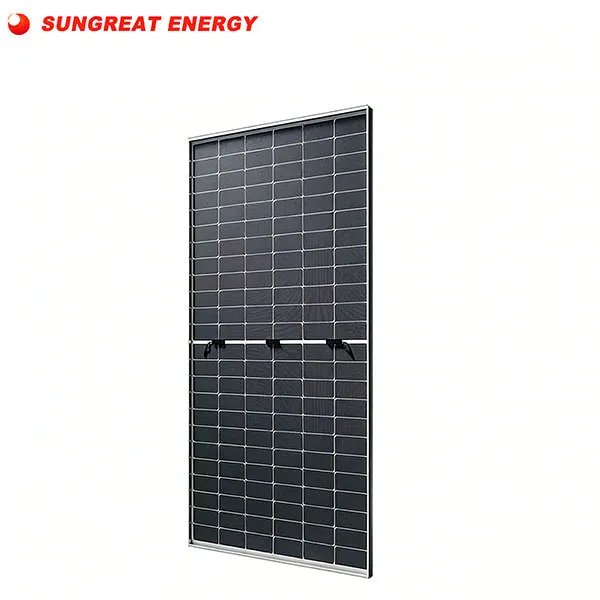
To satisfy the peak operational load of the clinic, Sungreat Energy engineered a 99.0 kWp DC PV array deploying 180 units of the Sungreat BSP Series 550W N-Type TOPCon bifacial double-glass solar panels. Built with a dual-glass architecture, the modules provide superior mechanical resistance against localized high-wind loads (rated at 5400Pa front / 2400Pa rear load) while optimizing albedo irradiance capture from the surrounding surface to yield up to a 30% rear-side power gain.
N-Type TOPCon Efficiency
Achieves up to 23.69% module conversion efficiency with zero Light-Induced Degradation (LID) and enhanced low-light performance during overcast morning and evening shifts.
Thermal Coefficient
Features an ultra-low −0.29%/°C Pmax temperature coefficient, suppressing power drop during intense Cape Town heatwaves to ensure stable afternoon generation profiles.
Dual Hybrid Inverters
Utilizes two 50 kW Sungreat Energy commercial hybrid inverters operating in synchronized parallel mode, offering intelligent grid management and zero-transfer switching capability.
Future Storage Architecture
Pre-engineered DC/AC coupling interfaces allowing seamless integration of utility-scale energy storage batteries for secondary-phase power cycling and overnight resilience.
2.2. System Parameter Schedule
The detailed system parameters and engineering specifications for the Durbanville Clinic installation are structured as follows:
3. Project Execution
3.1. Supply Chain Logistics
(April 2023 – May 2023)
Project initiation commenced in April 2023 with strict supply chain protocols. Sungreat Energy managed the factory flash-testing, EL (Electroluminescence) image inspection, and maritime logistics to ensure zero micro-cracks upon arrival at the Port of Cape Town. Structural engineers performed site topography and roof ballast testing to ensure compliance with Western Cape structural safety codes.
3.2. Implementation Phase
(June 2023 – August 2023)
Mechanical installation involved erecting non-penetrative, anodized aluminum mounting structures optimized for an optimal tilt angle to maximize seasonal irradiance. Double-glass solar panels were installed with exact torque parameters. Electrical wiring utilized UV-resistant 1500V DC cables routed through heavy-duty galvanized conduits directly into dual 50 kW hybrid inverters equipped with integrated surge protection (SPD) and rapid shutdown safety units.
3.3. System Handover
(September 2023)
Final commissioning and grid synchronization were concluded in September 2023. Compliance testing verified anti-islanding parameters, thermal camera scans under load, and seamless automatic switching. The system was fully handed over to the facility engineering team alongside real-time IoT cloud monitoring integration.
4. System Performance
Following six months of operational monitoring, the installation achieved exceptional performance indices, significantly reducing grid reliance and completely eliminating daytime generator runtime:
- Annual Generation Potential: Estimated 168,000 kWh of clean energy generated annually.
- Grid Cost Reduction: Slashed daytime municipal electricity spend by over 72%.
- Diesel Fuel Savings: Reduced facility backup generator fuel usage by approximately 85% during daytime outages.
- Carbon Offset: Mitigates ~158 Metric Tons of CO2 equivalent emissions per year.
The integration of Sungreat Energy’s high-efficiency TOPCon bifacial array has fundamentally changed our operational security. During heavy daytime grid interruptions, our critical medical imaging equipment and climate control systems run seamlessly on clean solar power, eliminating diesel noise and crippling fuel expenses.
— Chief Operations Officer, Durbanville Medical Center

5. International Publication
Sungreat Energy
Consult with our EPC technical specialists to design, simulate, and engineer custom commercial solar and energy storage solutions tailored to demanding industrial requirements.
Website: www.sungreatenergy.com | Email: [email protected]