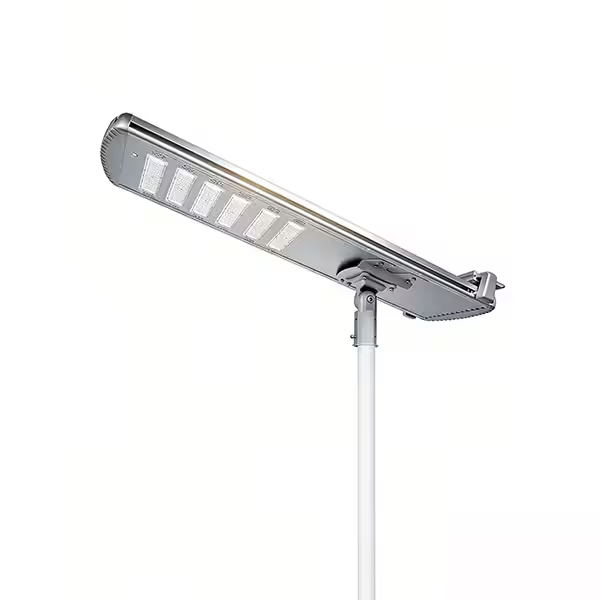
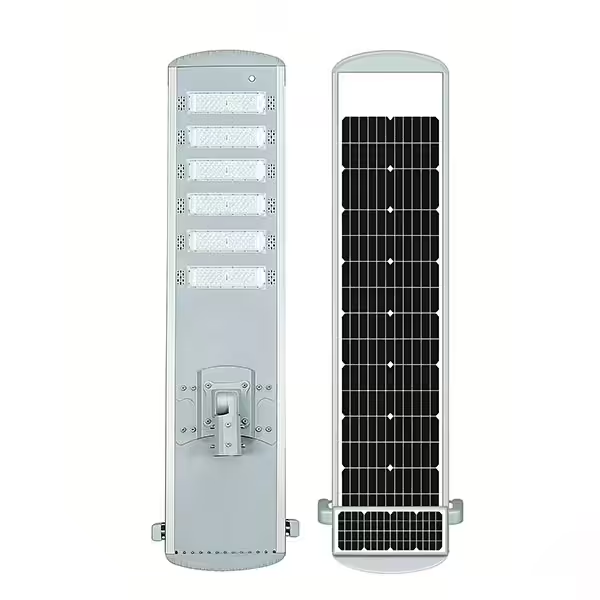
QS Integrated Solar Street Light with Automatic Panel Cleaning
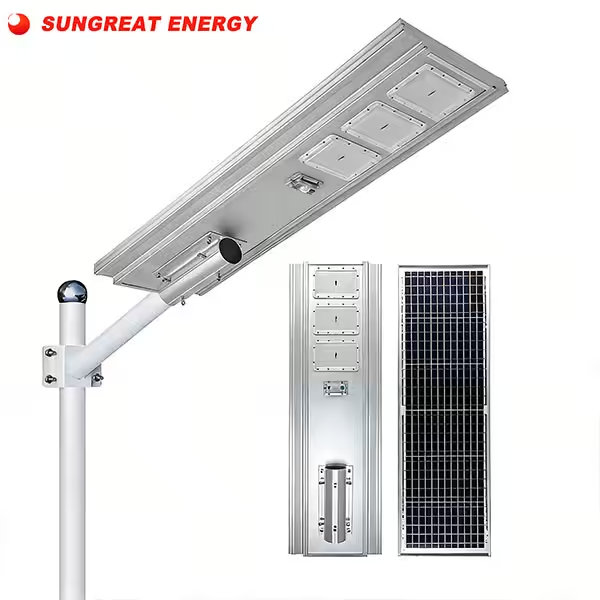
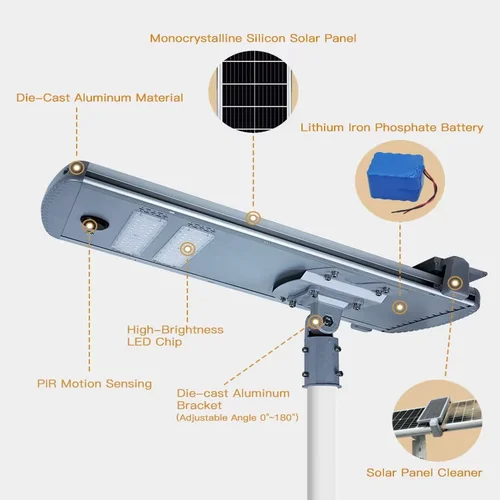
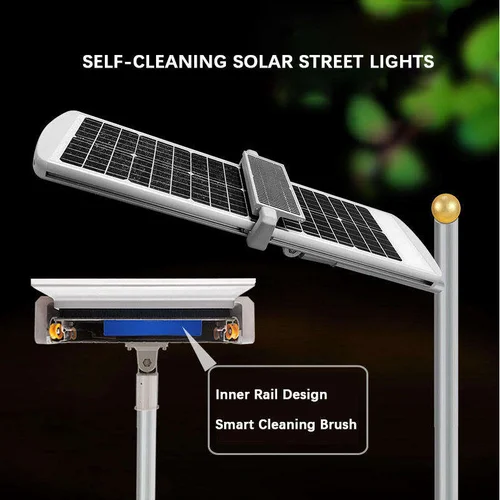
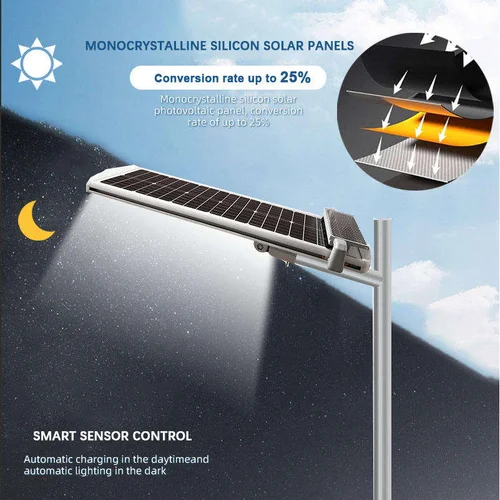
At model-specific recommended mounting heights of 4–11 m, panel inspection and cleaning may require elevated access, particularly where loose dust accumulates. The Sungreat Energy QS Series integrates a monocrystalline PV panel, LiFePO₄ battery, LED modules and MPPT controller in an aluminum-alloy housing. Its automatic cleaning mechanism is designed to clear loose surface dust; mud, sticky deposits and bird droppings may still need manual cleaning.
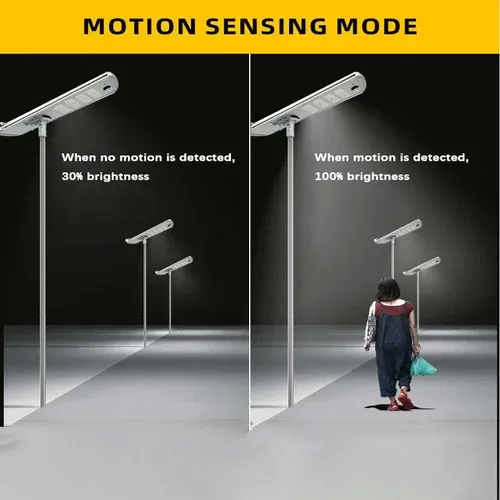
The five model-specific configurations range from 40 W to 120 W LED power, with corresponding 50–120 W PV panels and approximately 230–614 Wh of battery storage. Dusk-to-dawn switching, programmable time dimming and optional motion sensing support different operating schedules. For project planning, check road width, target illuminance, local solar conditions, dust exposure and operating hours, then assess the selected model’s IES file against the layout. See the solar street lighting technology and installation guide for broader planning context.
Integrated Solar Street Light With Automatic Self-Cleaning System QS Series Technical Specifications & Datasheet
| Model |
QS |
| Lamp Power (W) |
40W |
60W |
80W |
100W |
120W |
| Luminous Flux (lm) |
7200-8800LM |
10800-13200LM |
14400-17600LM |
18000-22000LM |
21600-26400LM |
| LiFePO₄ Battery |
12.8V 18AH |
12.8V 24AH |
12.8V 30AH |
12.8V 36AH |
12.8V 48AH |
| Solar Panel |
18V 50W |
18V 60W |
18V 80W |
18V 100W |
18V 120W |
| LED Brand |
Philips, Osram or Bridgelux, subject to the confirmed order configuration |
| CCT |
3000 K / 4000 K / 5000 K / 6000 K / 7000 K, subject to order |
| CRI |
>70 |
| Luminous Efficacy (lm/W) |
180-220 lm/w |
| Cloudy / Rainy Day Autonomy |
5-7 cloudy/ rainy days |
| Operating Temperature |
-25℃-+65℃ |
| Lighting Control |
Automatic dusk-to-dawn operation and programmable time dimming; motion sensor optional |
| Housing Material |
Aluminium alloy |
| Pole Upper Diameter |
φ70-φ76 mm |
| Solar Charge Controller |
MPPT |
| IP / IK Rating |
IP66/IK09 |
| Recommended Mounting Height |
4-5 m |
5-7 m |
6-8 m |
7-9 m |
8-11 m |
| Recommended Pole Spacing |
15-20 m |
15-25 m |
20-25 m |
20-30 m |
20-35 m |
| Warranty |
5 Years |
Get a QS Quote for Your Dust-Prone Road Project
Still cleaning panels by hand? Get a QS model recommendation: 40–120 W options, model-specific 4–11 m mounting heights, and 3 cleaning sessions per day.
QS Series Self-Cleaning Solar Street Light Demo | Reduce Manual Panel Cleaning on Dusty Roads
Integrated Solar Street Light With Automatic Self-Cleaning System QS Series Project & Application Cases
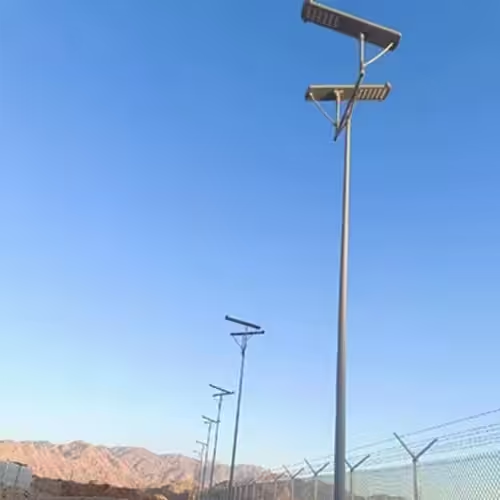
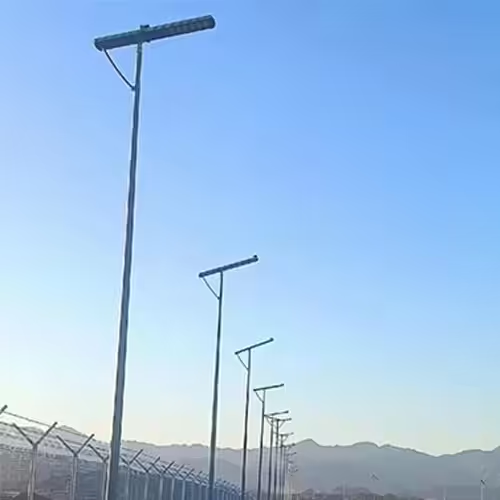
Dust, humidity and residue type affect both panel cleaning and solar charging. The scenarios below are preliminary references for EPC planning, not completed QS Series installations.
| Project scenario |
QS model and configuration |
Mounting height |
Preliminary pole spacing |
| Middle East community and service roads |
QS-40 (40 W): 50 W panel, approx. 230 Wh battery |
4–5 m |
15–20 m |
| Middle East community and service roads |
QS-60 (60 W): 60 W panel, approx. 307 Wh battery |
5–7 m |
15–25 m |
| Industrial and municipal access roads |
QS-80 (80 W): 80 W panel, approx. 384 Wh battery |
6–8 m |
20–25 m |
| Industrial and municipal access roads |
QS-100 (100 W): 100 W panel, approx. 461 Wh battery |
7–9 m |
20–30 m |
| Wide or remote road sections |
QS-120 (120 W): 120 W panel, approx. 614 Wh battery |
8–11 m |
20–35 m |
The automatic cleaning program is scheduled for three sessions per day, with three cycles per session, to remove loose surface dust. Dust, humidity and residue vary by site. Inspect the panel after sandstorms, and arrange manual cleaning if mud or sticky deposits remain.
Use the mounting heights and pole spacing as starting references only. Final model selection and quantity depend on road width, lane layout, pole arrangement, target illuminance and uniformity, local solar conditions, and the operating and dimming schedule. Use the selected model’s IES photometric data in a project-specific DIALux calculation to review the layout.
For a separate project reference in a different environment, see Sungreat Energy’s 2022 Davao project using 214 FX Series solar street lights. This is an FX Series project, not a QS installation, and does not verify QS performance.
Integrated Solar Street Light With Automatic Self-Cleaning System QS Series Production Process
QS Series orders are prepared against the approved bill of materials (BOM). For EPC orders with multiple models, the BOM helps the production team match the required components and options to the order.
| Production stage |
Checks performed |
| Order and component review |
The team reviews the specified solar panel, LiFePO₄ battery, LED modules, MPPT controller, cleaning mechanism, mounting interface and lighting-control options. |
| Assembly and function checks |
The team checks housing fit, internal electrical connections, and the cleaning mechanism’s movement and return position. Functional checks cover LED operation, solar charging, dusk-to-dawn switching and programmed dimming. Motion sensing is checked when included in the order. |
| Final order check |
Model labels, accessories and quantities are checked against the approved order and packing list. |
The QS Series is listed with IP66 and IK09 protection ratings. These ratings do not, by themselves, confirm unit-by-unit ingress or impact testing. For EPC tenders that require test evidence, specify the required reports, test scope, sampling basis and acceptance criteria in the project documents.
Integrated Solar Street Light With Automatic Self-Cleaning System QS Series Overview & Details
The QS Series combines solar lighting with an automatic panel-cleaning mechanism. Project planning should account for how dust behaves at the site, the available solar resource, the road layout and the existing pole structure.
| Planning factor |
Project considerations |
| Panel dust and cleaning |
Consider the type of dust, humidity and whether residue is loose or sticky. The cleaning mechanism is intended to remove loose surface dust. Mud, compacted residue and bird droppings may still need manual cleaning, so inspection needs depend on local conditions. |
| Solar resource and operating schedule |
Check local solar irradiation, shading, required nightly operating hours and the dimming schedule. Use these conditions to assess whether the selected QS configuration’s panel and battery capacity match the expected lighting load and backup requirement. |
| Road layout and lighting target |
Review road width, lanes, pole arrangement, mounting height, spacing, target illuminance and uniformity. The listed QS mounting heights span 4–11 m, with model-specific spacing from 15–35 m. Use the selected model’s IES photometric data in DIALux to assess the layout and preliminary fixture quantity. |
| Pole and structural compatibility |
Confirm the mounting direction, pole interface, arm or bracket fit, and the condition of the existing pole and foundation. For high-wind locations, have the supporting structure checked against site requirements; request wind-load information if the project requires a product rating. |
For a project-specific review, provide the site location, road layout, lighting target, operating schedule and pole/interface drawing. Final model selection, spacing and quantity should be checked against the project layout and photometric calculation.
Integrated Solar Street Light With Automatic Self-Cleaning System QS Series Packaging & Delivery
QS Series fixtures range from 998 mm to 2,200 mm in length, so outer-carton dimensions vary by model. For preliminary planning, a mixed shipment of 10 lights may require approximately 2–3 CBM. Final volume is calculated from the measured carton dimensions and confirmed packing list.
Internal cushioning and reinforced cartons help limit movement and reduce the risk of handling damage to the solar panel surface, LED modules and cleaning mechanism. Carton labels and accessories are checked against the approved packing list.
Smaller orders can be shipped by LCL sea freight, while project orders can be arranged as FCL in 20GP, 40GP or 40HQ containers. Based on an estimated 0.20–0.30 CBM per light, preliminary loading may be around 80–130 lights in a 20GP, 170–270 in a 40GP or 190–300 in a 40HQ. These are volume-based planning estimates; final quantities depend on the model mix, measured carton sizes, stacking plan and gross weight.
For reference, port-to-port sea transit from South China is approximately 5–8 days to Manila, 13–30 days to Jebel Ali, 25–30 days to Mombasa, 18–35 days to Karachi and 27–45 days to Santos. Transit times are estimates and exclude production, customs clearance and final delivery. Air freight can be checked separately after the carrier reviews the integrated LiFePO₄ battery configuration and required shipping documents.
FAQ of Integrated Solar Street Light With Automatic Self-Cleaning System QS Series