

Integrated Solar Wind Hybrid Street Light System HY Series with Wind Turbine & AC Backup
HY Series 80W–150W hybrid wind-solar street lights combine solar, wind and optional AC backup, delivering 14,400–33,000 lm for roads and off-grid lighting projects. Multi-source energy input helps improve power availability in coastal, island, mountain and other variable-weather locations.
- Solar + Wind + Optional AC Multi-Source Energy Architecture
- 80W–150W LED Output with 14,400–33,000 lm for Road Lighting
- 100W–200W Vertical-Axis Wind Turbine for Supplemental Energy Generation
- LiFePO₄ Storage with Programmable Dimming & Motion Control
- Designed for Coastal, Island, Mountain & Remote Off-Grid Road Projects
HY Series 80W–150W Hybrid Wind-Solar Street Light with Multi-Source Energy Support
The HY Series combines solar PV, a vertical-axis wind turbine, LiFePO₄ battery storage and optional AC backup in one hybrid street-lighting system. Available from 80W to 150W with approximately 14,400–33,000 lm output, it is designed for road and infrastructure projects where solar conditions may vary during the year.
Solar energy remains the primary daytime charging source, while the wind turbine can provide additional energy when suitable wind resources are available. Smart energy management, programmable time dimming and motion-based control help balance nighttime lighting demand with the available stored energy.
This multi-source design is especially suitable for coastal areas, islands, mountain roads, remote communities and other locations where relying on a single renewable-energy source may not provide the flexibility required by the project. Final solar, wind, battery and backup configurations should be matched to the actual site conditions and operating requirements.
Integrated Solar Wind Hybrid Street Light System HY Series with Wind Turbine & AC Backup Technical Specifications & Datasheet
| Model | HY | |||
| Watts(w) | 80W | 100W | 120W | 150W |
| Lumens(Lumens) | 14400-17600LM | 18000-22000LM | 21600-26400LM | 27000-33000LM |
| Lithium Battery(AH) | 12.8V 24AH | 12.8V 36AH | 12.8V 42AH | 12.8V 60AH |
| Solar Panel | 18V 40W | 18V 60W | 18V 80W | 18V 100W |
| LED Chip | Philips/Osram/USA Bridgelux | |||
| CCT(K) | 6000-6500K(customized) | |||
| CRI | >70 | |||
| Lighting Efficiency | 180-220lm/w | |||
| Rainy Days | 5-7 cloudy/ rainy days | |||
| Work Temperature | -25℃-+65℃ | |||
| Work Mode | Auto ON/OFF, Time Dimming, Motion Sensor (Can be modified based on requirement, with or without sensor) | |||
| Material | Aluminium alloy | |||
| Pole Upper Diameter | φ70-φ76mm | |||
| Controller | MPPT or PWM (Chosen by client) | |||
| IP Rating/IK Class | IP65/IK09 | |||
| Mounting Height(Recommend) | 4-6m | 5-7m | 6-8m | 6-8m |
| Space between Poles(Recommend) | 15-25m | 15-25m | 20-35m | 35-40m |
| Warranty | 5 Years | |||
Get a Free Quote for HY Wind-Solar Hybrid Street Lights
80W–150W + 14,400–33,000 lm + Solar + 100W–200W Wind Turbine + Optional AC Backup — Built for Coastal Roads, Islands, Remote Areas and Hybrid Off-Grid Lighting Projects.
HY Series 80W–150W Wind-Solar Hybrid Street Light | Wind Turbine & AC Backup Video
Integrated Solar Wind Hybrid Street Light System HY Series with Wind Turbine & AC Backup Project & Application Cases
The HY Series is designed for road and infrastructure projects where relying on solar energy alone may not provide the flexibility required throughout the year. By combining solar PV, wind generation, LiFePO₄ battery storage and optional AC backup, the system can use multiple energy sources according to the actual site conditions.
In coastal and island markets such as the Philippines, Indonesia and other Southeast Asian regions, seasonal cloud cover, long rainy periods and regular coastal winds can make wind-solar hybrid lighting worth evaluating. The solar panel remains an important daytime energy source, while the wind turbine can provide additional charging when suitable wind conditions are available. For coastal projects, corrosion protection, wind exposure and long-term turbine maintenance should also be considered during system selection.
For mountain roads, highland communities and remote infrastructure in regions such as East Africa, including Kenya, Tanzania, Uganda and Ethiopia, wind conditions can vary significantly with altitude, terrain and local geography. HY systems are better suited to sites where the available wind resource can complement solar generation rather than projects selected only because they are located at high altitude.
In Middle Eastern and African markets such as Saudi Arabia, Oman, the UAE, Nigeria and Ghana, the hybrid configuration can also be considered for remote roads, border areas, industrial access roads and infrastructure sites where lighting reliability is important. Where grid electricity is available but unstable, optional AC backup can provide an additional energy source instead of increasing solar and battery capacity without first evaluating the actual project conditions.
The HY Series is available in 80W–150W configurations with approximately 14,400–33,000 lm output. The final solar-panel, wind-turbine, battery and lighting configuration should be based on local solar irradiation, usable wind conditions, nightly operating hours and the required lighting performance. Wind start-up speed alone should not be used to judge whether a hybrid system is suitable; the actual wind resource and expected energy contribution are more important for project design.
For EPC and municipal projects, the best approach is to evaluate solar generation, wind contribution, stored energy and nighttime consumption as one complete system. In locations where wind and solar resources complement each other, the HY Series can reduce dependence on a single energy source while optional AC backup provides another layer of flexibility for projects that require it.


Integrated Solar Wind Hybrid Street Light System HY Series with Wind Turbine & AC Backup Production Process
Production planning starts with the approved HY configuration, including 80W–150W LED output, approximately 14,400–33,000 lm, a 100W–200W wind turbine, solar input, LiFePO₄ battery, hybrid controller and optional AC backup. Component matching is important because the solar and wind charging inputs need to work correctly with the selected battery and control strategy.
During assembly, the wind turbine, solar module, LED luminaire, controller, battery wiring and mounting structure are integrated according to the project configuration. Electrical connections, turbine rotation, charging inputs and structural fixing points are checked before functional testing.
Testing can cover solar charging, wind-energy input, battery charging and discharging, dusk-to-dawn operation, programmable dimming and optional AC backup switching. A 100W lighting configuration, for example, may use different energy-management settings from a 150W system.
Before packing, the ordered power, turbine rating, control functions and accessories are checked against the confirmed project configuration to reduce installation and commissioning errors on site.


Integrated Solar Wind Hybrid Street Light System HY Series with Wind Turbine & AC Backup Overview & Details
The HY Series combines solar generation, a 100W–200W vertical-axis wind turbine, LiFePO₄ battery storage and optional AC backup in one hybrid road-lighting system. With 80W–150W LED configurations and approximately 14,400–33,000 lm output, the system is designed for projects where energy availability may change with weather and site conditions.
Solar energy provides the main daytime charging source, while the wind turbine can supplement battery charging when usable wind is available. The actual wind contribution depends on local wind speed, duration and site exposure, so wind resources should be evaluated as part of the project rather than judged only by turbine start-up speed.
Programmable dimming and motion-based control help reduce unnecessary nighttime consumption, while optional AC backup can provide an additional energy source for projects that require greater supply flexibility.
For coastal roads, islands, mountain areas and remote infrastructure, the solar, wind, battery and lighting load should be matched as one complete energy system.


Integrated Solar Wind Hybrid Street Light System HY Series with Wind Turbine & AC Backup Packaging & Delivery
HY Series packaging is arranged according to the confirmed 80W–150W system configuration, including the LED luminaire, solar module, 100W–200W wind turbine, controller, mounting parts and optional AC components. Wind-turbine blades and rotating parts require additional cushioning and separation from heavier structural components during transportation.
For project orders, cartons and accessory packages can be identified by model, turbine rating or project batch to make onsite checking and installation easier. Solar panels, wiring, brackets and control accessories are packed according to the approved configuration and packing list.
Sample production typically takes around 5–9 days, while bulk orders may require approximately 16–24 days depending on quantity, turbine configuration and customization. Packing photos, packing lists and shipping documents can be provided before dispatch, while the final freight schedule is confirmed according to the destination and current carrier availability.


FAQ of Integrated Solar Wind Hybrid Street Light System HY Series with Wind Turbine & AC Backup
The main advantage is having more than one energy source available for battery charging. The HY Series combines solar generation with a 100W–200W vertical-axis wind turbine, LiFePO₄ battery storage and optional AC backup, supporting 80W–150W road-lighting configurations.
During sunny periods, solar energy provides the main charging source. When solar generation is lower, usable wind can contribute additional energy instead of leaving the system dependent on the solar panel alone. For projects with AC backup, grid power can provide another option when renewable generation and stored energy are not sufficient for the required lighting schedule.
The benefit is therefore not simply “more power,” but greater flexibility in how the system obtains and manages energy. This can be useful for coastal roads, islands, mountain areas and remote infrastructure where solar and wind conditions change throughout the year.
The HY Series does not rely on solar charging alone. During cloudy or rainy periods, the 100W–200W wind turbine can provide additional energy when usable wind is available, while the LiFePO₄ battery stores energy from both renewable sources for nighttime lighting.
Programmable dimming also helps extend operating time by reducing the LED load during lower-traffic hours. For example, an 80W–150W lighting system does not need to remain at full output throughout the entire night if the project allows a lower-power schedule. This helps preserve stored energy when several days of poor solar conditions occur.
For projects designed for approximately 5–7 cloudy or rainy days of operation, the final result depends on the battery capacity, solar input, actual wind contribution, dimming profile and local weather conditions. If optional AC backup is included, it can provide an additional power source when renewable generation and stored energy are not sufficient for the required lighting schedule.
Not necessarily. The HY wind turbine can begin rotating and generating at approximately 2.0–3.0 m/s, but start-up wind speed is not the same as rated power output. A 100W–200W turbine will normally produce less than its rated power in light wind, with the actual charging contribution increasing as usable wind speed and duration increase.
For a hybrid street-lighting project, the more useful information is the site’s regular wind condition rather than a short gust or the turbine’s start-up number alone. Surrounding buildings, trees, terrain and mounting position can also create turbulence or reduce the wind reaching the turbine.
This is why the wind turbine should be treated as a supplemental energy source to the solar system. Where regular usable wind is available, it can add charging energy during cloudy periods or outside peak solar hours. Where wind resources are limited, solar generation and battery storage will continue to carry most of the energy demand.
For EPC projects, local wind data and site exposure should therefore be reviewed before deciding how much contribution to expect from the 100W–200W turbine.
The standard HY Series is designed for approximately 4–8m mounting heights depending on the selected 80W–150W lighting configuration. The final pole height should balance the road-lighting requirement with the wind conditions available at the actual site.
For the wind turbine, height alone does not determine energy output. Nearby buildings, trees, hills and other obstacles can create turbulence or block usable wind, so a slightly higher but poorly positioned turbine may still perform worse than one installed in a more open location.
For road-lighting projects, pole height should therefore be selected together with road width, required illumination, turbine exposure and local wind conditions. Where a project requires a higher pole or has complex terrain, the lighting layout and wind-turbine installation should be reviewed separately before the final configuration is confirmed.
Yes, but the charging system needs to be matched as a complete hybrid configuration rather than treating the wind turbine and solar panel as two independent accessories.
The HY Series uses 12.8V 24–60Ah LiFePO₄ battery configurations together with 18V 40–100W solar panels and a 100W–200W wind turbine. Solar and wind inputs can both contribute energy to the battery, but the controller settings and charging limits need to match the selected battery and generation sources.
Wind charging is different from solar charging because turbine voltage and power can change quickly with wind speed. When the battery approaches full charge, the wind side also needs to be managed correctly instead of simply disconnecting the load without considering turbine operation. This is why the controller should be selected according to the final HY configuration rather than choosing MPPT or PWM only by preference.
For project orders, the battery, solar input, turbine rating and control strategy should therefore be confirmed together before production.
The HY Series should be configured according to both the lighting requirement and the available energy resources at the installation site. Standard options cover 80W–150W LED power with approximately 14,400–33,000 lm output, 100W–200W wind turbines and recommended mounting heights of about 4–8m.
For the lighting side, road width, pole height, pole spacing, required illumination, operating hours and dimming schedule should be considered together. For the energy side, local solar irradiation, regular wind conditions, battery capacity, expected cloudy or rainy periods and whether AC backup is available all affect the final configuration.
A coastal road with regular usable wind may benefit more from the turbine than a sheltered urban street with turbulent or weak wind, even if both projects use the same LED wattage. Wind-turbine size should therefore not be selected only from lamp power.
For EPC and municipal projects, the final solar, wind, battery, controller and lighting configuration should be matched as one system according to the actual site and operating requirements.
Related Products


Related News
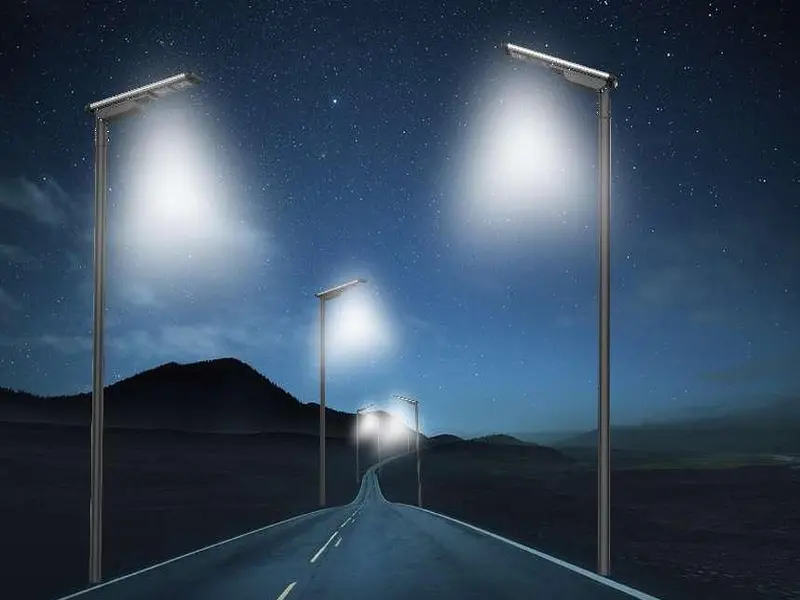
As cities and communities worldwide strive to adopt sustainable and cost-effective infrastructure, solar street lights have emerged as a leading […]
As the world increasingly turns its attention to sustainable energy solutions, solar street lights are emerging as a beacon of […]
Empowering Urban Infrastructure with Smart, Sustainable Illumination through advanced solar lighting solutions by Sungreat Energy. 1. Project Overview The Spanish […]