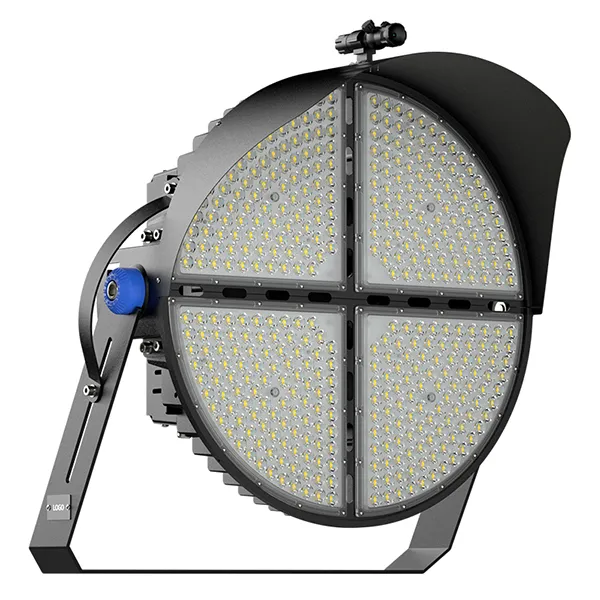


LED Stadium High Mast Light QC Series 400W–1600W
QC Series 400W–1600W modular LED stadium lights deliver 72,000–352,000 lm with 30°/60° optics and IP66 protection. Designed for stadiums, sports fields and high-mast EPC lighting projects.
- 400–1600W modular output supports stadium and high-mast projects
- 180–220 lm/W supports lower installed power and operating costs
- 30° and 60° optics match long-throw and wide-area coverage
- IP66 housing supports outdoor operation from −40°C to +65°C
- Adjustable Power & CCT for Flexible Sports Lighting
QC Series 400W–1600W Modular LED Stadium & High-Mast Light
The QC Series provides 400W–1600W output, approximately 72,000–352,000 lm and 180–220 lm/W for sports fields, stadiums and large-area high-mast lighting projects. Its modular structure supports different power configurations, while 30° and 60° optics can be selected or combined according to mounting height, projection distance and required coverage.
Lighting configurations are selected according to target lux, uniformity, pole height, fixture layout, glare control and operating environment—not wattage alone. Sungreat Energy can provide IES files, DIALux simulations and project-based fixture layouts to help EPC contractors confirm fixture quantity, optical distribution and aiming direction before installation, reducing dark areas, excessive light spill and costly onsite adjustments.
LED Stadium High Mast Light QC Series 400W–1600W Technical Specifications & Datasheet
| Model | QC | ||||||
| Watts(w) | 400W | 500W | 600W | 800W | 1000W | 1200W | 1600W |
| Lumens(Lumens) | 72000-88000LM | 90000-110000LM | 108000-132000LM | 144000-176000LM | 180000-220000LM | 216000-264000LM | 288000-352000LM |
| Voltage(V) | AC 90-305V | AC 90-305V | AC 90-305V | AC 90-305V | AC 90-305V | AC 90-305V | AC 90-305V |
| Frequency | 50/60Hz | 50/60Hz | 50/60Hz | 50/60Hz | 50/60Hz | 50/60Hz | 50/60Hz |
| LED Chip | Philips/Osram/USA Bridgelux | ||||||
| Beam Angle | 30/60 | ||||||
| Power factor | >0.95 | ||||||
| CCT(K) | 2700K–6500K Adjustable CCT | ||||||
| CRI | >80 | ||||||
| Driver | Meanwell/SOSEN/Sungreat Energy | ||||||
| Lighting Efficiency | 180-220lm/w | ||||||
| Work Temperature | -40℃-+65℃ | ||||||
| Photocell | An optional photocell allows for security and energy saving | ||||||
| Motion Sensor | PIR Sensor, plug-in, and play Microwave Sensor, optional | ||||||
| Power and CCT controller | The wattage and CCT can be changed by selecting the option on the controller | ||||||
| Material | Aluminum+PC | ||||||
| IP Rating | IP66 | ||||||
| Mounting Height(Recommend) | 4-10m | 4-10m | 4-10m | 4-10m | 11-20m | 11-20m | 11-20m |
| Space between poles(Recommend) | 15-30m | 15-30m | 15-30m | 15-30m | 30-50m | 30-50m | 30-50m |
| Warranty | 5 Years | ||||||
Get a Free Quote for QC LED Sports Lights
400–1600W Modular Design + 180–220 lm/W – Built for Stadium, High-Mast and EPC Lighting Projects!
QC Series 400W–1600W LED Stadium & High-Mast Lighting Video
LED Stadium High Mast Light QC Series 400W–1600W Project & Application Cases
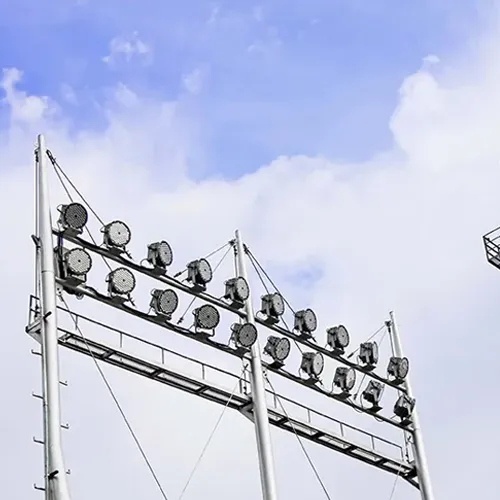
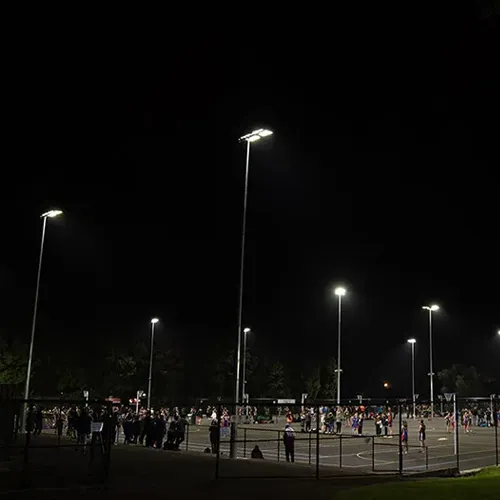
The QC Series supports 400W–1600W modular LED lighting for sports venues and large-area high-mast projects. Power, 30°/60° optics and fixture aiming can be selected according to mounting height, projection distance, target illumination and the actual site layout.
| Project Type | Reference Configuration | Main Project Focus |
|---|---|---|
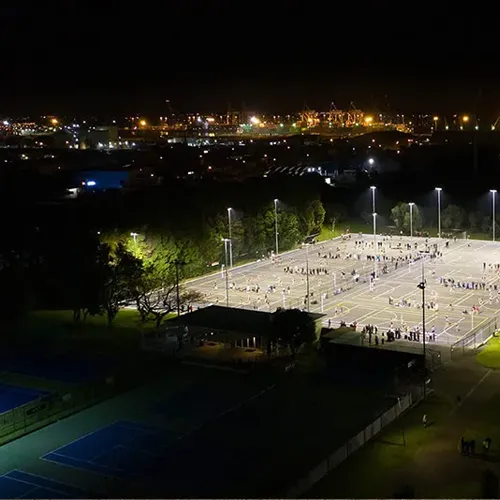
| Tennis, Padel & Training Courts | 400W–800W, 4–10m | Uniformity, player glare, dark corners and boundary light spill |
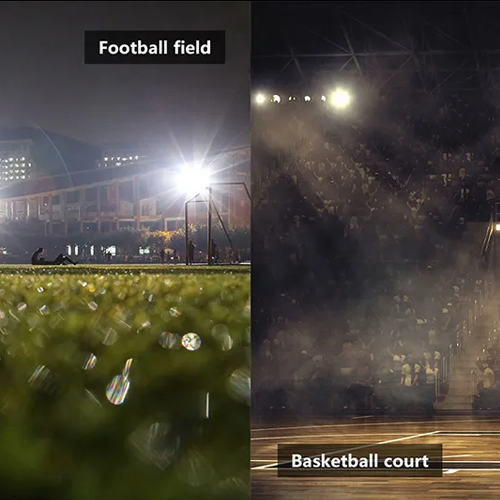
| Football Fields & Stadiums | 800W at 4–10m; 1000W–1600W at 11–20m | Long-distance projection, aiming accuracy, target lux and field uniformity |
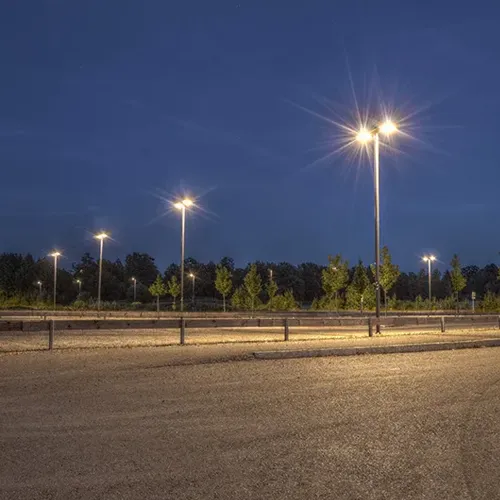
| Ports, Airport Aprons & Logistics Areas | 1000W–1600W, 11–20m | Wide-area visibility, glare control, spill light and high-mast operation |
For tennis, padel and training courts, increasing average lux alone does not guarantee better visibility. Fixture position, beam distribution and aiming should provide consistent illumination across the playing area while limiting direct glare and excessive light beyond the court.
For football fields and stadiums, 30° and 60° optics can be used individually or combined to cover different projection distances. Fixture quantity and wattage should be determined together with pole layout, mounting height, target lux and uniformity requirements.
For ports, airport apron areas and logistics sites, the design focus shifts toward large-area visibility, controlled light distribution and accurate high-mast aiming. Project-specific IES files and DIALux simulations can be used to verify fixture quantity, optical distribution and aiming before installation.
LED Stadium High Mast Light QC Series 400W–1600W Production Process
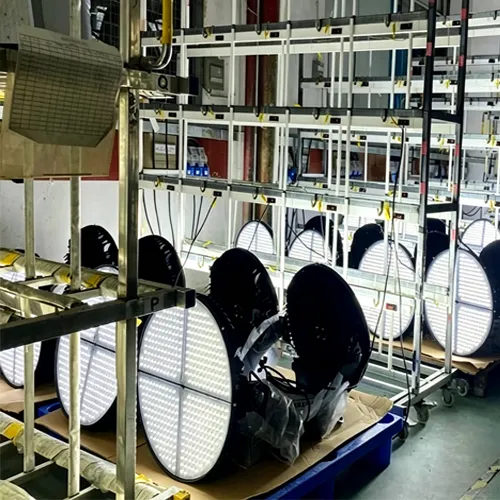
Module & Driver Matching: LED modules, drivers and thermal components are selected according to the approved 400W–1600W configuration. Input voltage, driver output and module consistency are checked during preparation to support stable electrical performance across different power configurations.
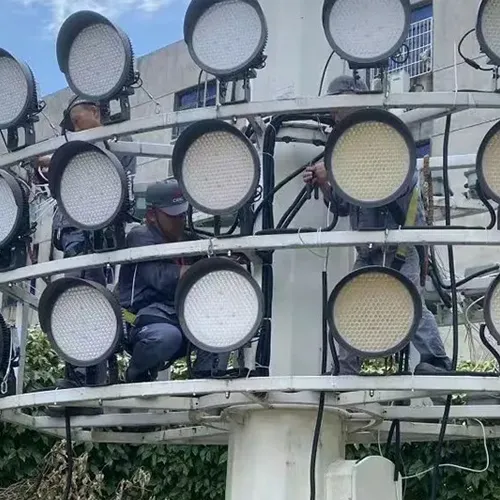
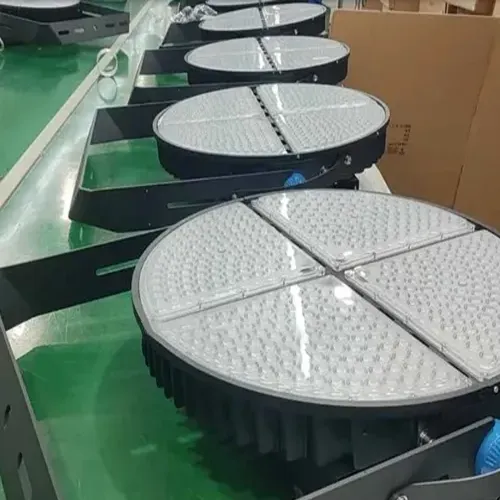
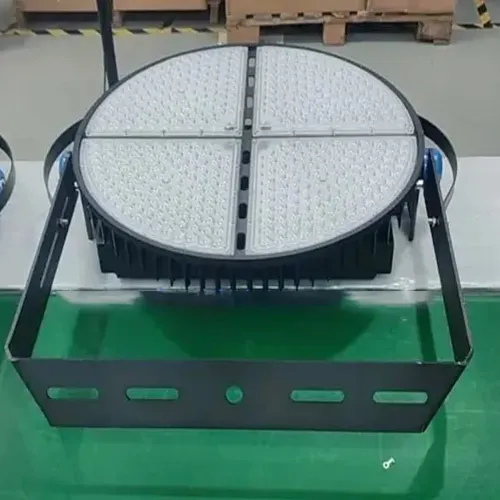
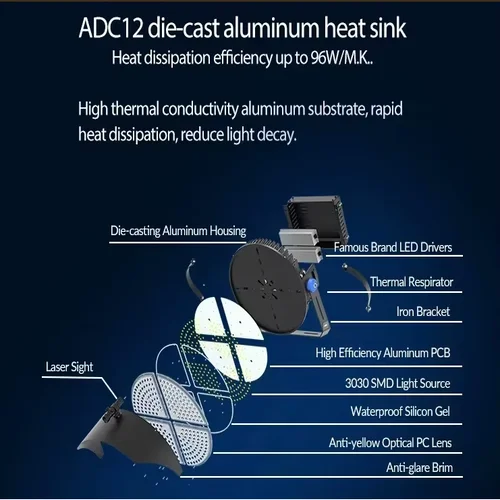
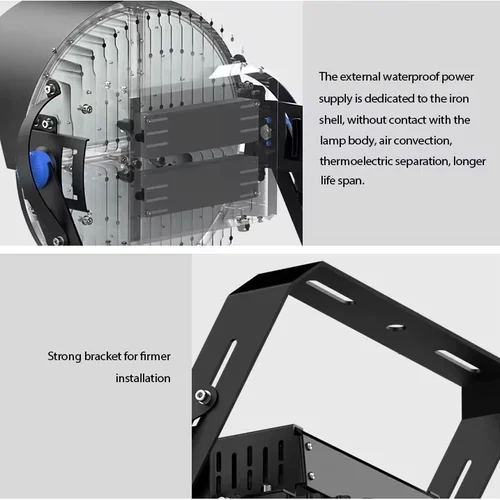
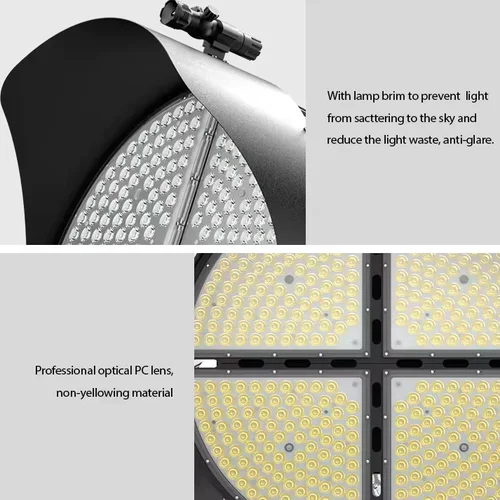
Optical & Structural Assembly: 30° or 60° lenses, modular heat sinks and adjustable mounting brackets are assembled according to the required optical configuration. Module positioning and bracket movement are checked to support accurate onsite aiming, while sealing components and cable-entry points are assembled according to the IP66 protection design.
Electrical & Protection Configuration: Driver type, grounding connections, adjustable power/CCT functions and surge-protection options are configured according to the approved order. QC projects can be supplied with 10kV, 20kV or project-specific surge protection depending on the electrical requirements of the installation.
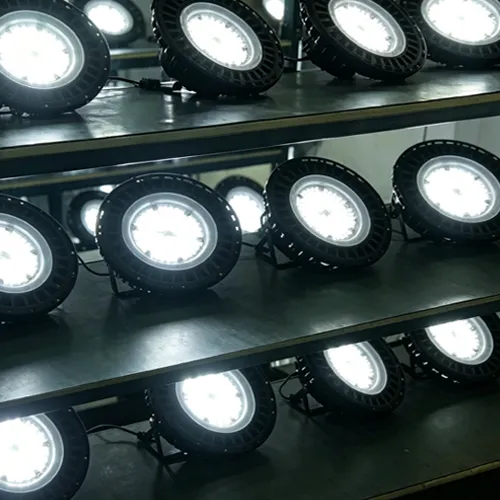
Testing & Final Verification: Functional checks cover lighting operation, power input, PF, control functions and module operation. Selected units can undergo 48-hour aging, thermal and photometric testing. Before packing, model, wattage, 30°/60° optics, driver configuration, surge-protection option and ordered accessories are verified against the project requirements.

LED Stadium High Mast Light QC Series 400W–1600W Overview & Details
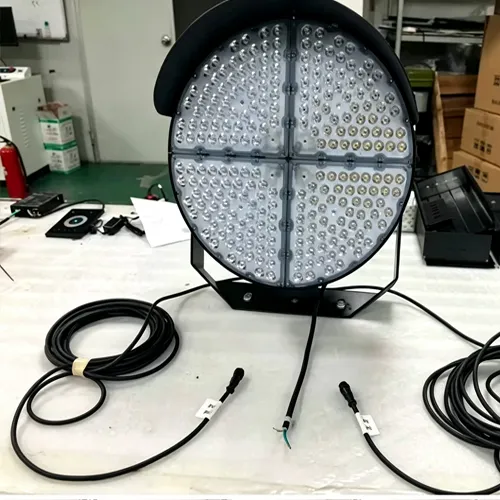
The QC Series is a modular high-power LED lighting platform covering 400W–1600W, approximately 72,000–352,000 lm and 180–220 lm/W. Different LED-module combinations allow the fixture power to be matched to the scale of the project, while 30° and 60° optics and an adjustable mounting bracket support different projection distances and aiming requirements.
| Product Detail | Customer Value |
|---|---|
| 400W–1600W modular configurations | Allows fixture power to be selected according to different project sizes and lighting layouts |
| 72,000–352,000 lm, 180–220 lm/W | Provides high light output while helping control total installed power |
| 30° / 60° optical options | Supports long-throw, wide-area and mixed-beam lighting layouts |
| AC 90–305V, PF >0.95 | Supports different project input voltages and high-power electrical systems |
| Adjustable Power & 2700K–6500K CCT | Provides flexible output and color-temperature settings for different operating requirements |
| IP66, −40°C to +65°C | Supports outdoor operation in demanding weather and temperature conditions |
| 10kV / 20kV / Project-Specific Surge Protection | Allows electrical protection configuration to be matched to different high-mast projects |
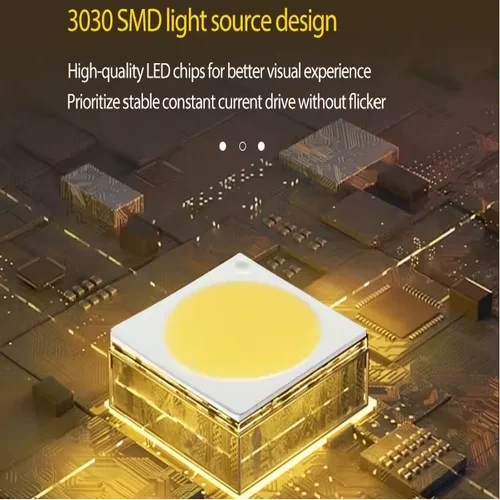
Meanwell, SOSEN or Sungreat driver options can be configured according to project requirements, while Philips, Osram or Bridgelux LEDs provide flexibility for different tender and component specifications. Fixture dimensions, module quantity, driver configuration and bracket structure vary with the selected wattage.
For EPC projects, the final QC configuration should be selected as a complete combination of power, optics, driver, control functions, surge protection and mounting requirements rather than by wattage alone.


LED Stadium High Mast Light QC Series 400W–1600W Packaging & Delivery
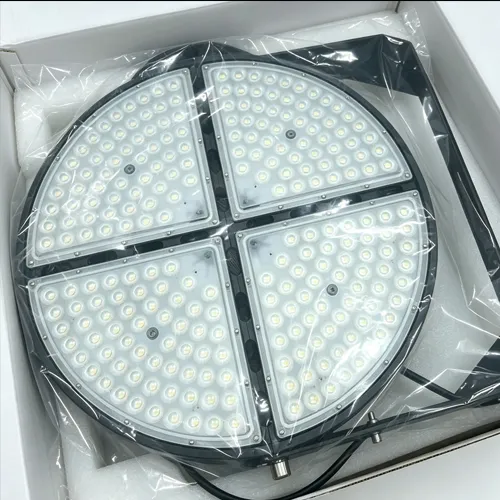
Protective Packaging: QC Series high-power fixtures are secured in reinforced export cartons with custom EPE protection around the LED modules, lenses, drivers and adjustable brackets. Pallets or wooden reinforcement can be added according to fixture size, order quantity and transport route to reduce movement, impact and stacking pressure during long-distance delivery.
Shipment Verification: Before packing, the model, wattage, 30°/60° beam angle, driver configuration, accessories and quantity are checked against the approved order. Clear carton marks and packing lists help EPC contractors identify different configurations and distribute the correct fixtures to each installation position.
Project Delivery Support: Package dimensions, gross weight, CBM and loading plans can be confirmed before dispatch. Packing photos or videos can also be provided upon request, helping buyers verify the shipment, arrange freight and customs clearance, and prepare unloading and high-mast installation schedules.



FAQ of LED Stadium High Mast Light QC Series 400W–1600W
The QC Series uses a modular structure across its 400W–1600W configurations, delivering approximately 72,000–352,000 lm for sports fields, stadiums and high-mast applications.
For fixtures installed at elevated positions, maintenance involves more than the cost of replacement parts. Access may require lifting equipment, additional labor and temporary interruption of the illuminated area. A modular structure makes LED modules, drivers and thermal components more manageable for inspection and servicing than treating the complete high-power fixture as a single assembly.
The modular architecture also allows different power configurations to be built for different project sizes, while 30° and 60° optics can be selected according to projection distance and coverage requirements.
For EPC projects, the benefit is therefore not simply higher wattage. The goal is to balance lighting performance, serviceability and long-term operating requirements before installation.
The choice between 30° and 60° optics depends mainly on projection distance, mounting height, fixture position and the area that each luminaire needs to cover.
A 30° beam concentrates more light over a longer distance, making it more suitable for high-mast positions or fixtures aimed toward the center and far side of a field. However, using narrow beams too aggressively can create bright hotspots and uncomfortable glare if the aiming angle is not properly controlled.
A 60° beam spreads the light across a wider area and is often used for zones closer to the pole, field edges or supplementary coverage. If the beam is too wide for the required projection distance, more light may fall outside the target area while illumination at the far side becomes insufficient.
Many stadium and sports-field projects therefore use a combination of 30° and 60° optics rather than one beam angle throughout the entire installation.
For the QC Series, the final optical combination should be verified according to the 4–20m mounting range, pole positions, target lux, uniformity, glare and boundary light spill. IES files and DIALux simulation can be used to confirm beam distribution and aiming before installation.
A DIALux simulation provides the planned fixture positions, beam distributions and aiming directions, but the final result also depends on how accurately the luminaires are installed and adjusted on site.
For the QC Series, 30° and 60° optics and the adjustable mounting structure should be installed according to the approved lighting layout. Even a small change in bracket angle or aiming direction can shift the beam away from its intended area, creating bright zones, dark areas or unwanted spill outside the field.
Before installation, the fixture position, wattage, beam angle and aiming direction should be clearly identified for each mounting point. After installation, the lighting system should be checked at night using a lux meter across the required measurement grid and compared with the design target.
If the measured lux or uniformity differs from the simulation, fixture aiming should be adjusted before changing wattage or adding more luminaires. This helps solve installation errors first and avoids unnecessary additional fixtures.
Sports lighting can appear stable to the human eye but still produce flicker, dark bands or color variation when recorded with high-frame-rate cameras or fast shutter speeds. For venues involving live broadcast, sports photography or slow-motion replay, camera performance should therefore be checked separately from normal visual lighting requirements.
The QC Series provides 400W–1600W configurations, CRI >80 and adjustable CCT within the 2700K–6500K range. This allows the color temperature to be adapted to different venue requirements, but adjustable CCT alone does not confirm broadcast suitability.
For camera-based projects, the selected LED driver, flicker performance, frame rate, shutter speed, vertical illuminance and color consistency should be confirmed before the final configuration is approved.
If professional broadcast or high-speed recording is required, the required flicker limits and camera specifications should be provided during project design so that the appropriate driver and lighting configuration can be evaluated before production.
The electrical system for 400W–1600W stadium lights should not be sized from fixture wattage alone. LED drivers can draw a short inrush current when the fixtures are switched on, so a circuit that appears sufficient under normal operating load may still experience nuisance tripping when multiple high-power luminaires start simultaneously.
The QC Series operates at AC 90–305V with a power factor above 0.95, but the final branch-circuit design should also consider the selected driver, fixture quantity per circuit, input current, inrush characteristics, cable length, breaker or contactor capacity and the site’s actual supply voltage.
This becomes especially important when several 1000W–1600W fixtures are installed on the same high-mast or switched on as one lighting group.
For EPC projects, the driver configuration and electrical distribution should therefore be confirmed before installation. Circuit loading, phase balance, grounding and switching arrangements should be designed according to the final fixture quantity, driver data and local electrical requirements rather than estimated from total LED wattage alone.
Not necessarily. A sports venue may require different lighting levels for training, routine maintenance, recreational use and official competition. Operating the complete high-mast system at maximum output for every activity can increase unnecessary energy consumption and may also increase off-site light exposure.
The QC Series covers 400W–1600W fixtures and supports adjustable wattage and CCT control options. Depending on the selected driver and control configuration, the lighting system can be planned in separate groups or operating modes so that only the required fixtures and output levels are used for each activity.
For example, routine training may not require the same lighting level as a professional match, while maintenance or field preparation may only require selected lighting zones. Competition mode can then operate according to the full lux and uniformity targets defined by the project.
For EPC projects, the required operating modes, fixture groups, switching method and dimming requirements should be confirmed before production. This allows the driver and control configuration to be matched to how the venue will actually be operated after installation.
Related Products



Related News
1. Executive Summary a. Project Background To support the Sultanate of Oman’s national vision for sustainable infrastructure and modern urban […]
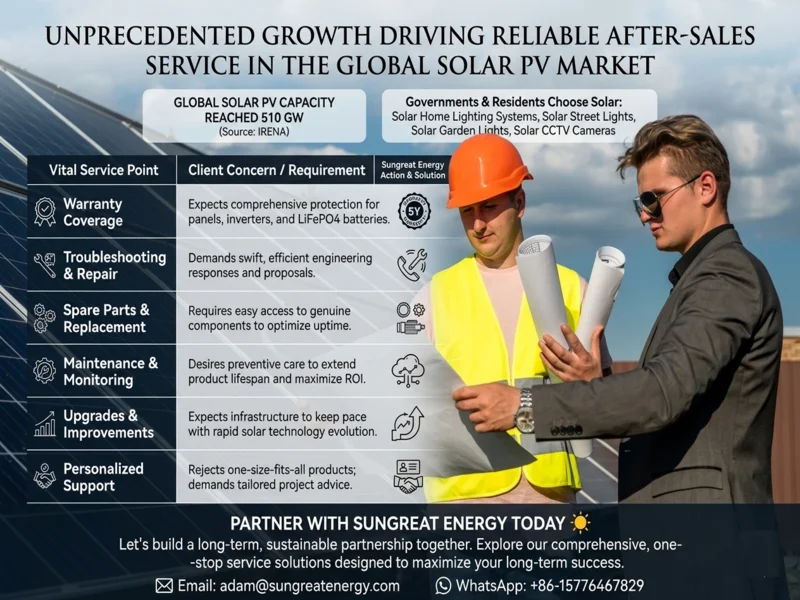
As the global shift towards Solar energy gains momentum, the solar power industry has experienced unprecedented growth. Data from the […]
LED street lighting has transformed urban landscapes globally, promising massive energy savings, reduced maintenance, and superior light quality. For urban […]