Upgrading to LED street lights is one of the smartest investments a municipality, real estate developer, or business can make. LEDs offer massive energy savings, brighter illumination, and lower maintenance costs. But here’s the catch: not all LED street lights are created equal. The market is flooded with cheap, poorly manufactured fixtures that fade prematurely, fail under harsh weather, or create dangerous glare. When you’re buying lighting that sits 20 to 40 feet in the air, replacing a failed fixture isn’t just expensive—it’s a logistical nightmare. To ensure you’re making a sound investment, it’s crucial to align your evaluation with the standards set by international lighting organizations and industry authorities. So, how do you separate the best from the rest? Here is a comprehensive guide on how to check the quality of LED street lights before you make a purchase.
1. Check the Luminous Efficacy (Lumens vs. Watts)

Many buyers make the mistake of looking only at wattage. Watts tell you how much power the light consumes; lumens tell you how much light it produces. The golden metric is Luminous Efficacy, measured in lumens per watt (lm/W).
- What to look for: A high-quality LED street light should have an efficacy of at least 130–150 lm/W. If a manufacturer is offering a 100W street light that only produces 10,000 lumens (100 lm/W), the technology is outdated, and you are wasting energy.
2. Demand IES Files and Photometric Data
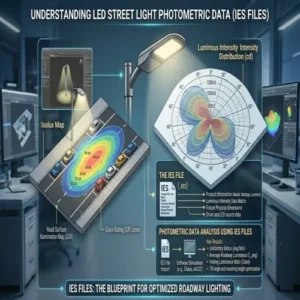
A light bulb might be bright, but is it lighting the right area? Street lighting requires precise optical control to illuminate the road without spilling light into people’s windows or the night sky.
- What to look for: Ask the manufacturer for IES (Illuminating Engineering Society) files. The IES is the premier lighting authority in North America, and their files allow you to run photometric simulations to see exactly how the light will hit the ground. Globally, look for alignments with CIE (International Commission on Illumination) standards for light distribution. Look for Type III or Type IV distributions, which are standard for street and roadway lighting.
3. Scrutinize the IP and IK Ratings (IEC Standards)
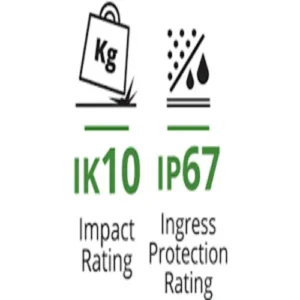
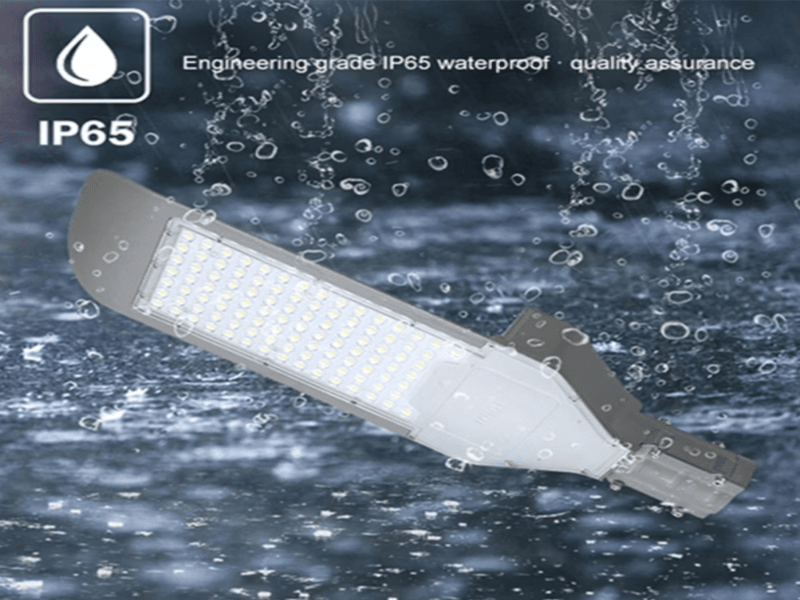
Street lights live in harsh environments. They face freezing rain, dust storms, and occasional vandalism. This is where Ingress Protection (IP) and Impact Protection (IK) ratings come in—both standardized by the IEC (International Electrotechnical Commission).
- IP Rating (Water/Dust): Look for a minimum of IP65 (dust-tight, protected against water jets) or ideally IP66/IP67 for areas with heavy rainfall or flooding.
- IK Rating (Impact): The IK rating measures mechanical impact resistance. For street lights, you should demand IK08 (protection against 5-joule impacts) or IK10 (protection against 20-joule impacts). A low IK rating means the lens will shatter easily.
4. Investigate the LED Chip Brand

The LED chip is the engine of the street light. Unknown, cheap chips degrade quickly, leading to rapid lumen depreciation (the light dims well before its rated lifespan ends).
- What to look for: Top-tier chip manufacturers include Nichia, Cree, Lumileds (Philips), Osram, and Samsung. If the manufacturer cannot specify the chip brand or claims “proprietary chips,” it is likely a low-grade component that will fail prematurely.
5. Don’t Ignore the Driver (The Heart of the Light)
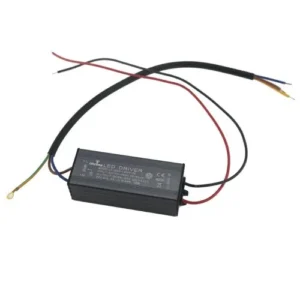
If the LED chip is the engine, the driver is the transmission. A massive percentage of LED failures are not due to the chips burning out, but the driver failing.
- What to look for: Ask for branded drivers like Mean Well, Inventronics, or Moso. Furthermore, check the driver’s operating temperature range. A high-quality driver should comfortably operate in ambient temperatures from -40°C to at least +50°C (-40°F to 122°F).
6. Look at the Heat Sink (Thermal Management)

Heat is the enemy of LED longevity. If heat isn’t pulled away from the LED chips, the light will suffer from rapid lumen depreciation and color shifting.
- What to look for: Feel the back of the fixture. High-quality street lights use robust, fin-style aluminum heat sinks designed for maximum convection. Be wary of “plastic-bodied” street lights with poor heat dissipation, or lights with completely sealed housings that trap heat. Industry publications like LEDs Magazine frequently highlight thermal management as the primary differentiator between premium and sub-par outdoor fixtures.
7. Check the L70 Lifespan and LM-80/TM-21 Reports
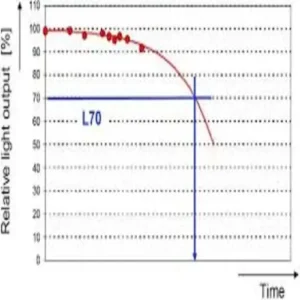
LEDs don’t “burn out” like traditional bulbs; they fade over time. The industry standard for an LED’s useful life is L70—the number of hours it takes for the light to fade to 70% of its original brightness.
- What to look for: A quality street light should have an L70 rating of 50,000 to 100,000 hours. However, don’t just take the manufacturer’s word for it. Ask for their LM-80 (tests the LED chips over 6,000+ hours) and TM-21 (extrapolates that data to estimate long-term life) reports to prove their longevity claims.
8. Assess Glare and Color Temperature (CCT)
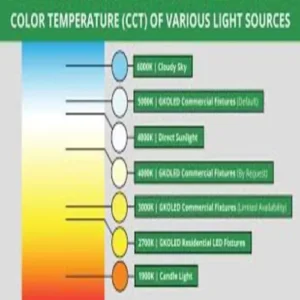
A street light that blinds drivers is just as dangerous as a dark road. Glare is often caused by poor lens design or a Color Temperature (CCT) that is too harsh.
- What to look for: For street lighting, a CCT of 3000K to 4000K is ideal. DarkSky International (formerly the IDA) strongly recommends 3000K or lower to minimize blue light emission, which causes dangerous glare and disrupts wildlife and human circadian rhythms. Additionally, check the UGR (Unified Glare Rating); a lower UGR indicates less disability glare for drivers.
9. Verify Certifications and Warranties
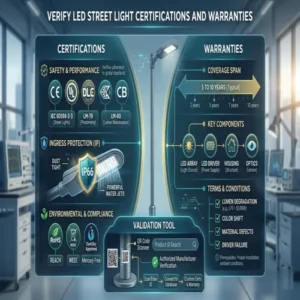
Certifications are your legal proof of quality and safety.
- What to look for: Minimum certifications should include CE, RoHS, and UL/ETL (for North American markets). If you are applying for utility rebates, ensure the fixture is listed on the DLC (DesignLights Consortium) qualified products list.
- The Warranty: A high-quality manufacturer will offer a 5 to 10-year warranty. Read the fine print: does the warranty cover shipping and labor, or just the replacement fixture?
Trusted Industry Resources for Further Research
When evaluating manufacturers, it helps to consult the organizations and publications that set the benchmarks for the global lighting industry:
- IES (Illuminating Engineering Society): The recognized authority on lighting standards in North America. Look up their RP-8-18 standard for roadway lighting.
- CIE (International Commission on Illumination): The international body that sets standards for light, color, and vision globally.
- IEC (International Electrotechnical Commission): The organization that defines the global IP and IK rating systems (IEC 60529 and IEC 62262).
- DarkSky International: The leading authority on light pollution. Their “Fixture Seal of Approval” ensures a street light is environmentally responsible.
- LEDs Magazine: The leading trade publication for the LED industry, offering unbiased technical reviews, case studies, and market insights.
- Lux Review: A highly respected global magazine for lighting professionals, covering product quality and technological advancements.
The Bottom Line
Checking the quality of an LED street light comes down to looking past the price tag and examining the data. By focusing on efficacy, component brands, environmental protection (IP/IK), and verified performance data (LM-80/IES), you can ensure your next lighting project is safe, efficient, and built to last for decades.
Remember: The bitterness of poor quality remains long after the sweetness of low price is forgotten—especially when you’re renting a boom lift to replace a failed fixture on a 30-foot pole!