




In the remote agricultural landscapes of Botswana, the bridge between a failing power supply and industrial productivity is built on one thing: Trust.
This case study details how Sungreat Energy successfully engineered a high-capacity off-grid system for a client who wasn’t just a customer, but a seasoned electrical engineer. It is a story of moving from technical skepticism to a win-win partnership through data-driven transparency and redundant design.

1. Project Background
-
Country: Botswana
-
Application: Comprehensive Off-Grid Private Farm
-
Infrastructure Powered: Container houses, fully automated irrigation systems, oil presses, and heavy-duty crushers.
-
Scale: 85KW+ Photovoltaic System
-
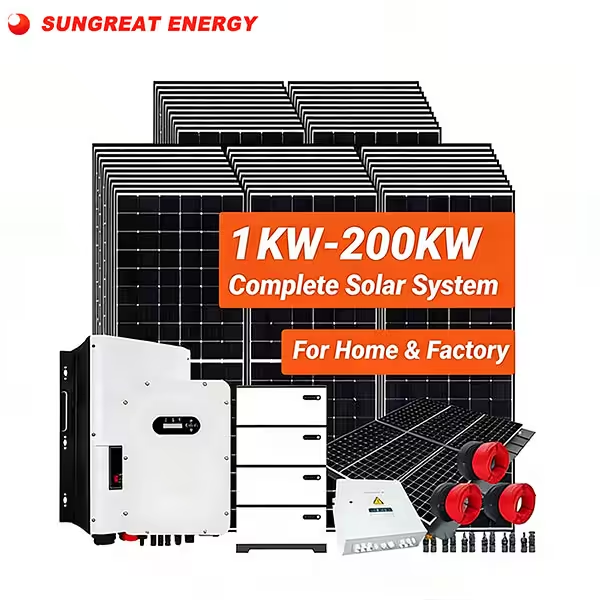
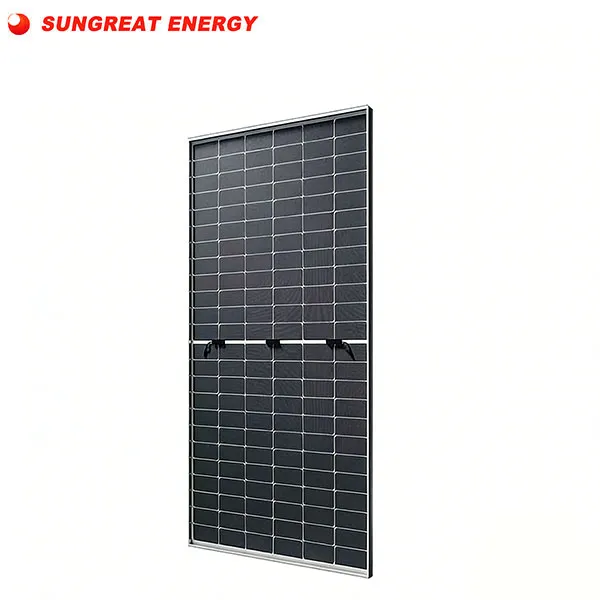
Core Hardware: 136 × 630W High-Efficiency 210R Modules + 3 × 30KW Parallel Inverters.
1.1 Project Timeline
-
Project Start Date: February 10, 2024
-
Project Completion Date: September 25, 2024
-
Total Project Duration: 7.5 Months (approx. 228 Days)
-
Procurement & Supply Lead Time: February 2024 – May 2024 (12 Weeks)
-
On-Site Installation Phase: June 2024 – August 2024 (10 Weeks)
-
Testing, Commissioning & Handover: September 2024 (3 Weeks)
According to the International Energy Agency (IEA), off-grid solar is no longer a niche solution; it is a globally recognized driver of rural economic growth. In Botswana, where grid extension costs are prohibitive, solar autonomy is the only path to modernizing agriculture.
2. The Customer Profile
Our client presented a unique challenge. As an electrical engineer, he had personally designed the farm’s automated irrigation and container-living modules. However, as he introduced heavy machinery like oil presses, his power demand surged to 64KW.
He wasn’t looking for a “sales pitch.” He was looking for kilowatt accuracy. Having previously been “heartbroken” by local modules that were labeled 550W but only produced 510W, he approached the project with deep-seated trust issues regarding “False Labeling.”
As noted by the International Renewable Energy Agency (IRENA) in their analysis of renewable quality infrastructure, the lack of standardized testing in local markets often leads to the exact “power deficit” our client experienced.
3. Solution Design
During the design phase, we proposed a significant shift: abandoning the client’s preferred 550W modules for the 210R Half-Cell 630W technology.
3.1 630W Efficiency Edge
By utilizing the 210R cell architecture, we provided a module that is only 104mm longer than a standard 550W board but delivers 80W of additional power. This technical pivot addressed several logistical hurdles.
| Parameter | 550W Module (182) | 630W Module (210R) | Conclusion |
| Total Power for 85KW | ~155 pcs | ~136 pcs | 19 fewer modules |
| Mounting Hardware | Higher quantity | Reduced quantity | Lower BOS Cost |
| Shipping Cost | Higher per Watt | Lower per Watt | Maximum ROI |
Research from the Fraunhofer Institute for Solar Energy Systems (ISE) confirms that high-wattage modules (600W+) are essential for reducing the Levelized Cost of Energy (LCOE) in off-grid industrial applications.
3.2 Inverter Redundancy
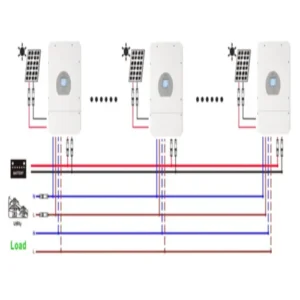
The client initially requested a single 90KW inverter. However, we suggested a parallel configuration of three 30KW inverters.
In remote Botswana, a single point of failure is a catastrophe. If a 90KW unit fails, the entire farm—irrigation, oil pressing, and living quarters—goes dark. With our redundant design, if one unit requires maintenance, the farm still operates at 66% capacity (60KW), keeping the essential machinery running. This aligns with NREL’s (National Renewable Energy Laboratory) best practices for microgrid resilience, emphasizing modularity over centralization.
4. The Killer Approach
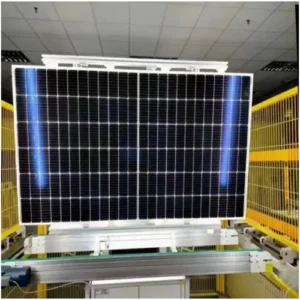
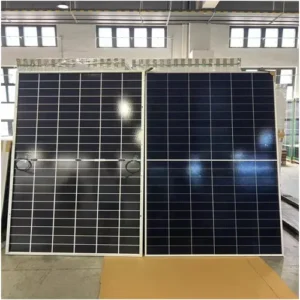
To prove the 630W modules would deliver exactly what was promised, we didn’t use brochures—we used IV Power Testing.
We demonstrated our factory’s Double EL Test and IV Scanning process via live video. By monitoring Pmax, Vmp, and Imp under standard lighting conditions (1000 W/m²), we provided the “Hardcore Electrician” with the raw data he craved.
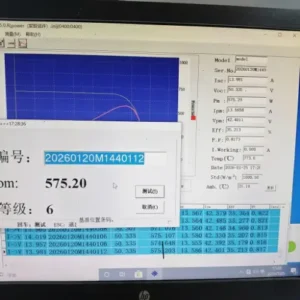
Solar Power World Magazine emphasizes that transparency in testing is the key to building long-term solar partnerships. By offering a personalized commitment to sample and film the actual test of his order before shipping, we moved from “distrust” to “signed contract.”
5. Expert Insight
This Botswana project underscores a vital lesson for the industry: for expert clients, you cannot sell promises; you must sell certainty.
-
Modular Thinking: Help farmers avoid downtime risks by designing for failure (redundancy).
-
Data Over PowerPoint: Provide IV curves and EL test results to validate performance.
-
BOS Optimization: Show how higher-wattage modules save more than just space—they save international shipping and installation labor.
6. Project and Future Outlook
-
Stability: High-surge machinery (crushers/presses) operates smoothly due to the robust parallel inverter setup.
-
Yield: The farm now has a stable 85KW+ power base for 24/7 automated irrigation.
-
Partnership: The client, once a skeptic, is now a long-term technical collaborator for future expansions.
As the World Bank reports in their Off-Grid Solar Market Trends, systems like this are the backbone of the “Agri-PV” revolution. By providing high-efficiency hardware and transparent engineering, Sungreat Energy continues to turn the lights on across the African continent.
#SolarPowerBotswana #OffGridSolar #AgriculturalTechnology #SungreatEnergy #RenewableEnergy #PVTech #CleanEnergyAfrica #SolarEngineering #210RTechnology #SustainableFarming