





1. What Is a TOPCon Solar Panel?
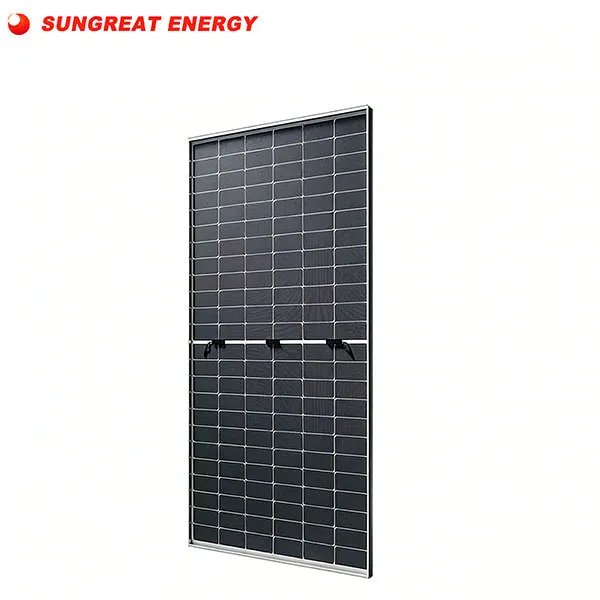
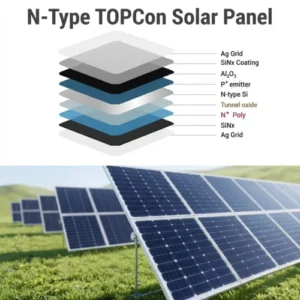
A TOPCon solar panel is an advanced photovoltaic module that incorporates a thin tunnel oxide layer and a polycrystalline silicon layer on the rear side of the solar cell.
1.1. N-Type TOPCon Module?
An N-type TOPCon module utilizes N-type silicon wafers (doped with phosphorus) as its base substrate rather than traditional P-type silicon (doped with boron). Combined with Tunnel Oxide Passivated Contact technology, N-type TOPCon modules significantly reduce carrier recombination, allowing more electrons to be converted into usable electricity.
1.2. TOPCon Works?
- Ultra-Thin Oxide Layer: A microscopic silicon oxide layer (~1 to 2 nanometers) is applied to the cell’s rear surface.
- Passivated Contacts: This layer acts as a selective barrier—allowing charge carriers (electrons) to tunnel through while preventing surface recombination.
- Higher Voltage Output: By minimizing energy loss at the contact points, TOPCon cells achieve higher open-circuit voltage ($V_{oc}$) and superior overall conversion efficiency.
2. Key Advantages
(N-Type TOPCon Modules)
Compared to traditional PERC panels, N-type TOPCon modules offer clear technical and financial benefits for commercial projects:
2.1. Higher Module Efficiency
(22.5%+)
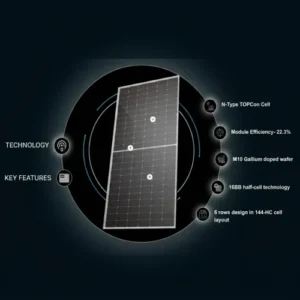
While standard PERC panels average around 20%-21.5% efficiency, mass-produced TOPCon solar panels easily exceed 22.5%-23% efficiency. This means higher power output per square meter, reducing land, racking, and BOS (Balance of System) costs.
2.2. Temperature Coefficient
In high-temperature environments (such as the Middle East, Southeast Asia, or Africa), standard solar panels lose efficiency rapidly as temperatures rise. TOPCon panels feature an exceptionally low temperature coefficient of -0.30%/℃ (compared to PERC’s -0.35%/℃), ensuring higher energy yield in extreme heat.
2.3. Near-Zero (LID)
Because N-type silicon uses phosphorus instead of boron, N-type TOPCon modules do not suffer from Boron-Oxygen complex degradation. This eliminates initial Light-Induced Degradation (LID), protecting your power generation performance from Day 1.
2.4. Superior Bifaciality Factor
(80%-85%)
TOPCon cells boast a higher bifacial rate than PERC (80%–85% vs. 70%). When integrated into double-glass module designs, they absorb significantly more reflected sunlight from ground surfaces (sand, concrete, snow), boosting overall system output by an extra 10%–30%.
2.5. Lower Degradation
(Longer Warranty)
TOPCon modules degrade at a much slower rate over time—typically ≤1.0% in Year 1 and ≤0.4% annually thereafter. High-grade solar panels enable manufacturers to offer 25-to-30-year power performance warranties with confidence.
3. TOPCon vs. PERC vs. HJT
(A Quick Comparison)
| Feature / Metric | P-Type PERC | N-Type TOPCon | HJT (Heterojunction) |
|---|---|---|---|
| Cell Efficiency (Mass Production) | 21.5% – 22.5% | 24.5% – 25.5% | 24.8% – 25.8% |
| Module Efficiency | 20.0% – 21.5% | 22.0% – 23.0% | 22.0% – 23.2% |
| Temperature Coefficient | -0.35% / ℃ | -0.30% / ℃ | -0.26% / ℃ |
| Bifaciality Rate | 70% | 80% – 85% | 85% – 90% |
| Manufacturing Cost / Capex | Lowest | Cost-Effective (Compatible with PERC lines) | High |
| Commercial Adoption | Phasing Out | Current Market Mainstream | Emerging / High Price Premium |
4. Why Switching to TOPCon
For B2B procurement officers and EPC contractors, choosing a TOPCon solar panel solution is not just about adopting new technology—it is a strategic decision to lower the Levelized Cost of Electricity (LCOE).
- Lower BOS Costs: Higher power density means fewer panels, cables, mounting structures, and inverter ports required per megawatt.
- Higher Lifetime Generation: Lower thermal degradation and reduced yearly attenuation translate directly to more kilowatt-hours generated over a 25-year lifecycle.
5. Your Trusted Partner
(N-Type TOPCon Modules)
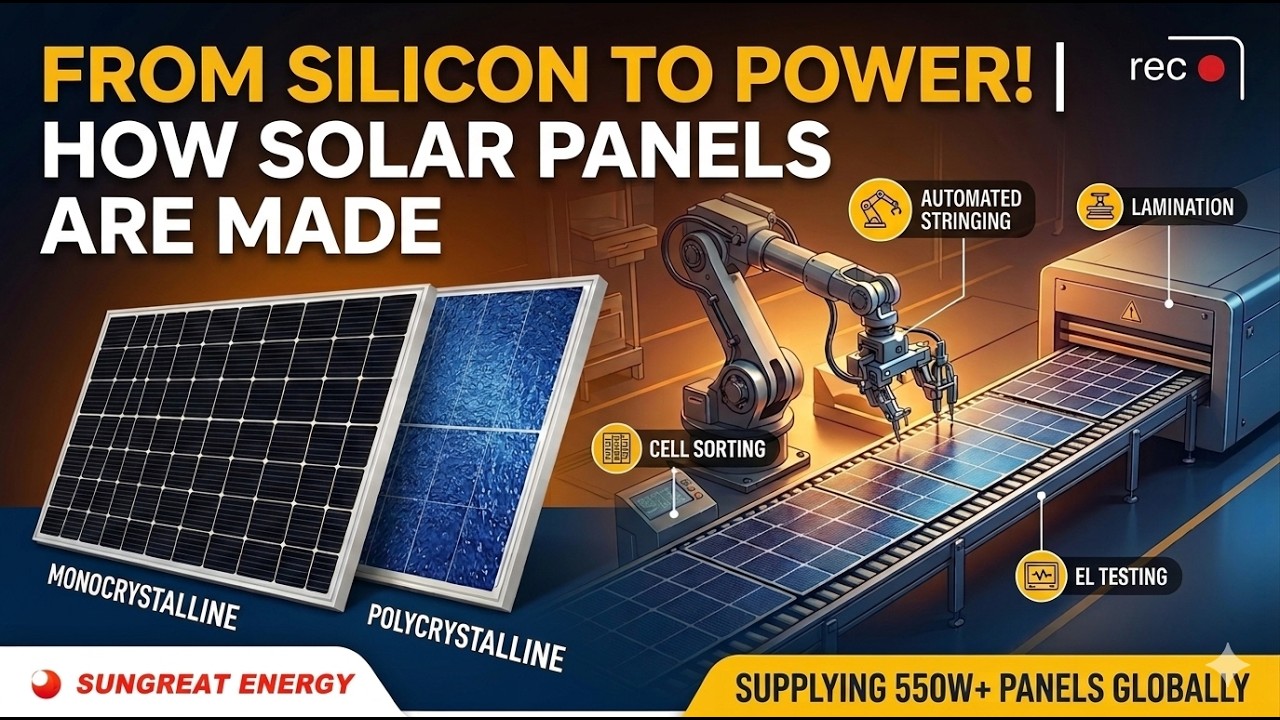
At Sungreat Energy, we engineer high-reliability N-type TOPCon solar panels (SP Series) tailored for extreme outdoor operational conditions across global markets.
- High Efficiency Range (5W – 710W): Covering diverse project sizes from specialized off-grid applications to large commercial rooftop and utility installations.
- Tested for Harsh Environments: Featuring IP67/IP68 junction boxes and robust anodized frames engineered to handle heavy sandstorms, tropical humidity, and ambient operating temperatures up to 65°C.
- Full OEM/ODM Integration: Complete support for custom branding, specialized packaging, and seamless integration with our hybrid inverters, energy storage systems (BESS), and solar lighting systems.
5.1. Industry Conclusion
Understanding what is a TOPCon solar panel is crucial as the photovoltaic industry transitions into the N-type era. By offering higher efficiency, better temperature tolerance, and lower LCOE, the N-type TOPCon module has firmly established itself as the smartest investment for modern solar projects.
Ready to upgrade your supply chain with tier-quality N-type TOPCon modules? [Contact Sungreat Energy Today] to consult with our technical engineers and receive a customized quote for your next project!