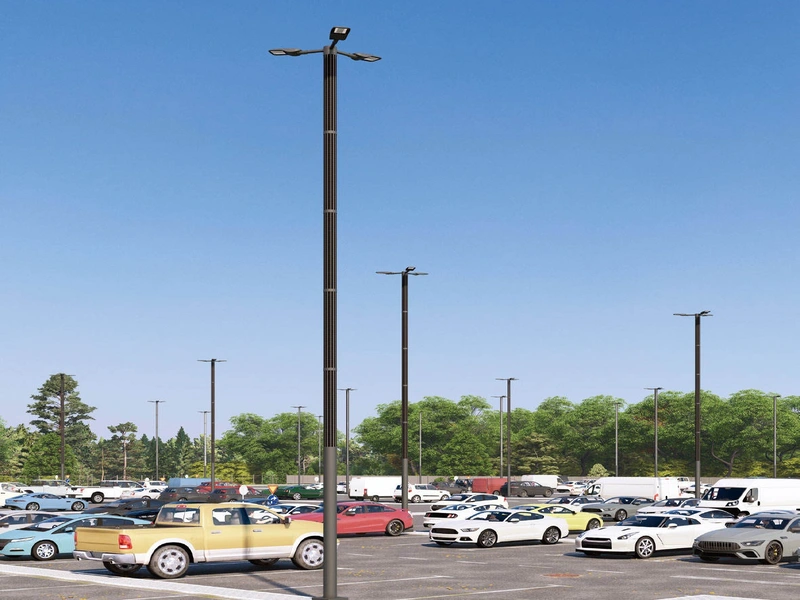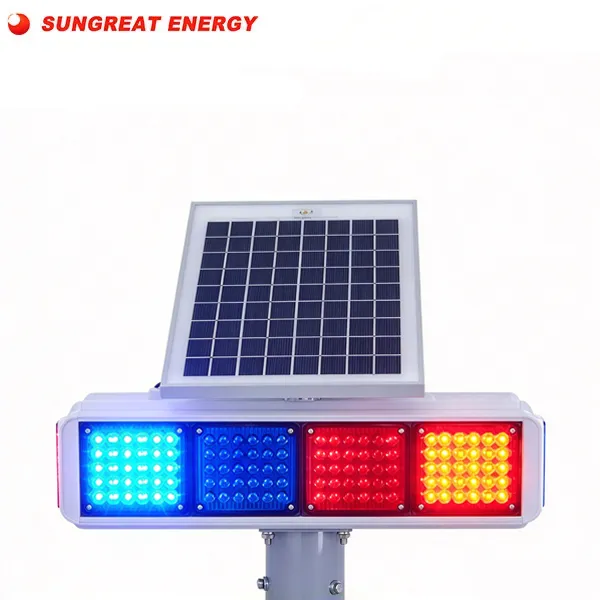

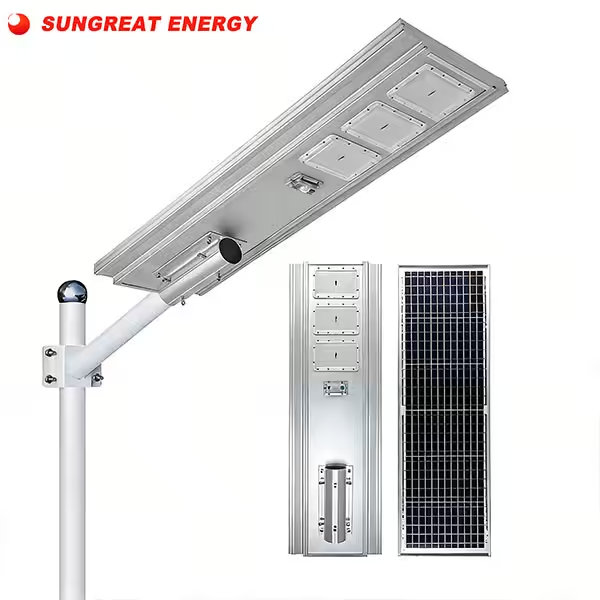




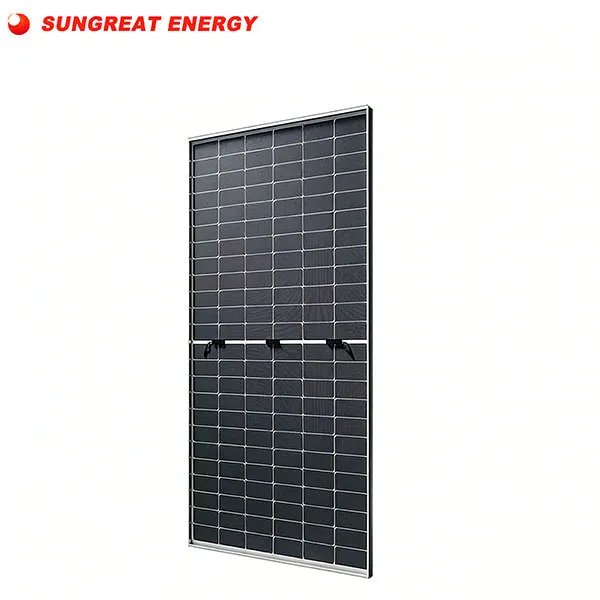

The global solar street lighting market is expanding rapidly, with smart municipal grids and urban developments driving a compound annual growth rate (CAGR) of over 15%. At the heart of every dependable autonomous lighting system lies its energy storage unit.
Selecting the right battery for solar street LED lights is crucial to ensuring reliable performance, structural safety, and long-term project longevity.
Drawing on over 15 years of engineering experience in the renewable energy sector, this comprehensive guide covers the critical technical and commercial factors required to choose the optimal battery system for commercial, industrial, or municipal infrastructure projects.
1. Reliable Pricing Realities
The global battery manufacturing landscape has shifted toward extreme price transparency, especially within the primary Chinese supply chain network. Today, the manufacturing costs of core raw components—such as lithium iron phosphate (LiFePO4) cells—are tightly indexed and public knowledge.

Industry Warning: Beware of suppliers offering product quotes significantly lower than the market average.
In the energy storage sector, extreme discounts almost always indicate compromised quality, such as the use of salvaged, graded, or B-grade cells with high internal resistance. Reliable suppliers maintain consistent, fair pricing models that reflect the true raw-material value of the product. Prioritizing strict quality baselines over low initial procurement costs protects your project from early field failures, high replacement overheads, and liability issues.
2. Decoupling Battery
While size and physical volume can change based on the internal spatial arrangement of a product, a battery’s weight remains an unalterable baseline metric for real capacity. If a manufacturer offers a battery with an identical capacity rating but at a drastically lower weight than industry standards, it is highly likely that the cells are under-capacity or mislabeled.
Consider the layout options required to accommodate different solar street light structural shapes (such as All-in-One vs. Split-type configurations). For example, a heavy-duty 12.8V 48Ah LiFePO4 battery pack typically weighs around 5.6 KG. Depending on the internal enclosure space of the light fixture, that identical mass can be engineered into distinct physical forms:
Configuration Dimensions Table
| Design Form | Width (mm) | Length (mm) | Thickness/Height (mm) | Total Weight (kg) | Ideal Integration |
| Size 1 (Slim Profile) | 300 | 265 | 25 | 5.6 | Built behind slim-line solar panels |
| Size 2 (Compact Block) | 275 | 135 | 72 | 5.6 | Internal pole bases or light cavities |
If a third-party manufacturer offers a 12.8V 48Ah battery pack that weighs significantly less than 5.6 KG, the physical properties of the materials suggest the rated capacity may be fraudulent. Always cross-examine volumetric size and weight metrics against the theoretical energy density of the chemistry used.
3. Verification of Certifications
A reputable battery manufacturer must back their structural claims with internationally recognized testing certifications. These documents ensure compliance with global transport safety laws, environmental restrictions, and electrical standards.
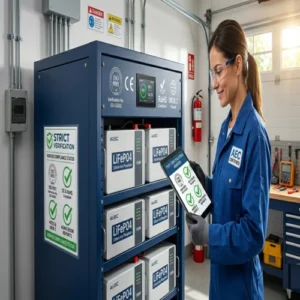
Before approving a supplier, ensure their technical dossier includes the following verified documentation:
-
ISO 9001: Validates that the factory operates under a verified, consistent quality management system.
-
CE & RoHS Marks: Guarantees compliance with European health, safety, and environmental protection standards, ensuring the absence of restricted hazardous substances.
-
MSDS (Material Safety Data Sheet) & UN38.3: Crucial compliance certifications proving the battery pack has passed strict safety tests (vibration, thermal shock, external short circuit) and is legally certified for safe air and ocean freight shipping.
-
Factory Aging Room Reports: Real-world testing documentation proving the cells have undergone multi-hour charge/discharge cycling prior to final packaging.
4. Advanced Testing Equipment
Quality assurance cannot be simulated with simple hand-held multimeters. Competent battery assembly lines utilize dedicated, computerized testing machinery to verify cell consistency before building a pack.
                  +-----------------------------------+
                  |   INCOMING CELL RAW MONITORING    |
                  +-----------------------------------+
                                    |
                                    v
                  +-----------------------------------+
                  |  COMPUTED CAPACITY MATCHING (AH)  |
                  +-----------------------------------+
                                    |
                                    v
                  +-----------------------------------+
                  |  INTERNAL RESISTANCE SORTING (mΩ) |
                  +-----------------------------------+
                                    |
                                    v
                  +-----------------------------------+
                  | INTEGRATED BMS VOLTAGE BALANCE    |
                  +-----------------------------------+
                                    |
                                    v
                  +-----------------------------------+
                  |   FINAL DEEP-CYCLE STRESS TEST    |
                  +-----------------------------------+
When auditing a manufacturing partner, verify that they actively test for Ampere-Hour (Ah) capacity accuracy, internal resistance matching ($m\Omega$), and voltage uniformity. A single mismatched cell within a series configuration will limit the performance of the entire battery pack, leading to premature system failures.
5. Raw Material Quality
The internal components of a lithium battery directly impact its operational lifespan. To achieve the 3,000 to 6,000 deep-charge cycles required for municipal infrastructure installations, systems must use brand-new, Grade A cells sourced from traceable production lines.
Compromising on raw materials by using Grade B or unbranded cells introduces significant operational risks:
5.1 Capacity Fade
Rapid reduction in runtime after only 6 to 12 months of field deployment.
5.2 Thermal Instability
Poor resistance to extreme outdoor environments, causing the system to fail during hot summers or cold winter nights.
5.3 BMS Failures
Inconsistent cell behavior that overwhelms standard Battery Management Systems (BMS), leading to premature permanent shutdowns.
6. CSR and Technical Alignment
Industrial procurement requires evaluating more than just a product’s bill of materials. A manufacturer’s approach to corporate social responsibility (CSR) serves as an indicator of their overall operational care and reliability.
Companies that prioritize ethical labor practices, safe working conditions, and green manufacturing methods are far more likely to maintain strict quality standards on their production lines. Working with professional, responsive, and accountable leadership ensures smoother long-term project support, reliable warranty execution, and transparent communication if supply chain challenges arise.
7. Industry Reputation
A proven track record within the competitive renewable energy sector is an excellent indicator of a reliable partner. Suppliers who prioritize short-term profit margins often use lower-grade materials or skip critical quality control steps to hit unsustainable price points. Conversely, an established brand name is built on years of verified performance, engineering transparency, and reliable field support.
Partnering with an experienced, reputable manufacturer gives municipal contractors, engineering firms, and international buyers peace of mind. Investing in high-grade energy storage components ensures your outdoor installations perform reliably year after year.
8. Conclusion
Choosing the right battery for solar street LED lights requires balancing immediate procurement budgets against long-term operational costs. By prioritizing verified cell weights, demanding comprehensive regulatory certifications, and partnering with reputable manufacturers that use Grade A components, you protect your infrastructure investments from premature failure.
To explore professional-grade solar lighting solutions engineered for municipal and commercial deployments, visit our technical product catalog at Sungreat Energy.
9. Global References
-
International Renewable Energy Agency (IRENA): For official international statistics regarding employment growth and renewable energy adoption metrics, consult the comprehensive IRENA Renewable Energy and Jobs Annual Review.
-
International Energy Agency (IEA): For detailed technical reports on clean energy technology development timelines and global infrastructure standards, visit the IEA Technology Roadmaps portal.
-
United States Department of Energy (DOE): For research and testing data regarding specialized storage capacities and battery chemistry behaviors across varying environments, refer to the DOE Office of Energy Efficiency & Renewable Energy.
If you need more information and want to know more, please visit our website: www.sungreatenergy.com or email: [email protected] or WhatsApp: 0086-15776467829
#battery #lithiumbattery #lifepo4battery #solar #renewableenergy #sustainableenergy #solarstreetlight #sungreatenergy