





The global transition to solar clean energy is accelerating at an unprecedented pace, and at the heart of this revolution lies the solar photovoltaic (PV) panel. Once considered a niche alternative for off-grid outposts, solar energy systems are now standard, highly lucrative investments for residential estates, municipal grids, and massive industrial operations.
However, while millions of panels are installed worldwide each year, the physical engineering and system economics governing their operation remain a mystery to many buyers. Understanding how solar panels function—and what variables dictate their efficiency—is essential for making informed purchasing decisions.
This definitive guide breaks down the step-by-step science of the photovoltaic effect, compares the underlying module materials, outlines installation strategies, and details the financial realities of going solar globally.
1. The Photovoltaic Process
Solar panels do not simply absorb heat; they harvest light at the atomic level through a semi-conductive chemical reaction known as the Photovoltaic (PV) Effect. A typical utility system handles this conversion across five sequential stages:
Step 1: Sunlight Strikes the Photovoltaic Cells
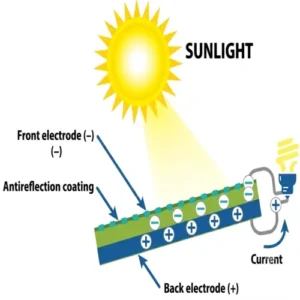
A solar panel is an interconnected network of multiple individual photovoltaic cells protected behind impact-resistant tempered glass. These cells are exposed directly to ambient daylight. The uppermost layers are treated with advanced anti-reflective coatings to ensure that incoming photons (light energy packets) are captured and driven into the core material rather than bouncing away.
Step 2: Photons Excite and Free Electrons
The structural engine of a solar cell is a silicon semiconductor split into two distinctly chemically treated layers:
• The N-Type Layer: Infused with phosphorus to carry a net negative electrical charge (surplus electrons).
• The P-Type Layer: Infused with boron to carry a net positive electrical charge (deficient in electrons, creating “holes”).
Where these two layers meet, a permanent internal electric field is established. When photons strike this junction, they transfer their kinetic energy to the silicon atoms. This energy instantly knocks native valence electrons free from their fixed atomic bonds.
Step 3: Electron Flow Generates Direct Current (DC)
Because of the permanent electric field at the P-N junction, the newly freed electrons are restricted from wandering aimlessly. They are forced to stream uniformly toward metal contact grid lines screen-printed onto the face of the cell wafer. This structured, continuous directional movement of electrons generates Direct Current (DC) electricity.
Step 4: The Inverter Converts DC to Usable AC
While solar cells natively generate DC electricity, residential appliances, commercial facilities, and localized public utility grids are built around Alternating Current (AC). To bridge this gap, the raw DC power is safely channeled away from the array into a centralized or distributed solar inverter system. The inverter dynamically shifts the flat DC signal into a clean, alternating sinusoidal wave.
Step 5: Electricity is Consumed, Exported, or Stored
The finalized AC electricity flows instantly into the property’s main breaker panel. From there, it is distributed to power operational loads (lighting, machinery, computing, air systems). When the array generates more electricity than the property requires, the excess current takes one of two paths:
• Grid Export: It flows through a bidirectional net meter out into the public grid, generating billing credits.
• Energy Storage Systems (ESS): It is routed through an intelligent charge controller to replenish high-storage Lithium Iron Phosphate (LiFePO₄) battery banks, establishing an autonomous power reserve for night cycles or utility outages.
2. Core Components
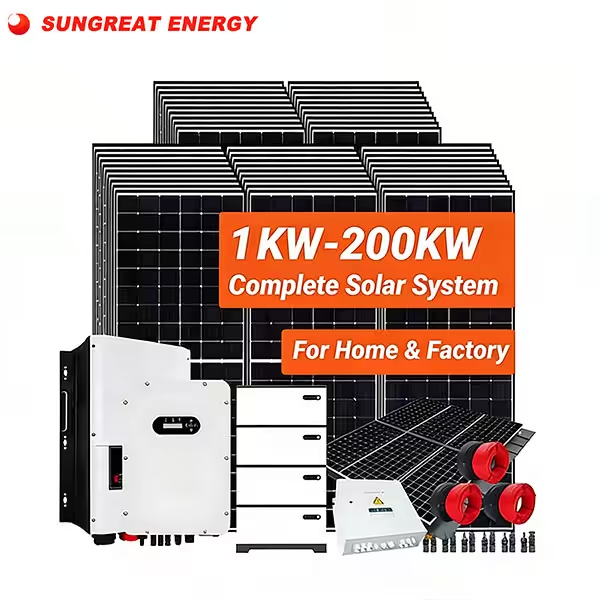
An operational solar energy system requires a balanced ecosystem of components to maintain grid safety and optimal power collection over decades:
| Core Component | Engineering Purpose | Critical Quality Indicator |
|---|---|---|
| Photovoltaic Cells / Panels | Captures ambient photons and initiates electron flow. | Monocrystalline wafer structure with a low temperature coefficient. |
| Solar Inverter | Converts raw DC electricity into standardized AC waveform; manages grid-tie safety. | High tracking efficiency (>98%) and smart monitoring capability. |
| Mounting / Racking System | Anchors modules to roof structures or ground plots; resists high wind loads. | Anodized structural aluminum or stainless steel with adjustable angle settings. |
| Charge Controller & Battery | Manages current charging rates and stores surplus power for night cycles. | Smart Maximum Power Point Tracking (MPPT) partnered with a LiFePO₄ battery bank. |
3. Photovoltaic Material Variations
Not all solar panels convert light at identical rates. The material choice fundamentally dictates your system’s overall spatial footprint, degradation curve, and performance during intermittent weather:
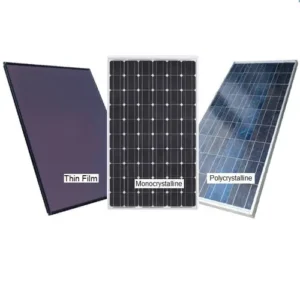
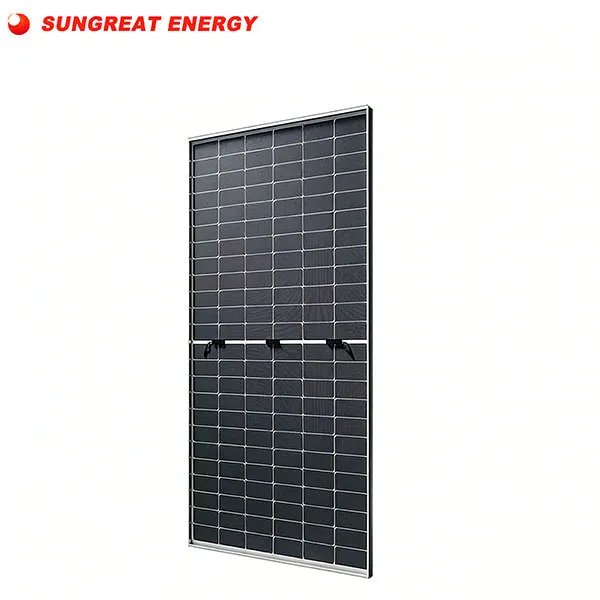
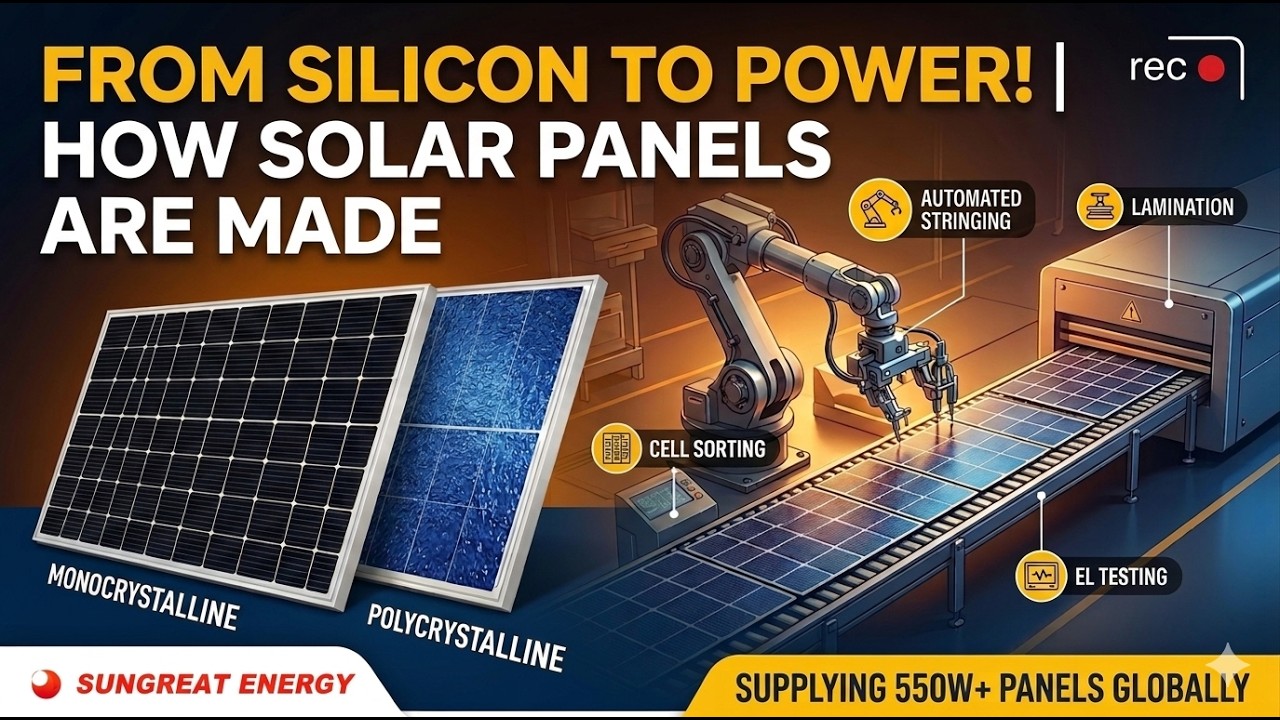
Monocrystalline Solar Panels: Cut from a single, high-purity silicon crystal structure, these modules are recognizable by their uniform dark black appearance. They are the premium choice for commercial and residential installations, delivering commercial efficiency rates of 20% to 24%. Monocrystalline cells suffer less degradation over time and perform exceptionally well in high-temperature conditions.
Polycrystalline Solar Panels: Constructed by melting multi-faceted silicon crystal fragments together, these panels feature a distinct blue, shimmering appearance. They are cheaper to produce but have a lower efficiency window (15% to 17%). Consequently, you require a significantly larger physical footprint to generate the same electrical capacity as a monocrystalline layout.
Thin-Film Panels & Bifacial Innovations: Thin-film layers are highly flexible and lightweight, making them suitable for unique architectural curves or transport assets, though they offer much lower efficiency. On the innovation front, Bifacial solar panels are rapidly gaining market share. They feature transparent glass backsheets capable of generating extra current from the ambient light reflecting off the ground grid below them, maximizing production by up to 30%.
Premium Commercial B2B Manufacturing & Supply
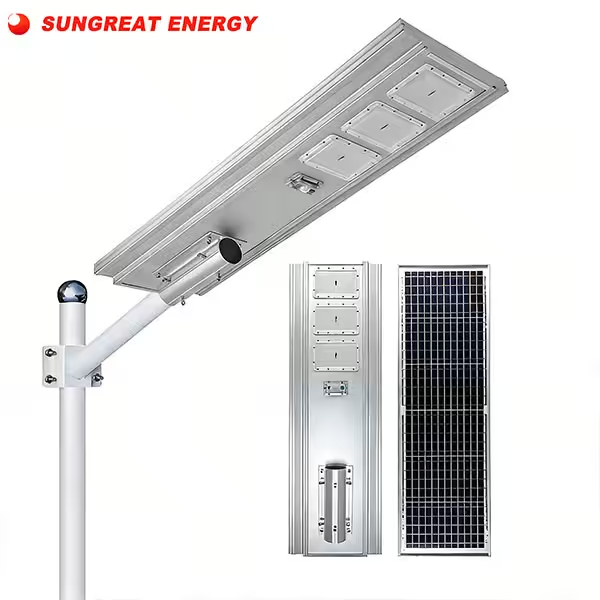
Maximize your conversion ratios with advanced monocrystalline engineering blocks, intelligent hybrid inverters, and heavy-duty, field-tested solar street light designs.
4. Performance Profile
The effectiveness of your solar system is heavily dependent on localized peak sun hours—defined as the periods where regional daylight hits an average intensity of 1,000 Watts per square meter (W/m²). Solar production naturally follows a bell curve over a 24-hour cycle. However, environmental disturbances like cloud cover, soot, or heavy seasonal shifts can significantly alter this generation profile.
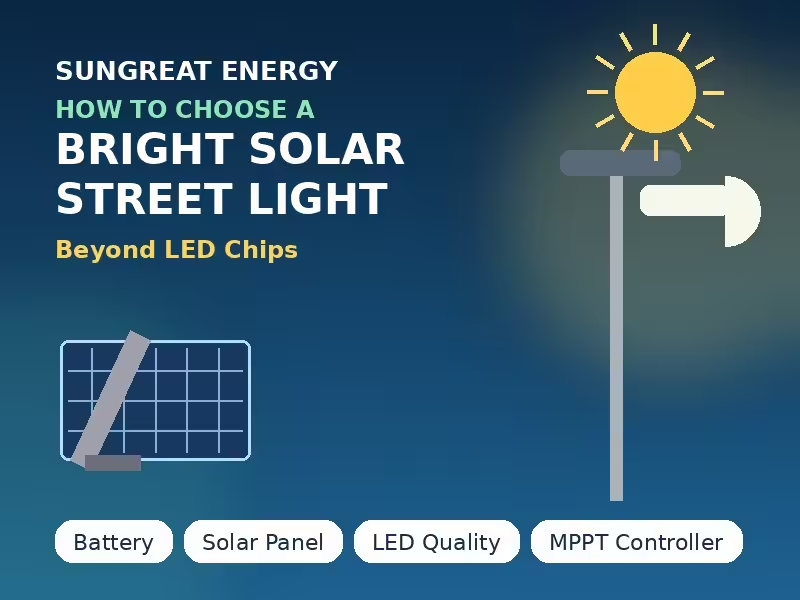
To maintain constant system brightness and power safety during overcast weather or low-light cycles, modern designers couple high-efficiency monocrystalline panels with advanced Maximum Power Point Tracking (MPPT) controllers. An MPPT controller acts like an automatic transmission, constantly adjusting the voltage and current output from the panels to match the battery bank’s needs, maximizing power harvesting even on cloudy days.
5. Global Economics
Investing in sustainable solar infrastructure requires analyzing upfront capital expenditures against decades of reduced grid dependency and financial savings. Here is a global economic cross-comparison:
The United States Market
Avg. Upfront Cost: $19,100 – $23,800
Cost Per Watt: $2.50 – $3.50 /W
Annual Savings: $650 – $1,500 / year
The federal Residential Clean Energy Credit lets developers deduct 30% of aggregate system integration costs directly from federal tax liabilities.
The Indian Market
3kW Array Cost: ₹1.89 lakh – ₹2.15 lakh
5kW Array Cost: ₹3.15 lakh – ₹3.57 lakh
Monthly Savings: ₹3,000 – ₹8,000 / month
Central government frameworks render direct subsidies covering up to 40% of standard localized household arrays under 3kW capacities.
The United Kingdom Market
Annual Savings: £185 – £610 / year
System Maintenance: Exceptionally Low
Includes structural VAT exemption on energy-saving devices, along with Smart Export Guarantee (SEG) tariffs returning financial value for overproduction.
6. Strategies
To guarantee an operational lifespan of 25 to 30 years, solar panels must be deployed using professional physical engineering and regular preventative maintenance protocols:
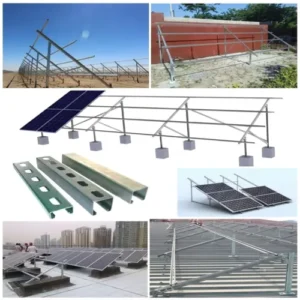
6.1 Layout Configurations
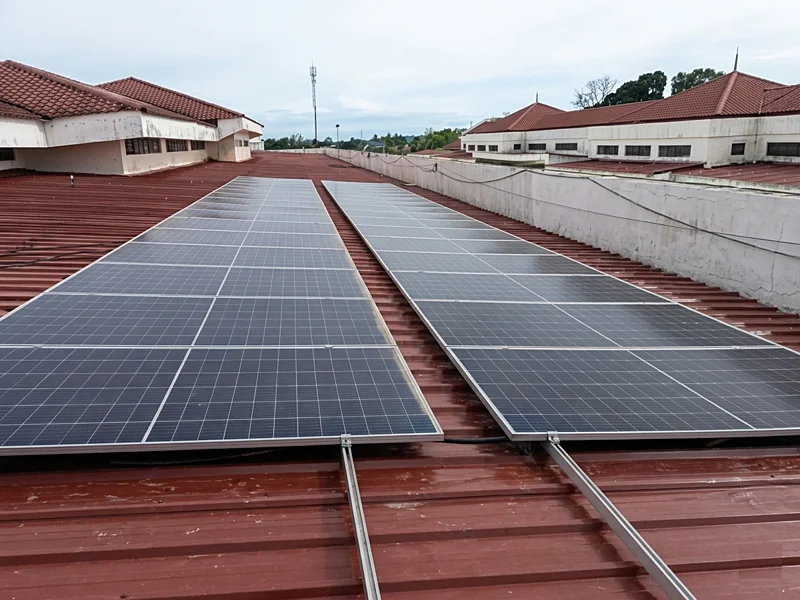
- Roof-Mounted Systems: The most space-efficient arrangement for urban architecture, leveraging pre-existing roof slopes to capture high sky visibility.
- Ground-Mounted Racks: Installed on open terrain using fixed racks or pole anchors. This setup provides total flexibility to select optimal orientation and tilt angles, independent of building constraints.
- Tracking Systems: Commercial projects often integrate automated trackers that shift panels along single or dual axes to follow the sun’s trajectory, increasing annual yield by up to 25%–40%.
6.2 Maintenance Protocols
- Surface Cleaning: Periodic rinsing of panel faces with water clears away accumulated dust, pollen, bird droppings, and industrial soot that can block sunlight and trigger efficiency losses.
- Thermal and Structural Inspection: Routine physical walk-throughs and thermal imaging check for micro-cracks in the glass, secure mounting brackets, and undamaged wiring harnesses.
- Software Monitoring: Utilizing intelligent cloud software allows owners to review real-time string voltages, instantly spotting variations in production to handle system maintenance before failure occurs.
7. Conclusion
Solar panels are no longer a black box of mysterious physics; they are well-understood, high-performing engineering structures. By shifting your focus from the simple concept of “buying a solar panel” to analyzing cell efficiencies, inverter pairing, proper battery storage matching, and local peak sun hours, you ensure that your green infrastructure remains profitable and self-sustaining for decades.
8. B2B Supply Channels
Ready to integrate ultra-efficient monocrystalline modules, advanced tracking mounts, or high-storage hybrid inverters into your infrastructure projects? Connect with our global engineering team today for personalized project layout design and B2B pricing:
www.sungreatenergy.com
+86-15776467829
[email protected]
9. International Publications
To read further on peer-reviewed engineering metrics, battery lifecycles, and solid-state photovoltaic models, explore these international authorities:
- IEEE Xplore Journal: Advanced Boundary Layer Controls and Semiconductor Silicon Cell Modeling Optimization – Core study evaluating internal diode factor shifts under continuous sunlight radiation.
- ScienceDirect / Energy Reports: Lifecycle Vulnerability and Financial Analysis of Distributed Energy Microgrids – Validating system economics and battery asset deterioration patterns under multi-phase load strain.
- U.S. Department of Energy (NREL): Solid-State Solar Device Testing Standards and Photovoltaic Efficiency Cell Verification – Standard testing parameters detailing thermal degradation margins across global environments.
- MDPI Energies Publication: Performance and Yield Evaluations of Bifacial Panels Under Dynamic Weather Layouts – Academic metrics quantifying rear albedo reflection capture on varied structural landscapes.
- International Energy Agency (IEA): Global Renewable Policy Frameworks: Transition Outlook and Grid Integration Best Practices – Comprehensive framework profiling utility integration benchmarks and smart bidirectional meter standards.
“`