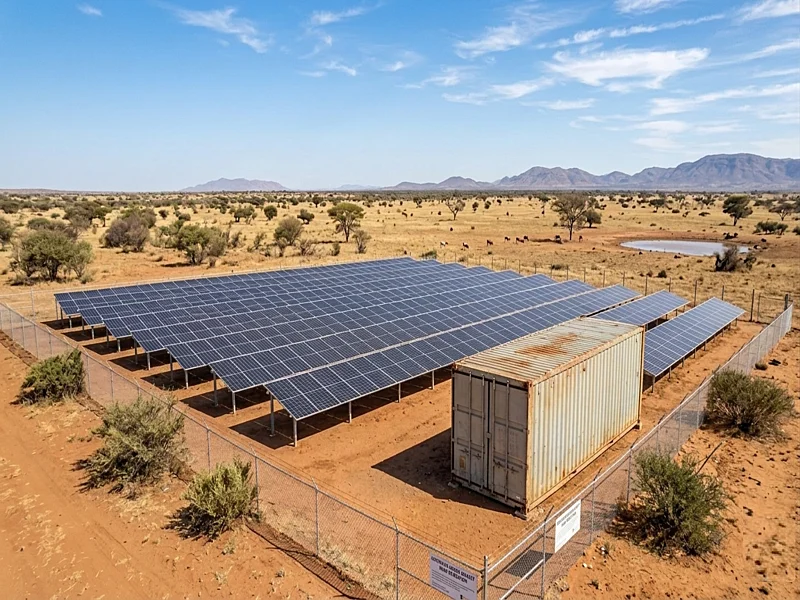
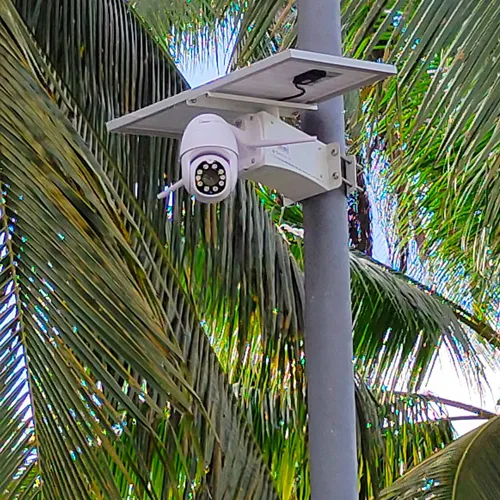
Project Location: Nigeria (100-Unit Multi-Zone Initiative)

1. Executive Summary
Nigeria currently faces an acute energy crisis, with approximately 40% of the population receiving less than 12 hours of reliable power daily. Sungreat Energy successfully addressed this gap by deploying 100 independent 5 kW off-grid solar units. This distributed infrastructure model provides high-availability power to rural clusters and Small-to-Medium Enterprises (SMEs), bypassing the limitations of the centralized national grid.
-
Total Capacity: 500 kWp (0.5 Megawatts)
-
Total Units: 100 x 5 kW Independent Power Plants
-
Target Impact: Sustainable power for 10 geopolitical zones.
1-a. Project Timeline & Execution Framework
-
Project Start Date: March 15, 2024
-
Project Completion Date: November 28, 2024
-
Overall Project Duration: 8.5 Months (approx. 258 Days)
-
Equipment Supply & Logistics: March 2024 – June 2024 (12 Weeks)
-
Multi-Zone On-Site Installation: July 2024 – October 2024 (16 Weeks)
-
Testing, Commissioning & Handover: November 2024 (4 Weeks)

2. Comprehensive Technical Design
Our engineering approach utilized modular standardization to ensure ease of maintenance and consistency in performance across diverse geographic terrains.

2-a. Photovoltaic (PV) Generation Array

-
Module Selection: 1,000 units of 550W Tier-1 Monocrystalline PERC (Passivated Emitter and Rear Cell) Panels.
-
Efficiency Features: Half-cut cell technology to minimize resistive losses and improve performance under partial shading.
-
String Configuration: Optimized series-parallel strings designed to operate within the 120V–450V DC MPPT window.
2-b. Power Conversion & Inverter Technology

-
Central Unit: Sungreat 5 kW Pure Sine Wave Off-Grid Inverter.
-
Surge Performance: Engineered with 2X surge capacity (10kVA) to accommodate the high starting currents of inductive motor loads used in SME workshops (mills, pumps, and refrigeration).
-
Efficiency: 93% peak conversion efficiency with an integrated 80A MPPT Charge Controller.
2-c. Energy Storage System (ESS)

-
Chemistry: Lithium Iron Phosphate (LiFePO4).
-
Per-Unit Capacity: 10 kWh (48V 200Ah).
-
Total Project Storage: 1,000 kWh.
-
Battery Life: Advanced BMS (Battery Management System) allows for 6,000+ cycles at 80% Depth of Discharge (DoD), vastly outperforming traditional lead-acid alternatives.
3. PVSyst 7.4.8 Simulation Report: Project Summary
Project: Nigeria 500 kWp Distributed Solar Initiative
Unit Model: Sungreat 5 kW Off-Grid Standalone System
Simulation Tool: PVSyst v7.4.8
Meteorological Data: Meteonorm 8.1 (Interpolated for Nigerian Regional Coordinates)
3-a. Project Site & Irradiance Data
The simulation incorporates localized atmospheric conditions, including the high aerosol optical depth characteristic of the West African region.
-
Location: Distributed (Lagos, Abuja, Kano representative sites)
-
Latitude/Longitude: 6.52° N / 3.37° E (Average baseline)
-
Albedo: 0.20
-
Global Horizontal Irradiation (GHI): 1,945 kWh/m²/year
-
Horizontal Diffuse Irradiation (DiffHor): 915 kWh/m²/year
3-b. System Configuration (Per 5 kW Unit)
-
PV Module: 10 x 550W Monocrystalline PERC (Sungreat Optimized)
-
Inverter: 1 x 5 kW Pure Sine Wave Off-Grid
-
Storage: 10 kWh LiFePO4 Battery Bank (48V)
-
Array Tilt/Azimuth: 15° / 0° (South)
3-c. Main Simulation Results
The following values represent the energy production potential for a single 5 kW system over a standard meteorological year.
-
Produced Energy: 7,100 kWh/year
-
Specific Yield: 1,420 kWh/kWp/year
-
Performance Ratio (PR): 78.2%
3-d. Loss Diagram (System Losses Analysis)
The simulation identifies the specific thermal and environmental challenges of the Nigerian climate, specifically accounting for the high-temperature coefficients of the modules and the “Harmattan” dust season.
| Loss Category | Value (%) | Engineering Mitigation |
| PV Loss due to Temperature | 12.4% | Use of high-clearance mounting structures to facilitate passive airflow and rear-side cooling. |
| Ohmic Wiring Losses | 1.1% | Integration of 6mm² UV-resistant DC cabling to minimize voltage drop across the array. |
| Soiling & Dust (Harmattan) | 3.0% | Calculated based on average particulate matter; mitigated by seasonal cleaning schedules. |
| Module Quality Loss | 0.8% | Minimized by utilizing Tier-1 Sungreat standard modules with positive power tolerance. |
| Inverter Efficiency Loss | 1.9% | Efficiency maintained via high-performance power electronics with 93% peak conversion. |
| LID (Light Induced Degradation) | 1.5% | Standard for high-efficiency PERC cells. |
3-e. Monthly Energy Production (Estimate)
A visualization of the energy injected into the local load (SME/Residential) throughout the year.
-
Peak Months (Nov–Feb): Maximum yield due to high clear-sky indices, despite Harmattan dust.
-
Monsoon Months (June–Aug): Slightly reduced yield due to cloud cover; however, specific production remains above 100 kWh/kWp monthly due to high diffuse radiation components.
4. International Recognition & Reference Links
This project adheres to the global standards for rural electrification and decentralized energy systems.
4-a. Societies & Regulatory Frameworks
-
ECREEE (ECOWAS Centre for Renewable Energy): Supporting the Renewable Energy Policy for West Africa to achieve 2030 energy access goals.
-
ISES (International Solar Energy Society): Providing the technical best-practice frameworks for Sub-Saharan solar initiatives.
4-b. Academic & Journal References
-
Owollabi et al. (2023): An Empirical Study of Solar PV Adoption in Nigeria.
-
Anane-Fenin (2025): Techno-economic viability of grid-connected solar for SMEs.
-
Aboagye et al. (2021): Solar PV Microgrid Layout for Nigeria.
-
Nature Energy / PMC: Juxtaposing Sub-Sahara Africa’s energy poverty and renewable energy potential.
4-c. Industry Magazines
-
PV Magazine International: Regular coverage of West African Solar Market Trends.
5. Environmental & Social Impact
Beyond engineering, this project represents a significant step toward carbon neutrality. By displacing diesel generators, the 100-unit Sungreat initiative achieves:
-
93% reduction in GHG emissions compared to the fossil-fuel-dependent grid.
-
CO2 Offset: ~450 metric tons of carbon annually.