In the world of renewable energy, we often talk about solar as the “shining star” of sustainability. But any experienced engineer or municipal planner knows the solar industry’s biggest secret: the sun doesn’t always play along. Whether it’s a week of heavy monsoon clouds or the long, dark nights of a northern winter, relying on a single energy source can be a gamble.
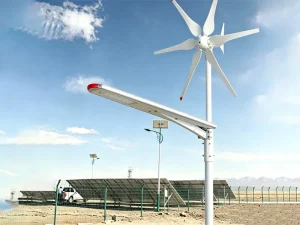
That is where the Hybrid Solar and Wind Street Light comes in. By combining a photovoltaic (PV) panel with a micro-wind turbine, these fixtures create a 24-hour power plant on top of a single pole.
At Sungreat Energy, we’ve seen these systems transform reliability in coastal areas, mountain passes, and windy plains. But choosing the right hybrid system is much more complex than just sticking a fan on a light pole. It requires a delicate balance of aerodynamics, battery chemistry, and structural engineering.
Here is everything you need to know to choose a professional-grade hybrid system that actually delivers on its promise.
1. Hybrid System Technology
1.1. Working
The “Magic” of hybrid lighting is the Complementary Effect. In most climates, wind speeds are higher at night and during stormy weather—exactly when solar production is at zero.
- The Goal: You want a system where the wind turbine “trickle charges” the battery during the night, reducing the Depth of Discharge (DoD). This means when the sun rises, the battery is already at 60% instead of 20%, leading to faster charging and a much longer battery lifespan.
- The Selection Tip: Don’t just look at the peak wattage of the turbine. Look at the Start-up Wind Speed. A turbine that needs 5m/s to start spinning is useless in a city. Look for high-efficiency maglev or carbon-fiber blades that start generating at 1.5m/s to 2.5m/s.
1.2. Turbine Design
This is the most visible choice you will make, and it affects both performance and public perception.
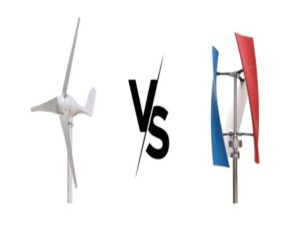
- Horizontal Axis (HAWT): These look like traditional windmills. They are generally more efficient at high wind speeds but require a tail vane to face the wind.
- Best for: Open highways or coastal areas with consistent wind directions.
- Vertical Axis (VAWT): These “spiral” or “helix” designs are the modern standard for urban environments. They are Omni-directional, meaning they catch wind from any angle without needing to turn. They are also significantly quieter and have lower vibration levels.
- Best for: Cities, bridges, and parks where wind turbulence is high and noise must be kept to a minimum.
2. Structural Engineering
2.1. Wind Loading and EPA
When you add a turbine to a light pole, you are essentially adding a “sail.” In a storm, the physical force exerted on the pole increases exponentially.

- EPA (Effective Projected Area): Every component has an EPA rating. A hybrid light has a much higher EPA than a standard LED light.
- The Requirement: You cannot use a standard “off-the-shelf” light pole for a hybrid system. You must specify a reinforced pole (often Q235 or Q345 steel) with a larger base plate and deeper foundation. At Sungreat Energy, we provide specific wind-load calculations for every hybrid installation to ensure the system can withstand Grade 12 typhoons or hurricanes.
2.2. Dual-Input MPPT
The most critical part of a hybrid light is invisible. It’s the controller hidden inside the pole or housing.
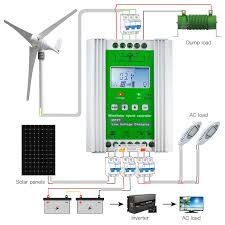
A standard solar controller cannot handle a wind turbine. You need a Hybrid MPPT (Maximum Power Point Tracking) Controller.
- Independent Charging: The controller must be able to manage the solar input and wind input simultaneously and independently.
- Braking System: Wind turbines can over-spin in high winds, which can destroy the bearings or the battery. A professional hybrid controller must have an Automatic Electronic Brake that slows the turbine down when the battery is full or the wind is dangerously high.
2.3. Battery Chemistry
Hybrid systems put a unique stress on batteries. Unlike solar lights that have a clear “Charge/Discharge” cycle, hybrid batteries are often being charged 24 hours a day.

- LiFePO4 is Non-Negotiable: Because of the constant activity, you need the high cycle life of Lithium Iron Phosphate. It can handle the frequent “micro-charges” from the wind turbine without suffering from the “memory effect” that kills older lead-acid or Gel batteries.
- Thermal Stability: Constant charging creates internal heat. Ensure your battery box is ventilated or integrated into a high-quality die-cast aluminum housing that acts as a heat sink.
3. Maintenance & References
3.1. Maintenance and Longevity
Anything with moving parts requires more attention than a static solar panel. To choose the “best” system, you have to look at the mechanical build quality.
- Bearing Quality: The turbine should use high-quality, sealed stainless steel bearings. If the bearings rust, the turbine becomes a noisy, rotating weight that produces zero power.
- Corrosion Resistance: Since wind turbines are often used in coastal areas, the blades and housing must have a C5-level anti-corrosion coating to survive the salt air.
3.2. Aesthetic Integration
In 2026, urban aesthetics matter. A hybrid light shouldn’t look like a science project gone wrong. Modern designs integrate the turbine and the panel into a sleek, aerodynamic profile. This doesn’t just look better; it reduces “Wind Noise,” which is a common complaint in residential hybrid installations.
3.3. External References
To understand the global standards for hybrid and urban wind energy, we recommend these resources:
- Office of Energy Efficiency & Renewable Energy (EERE): Provides a breakdown of wind energy benefits and the technical challenges of distributed wind.
- World Wind Energy Association (WWEA): A leading authority on small-scale and hybrid wind applications for urban environments.
- NREL – Distributed Wind Research: Technical insights into how micro-turbines integrate with local grids and off-grid systems.
- Windpower Engineering & Development: A professional magazine covering the latest in turbine blade materials and controller technology.
3.4. Conclusion
Choosing a Hybrid Solar and Wind Street Light is an investment in Reliability. While the upfront cost is higher than a simple solar light, the “Total Cost of Ownership” is often lower because the battery is better protected and the light stays on 365 nights a year, regardless of the weather.
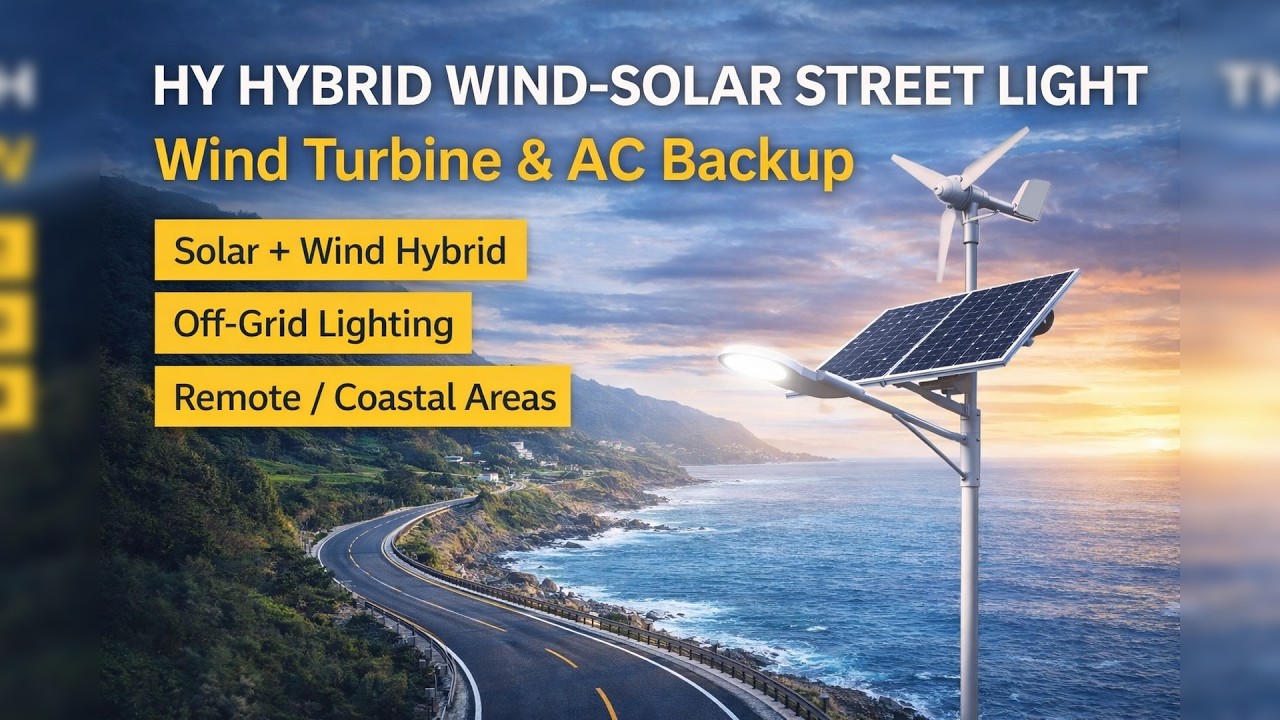
At Sungreat Energy, we specialize in these high-performance intersections of engineering. We don’t believe in “one size fits all.” We analyze your local wind maps and solar radiation data to build a system that is perfectly balanced for your specific environment.
Stop relying on the sun alone. Harness the wind.
- Talk to a Hybrid Expert: [email protected]
- WhatsApp / Call :
#RenewableEnergy #HybridPower #WindEnergy #SolarLighting #SmartCities #Infrastructure #Sustainability #SungreatEnergy #EngineeringExcellence