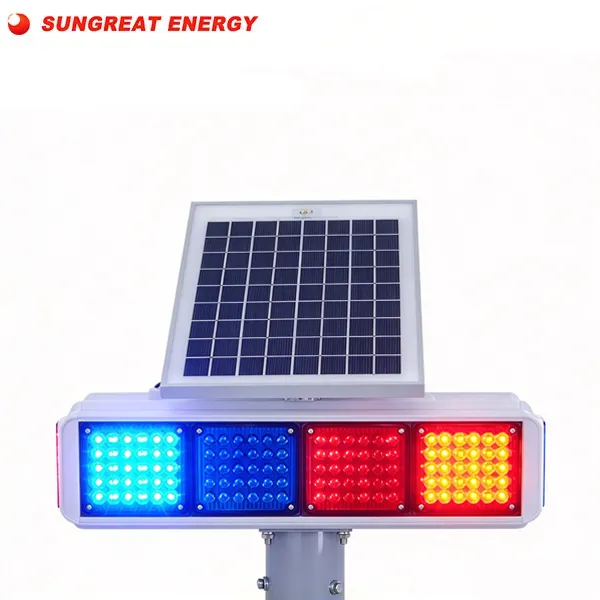
Feu de signalisation solaire TL avec modules de signalisation LED bleus, rouges et jaunes
Le lampadaire LED Sungreat Energy LE Series 150W de type « boîte à chaussures » est doté d'une conception à double module, d'une optique de type III et d'un boîtier en aluminium et PC certifié IP66 pour l'éclairage des routes et des aires de stationnement.
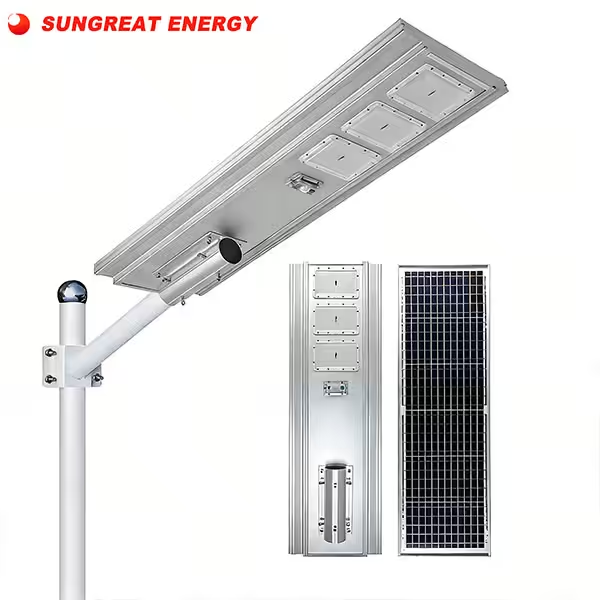
Le lampadaire solaire intégré de la série FN de Sungreat Energy est doté d'un panneau solaire monté à l'arrière et d'un système d'éclairage routier à LED multimodules.
Système de congélation solaire Sungreat Energy série SF avec panneaux photovoltaïques, contrôleur MPPT et batteries gel pour refroidissement hors réseau
Coffret d'usine pour réfrigérateur solaire Sungreat Energy série SDR, comprenant panneaux solaires et batterie pour solutions de refroidissement hors réseau.
Système de climatisation solaire hors réseau de Sungreat Energy, comprenant une unité intérieure, un condenseur extérieur, une batterie Lifepo4 et trois panneaux photovoltaïques pour un refroidissement indépendant et écologique sans dépendance au réseau.
Système complet d'énergie solaire de 10 kW avec tous les accessoires
Gamme de batteries LiFePO4 de Sungreat Energy présentant des modèles muraux et sur pied avec affichage numérique
Batteries et onduleurs tout-en-un Sungreat Energy disponibles en trois tailles différentes =
Panneau solaire monocristallin Sungreat Energy
Sac pour panneau solaire pliable ETFE modèle FP 200 W, ouvert avec béquilles pour la recharge de stations d'alimentation portables
Panneau solaire monocristallin Sungreat Energy série SP

Thailand’s New Mandatory Standards for Solar Panels, Batteries, Inverters and Chargers: What It Means for the Photovoltaic Market in 2026


Thailand’s New Mandatory Standards for Solar Panels, Batteries, Inverters and Chargers What It Means for the Photovoltaic Market in 2026 main

Thailand is rapidly tightening quality and safety rules across the new solar energy sector. In recent months, the Ministry of Industry and the Thai Industrial Standards Committee have moved multiple Thai Industrial Standards (TIS) from voluntary to mandatory controlled-product status. The measures cover Panneaux solaires, batteries à lithium for energy storage, PV system components, EV charging equipment, and related safety requirements.

These changes directly affect Thailand’s growing photovoltaic market, rooftop solar adoption, and the broader clean-energy supply chain. Here is a clear breakdown of the key developments and their practical implications.

1. Moving Forward Standards

1.1 PV System Components

Target Timeline: September 2026 – Early 2027 | Standard: TIS 61730 Part 2-2567
Thailand’s New Mandatory Standards for Solar Panels, Batteries, Inverters and Chargers What It Means for the Photovoltaic Market in 2026 moving farword standards

In May 2026, the Thai Industrial Standards Committee approved TIS 61730 Part 2-2567 for photovoltaic modules—harmonized with the international IEC 61730-2 safety qualification standard. The Thai Industrial Standards Institute (TISI) is preparing the formal announcement that will make these modules controlled goods. Officials expect the requirement to take legal effect in September 2026. After that date, Panneaux solaires produced, imported, or sold in Thailand must carry TIS certification.

Four additional products are also targeted for mandatory status within 2026:

Disjoncteurs CC for photovoltaic systems (aligned with IEC 60947-2)
Fusibles designed for solar energy systems (aligned with IEC 60269-6)
Specialised PV cables (aligné avec IEC 62930)
Batteries à lithium used in energy storage systems (ESS) (aligned with IEC 62619 et IEC 63056)

Two further standards—for PV junction boxes (aligned with IEC 62790) and DC MC4 connectors—are scheduled for submission by September 2026.

TISI has already published a broader suite of standards covering the full system (Panneaux solaires, onduleurs, convertisseurs, Batteries, cables, design, installation, and testing, incorporating frameworks such as IEC 62109 for power converters). The Ministry of Industry aims to make the complete package compulsory by early 2027.

1.2 EV Equipment

Approved: 21 July 2026 | Rollout: June 2027 – Early 2028

On 21 July 2026, the same committee approved five additional EV-related TIS standards—aligned with international benchmarks like the IEC 61851 conductive charging series and UN vehicle safety regulations—as mandatory controlled products:

  • Portable EV charging cables
  • Chargeurs CA
  • Chargeurs rapides CC
  • Side-impact occupant protection requirements
  • Frontal-impact occupant protection requirements

Portable cables and residential AC chargers are expected to become mandatory by June 2027. DC fast chargers and the vehicle crash-protection standards are targeted for early 2028.

Closing the Storage Safety Gap: Consumer-grade portable power banks already face some mandatory safety rules. The new batterie au lithium requirements for stationary energy storage close an important gap between household and larger-scale applications.

2. Impact on Thailand’s Market
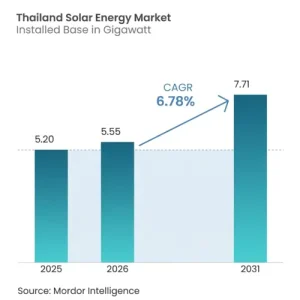
Thailand’s New Mandatory Standards for Solar Panels, Batteries, Inverters and Chargers What It Means for the Photovoltaic Market in 2026 market

2.1 Consumer Confidence

Rooftop solaire is expanding quickly, supported by tax deductions of up to 200,000 baht for eligible household systems and a surplus electricity buy-back rate of approximately 2.20 baht per unit. Mandatory standards reduce the risk of fire, short circuits, and other safety incidents that could undermine public trust. Higher confidence should support continued growth in residential and commercial installations.

2.2 Local Opportunity

By requiring TIS certification, Thailand is limiting the entry of low-quality imports. This creates clearer incentives for local manufacturers and assemblers of modules solaires, câbles, onduleurs, batteries de stockage d'énergie, and charging equipment. The policy aligns with broader industrial goals of building a more complete domestic clean-energy value chain.

2.3 Support for Projects

The explicit inclusion of batteries à lithium for energy storage systems is particularly relevant for the photovoltaic sector. As solaire penetration rises, grid stability and self-consumption become more important. Clear mandatory standards for Batteries ESS help de-risk “solaire + storage” projects and public or commercial charging hubs that integrate renewable generation.

2.4 Short-Term Challenges

Compliance will raise testing and certification costs for importers and some manufacturers. Capacity at accredited laboratories and the speed of transition rules will determine how smoothly the market adjusts. Some observers note that standards for large-scale ESS and EV traction Batteries have lagged behind module standards; the current package is intended to close that gap. End-of-life management is also receiving attention, with plans discussed for panneau solaire et batterie recycling industrial estates.

3. Regard vers l’avenir

Strategic Outlook: Power Development Plan & Net Zero 2050

Thailand’s New Mandatory Standards for Solar Panels, Batteries, Inverters and Chargers What It Means for the Photovoltaic Market in 2026 news

These mandatory TIS requirements form part of Thailand’s wider energy-transition framework, including higher clean-electricity targets in the forthcoming Power Development Plan and the national Net Zero 2050 ambition. For solaire developers, EPCs, equipment suppliers, and investors, the practical next steps are clear:

  1. Verify Compliance Early: Confirmer que modules, onduleurs, Batteries, and balance-of-system components already hold or can obtain the relevant TIS marks.
  2. Track Regulatory Timelines: Monitor the exact gazette announcements for September 2026 and the 2027–2028 charger timelines.
  3. Adjust Project Pipelines: Factor certification lead times and potential cost impacts into project pipelines.

The overall direction is positive for a more professional, safer, and more sustainable photovoltaic market in Thailand. Quality will increasingly differentiate suppliers, and companies that prepare early will be best positioned to serve both the growing rooftop segment and larger hybrid projects.

Readers are encouraged to verify the latest official announcements via the references below, as implementation details may be refined in the formal ministerial regulations.

4. Références

Catégories Source et lien
Thai Regulatory & Industry News Matichon Online – Ministry of Industry Solar & TISI Updates
Thai Regulatory & Industry News The Standard – Solar & EV Recycling Standards in Thailand
Thai Regulatory & Industry News The Nation Thailand – Sustaination & Clean Energy Policy
Thai Regulatory & Industry News Thairath Online – Thai Economic & Industrial Standards Coverage
Thai Regulatory & Industry News MarkLines – Thailand Approves Five EV-Related Mandatory TIS Standards
Thai Regulatory & Industry News Thansettakij – Mandatory TIS Standards for EV Chargers
International Technical Standards & Equipment Solutions International Electrotechnical Commission (IEC) – IEC 61730 Photovoltaic Module Safety Qualification
International Technical Standards & Equipment Solutions International Electrotechnical Commission (IEC) – IEC 62619 Secondary Lithium Cells & Batteries for Industrial/ESS Applications
International Technical Standards & Equipment Solutions International Electrotechnical Commission (IEC) – Standards Webstore (IEC 62109, IEC 60947-2, IEC 60269-6, IEC 62930, IEC 61851)
International Technical Standards & Equipment Solutions Thai Industrial Standards Institute (TISI) – Official Portal
International Technical Standards & Equipment Solutions

Sungreat Energy – Solar Panels, Inverters & Lithium Battery Storage Solutions
Image de SungreatenergyAdmin

SungreatenergyAdmin

Bienvenue pour partager cette page :
Catégories de Produits
Obtenez un devis gratuit dès maintenant !
FORMULAIRE DE CONTACT
Produits associés
Nouvelles connexes
Thailand’s New Mandatory Standards for Solar Panels, Batteries, Inverters and Chargers What It Means for the Photovoltaic Market in 2026 main

  Thailand is rapidly tightening quality and safety rules across the new solar energy sector. In recent months, the Ministry […]

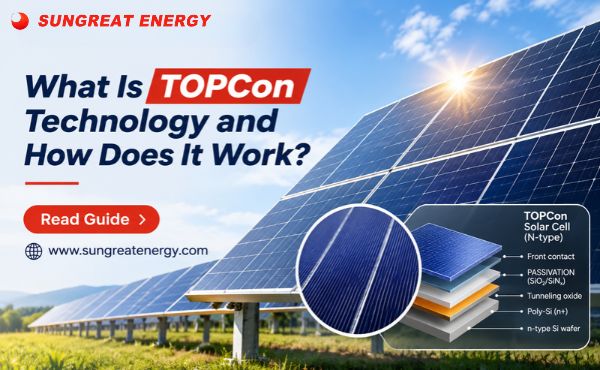
Qu’est-ce que la technologie TOPCon et comment fonctionne-t-elle ?

TOPCon signifie Tunnel Oxide Passivated Contact, une technologie de cellules solaires en silicium cristallin à haut rendement conçue pour améliorer la passivation des porteurs et […]

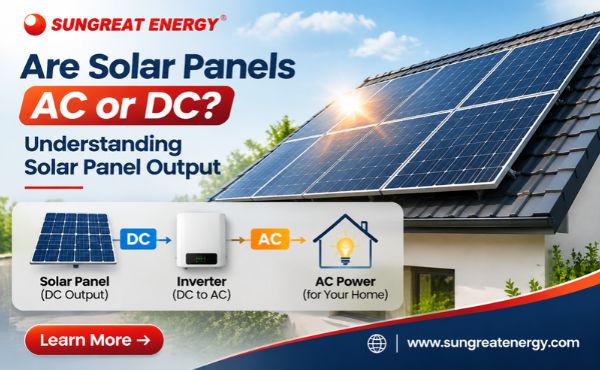
Les panneaux solaires fonctionnent-ils en courant alternatif ou continu ? Comprendre la production des panneaux solaires

Les panneaux solaires produisent de l'électricité en courant continu. Les cellules photovoltaïques à l'intérieur des panneaux génèrent du courant continu lorsque la lumière du soleil atteint le semi-conducteur […]

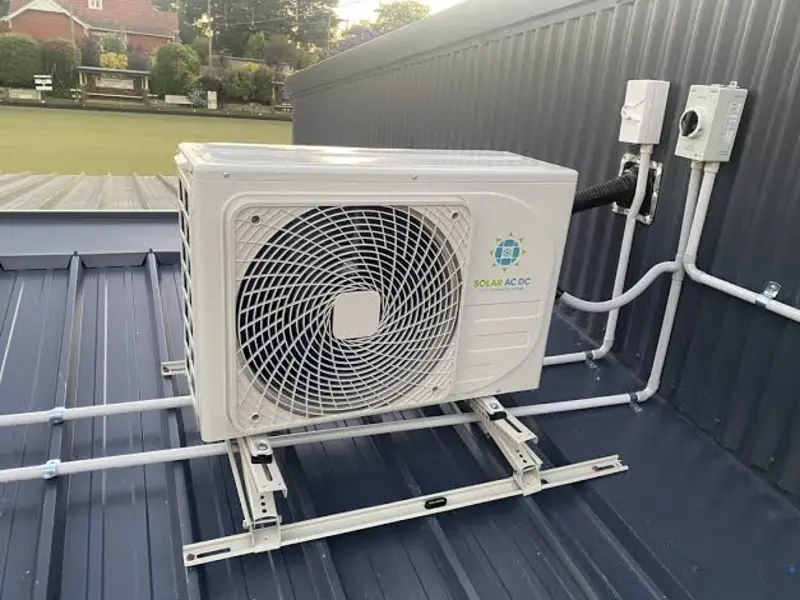
Pourquoi les climatiseurs solaires Sungreat Energy gagnent en popularité dans le monde entier

Alors que les températures mondiales continuent d'atteindre des niveaux records, la demande en énergie solaire pour la climatisation résidentielle et commerciale a explosé. Traditionnellement […]

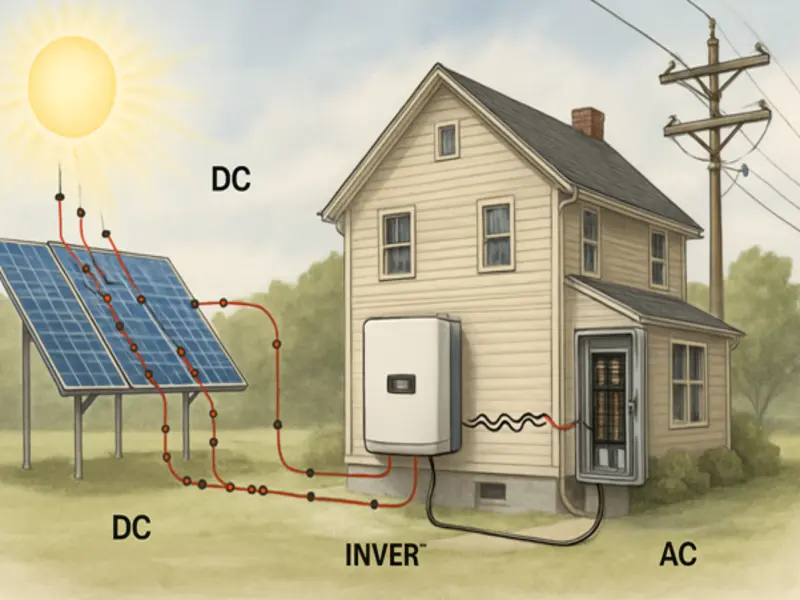
CA vs CC Comprendre le langage de votre système d'énergie solaire PRINCIPAL

Lorsque vous passerez à l'énergie solaire, vous entendrez souvent deux termes : CA (courant alternatif) et CC (courant continu). […]

Choisir le bon réfrigérateur solaire pour les cliniques isolées

Pour les établissements médicaux et les communautés rurales d'Afrique subsaharienne et d'Amérique latine, la réfrigération solaire n'est pas un luxe, c'est une nécessité.

Remonter en haut

Obtenez un devis gratuit dès maintenant !

FORMULAIRE DE CONTACT
Si vous avez des questions, n'hésitez pas à nous contacter.
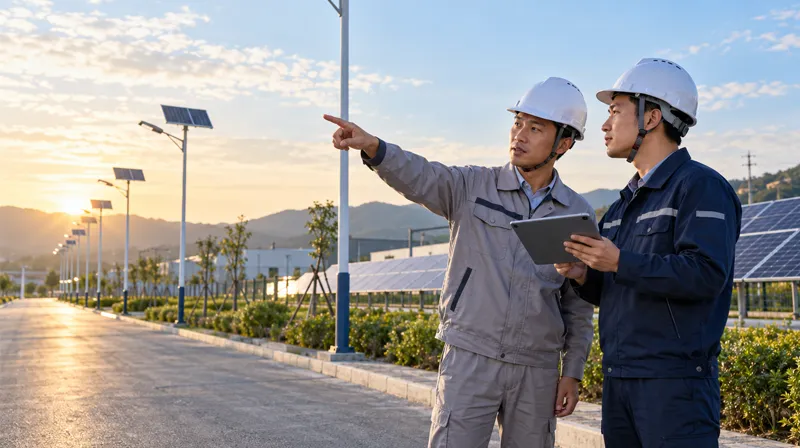
Des ingénieurs discutent d'un projet personnalisé d'éclairage public solaire et de système photovoltaïque