As global temperatures continue to break records, the air conditioner (AC) has transitioned from a luxury to a survival necessity. However, with the rising dependency on cooling systems comes a terrifying phenomenon: AC compressor explosions.
From residential blocks to high-rise commercial offices, reports of compressors suffering catastrophic failures or “blasting” have become alarmingly frequent. Understanding why these mechanical components fail—sometimes violently—is essential for property owners, EPC contractors, and building managers.
This guide dives into the thermodynamics and mechanics of compressor blasts, examines extreme regional environmental threats, and explores how industrial-grade solar engineering, like that found in Sungreat Energy’s AC/DC Hybrid Soar AC technology, provides a safer, more reliable cooling path.
Part 1: The Anatomy of a Blast – Why Compressors Explode

An AC compressor is a high-pressure vessel designed to withstand continuous compression cycles while circulating refrigerant. A violent compressor blast typically occurs due to a catastrophic breach of this pressure vessel or an internal chemical ignition.
1. The “Diesel Effect” and Internal Combustion
The most common cause of a violent explosion is a phenomenon similar to how a diesel engine works. A compressor contains refrigerant and lubrication oil. If the system develops a leak and air enters the lines, you now have oxygen mixed with oil.
If the compressor continues to run under high pressure, the temperature of the oil can reach its “auto-ignition” point. In a confined, pressurized space, this results in a sudden combustion. Because the compressor shell is not designed to contain an internal explosion, it ruptures, sending shrapnel and high-pressure gas outward.
2. Refrigerant Contamination and “Coking”
Contaminants are the silent killers of HVAC systems. If moisture or non-condensable gases (like air) enter the system during a poor installation, they react with the refrigerant and oil to create sludge and acid.
Over time, this sludge can “coke” or bake onto the internal walls of the compressor. This carbon buildup creates localized “hot spots.” According to the Institution of Chemical Engineers (IChemE), these hot spots can trigger a chain reaction of chemical decomposition, leading to a sudden spike in pressure that the metal casing cannot withstand.
3. Electrical Failure and Arcing
The compressor is powered by an electric motor. If the motor windings fail—often due to age, voltage fluctuations, or acid buildup—an electrical arc can occur. This arc can instantly vaporize the surrounding oil and refrigerant, creating a massive pressure wave. In areas with unstable power grids, these electrical “shocks” to the system are a leading cause of premature compressor death and subsequent failure.
4. Poor Maintenance: The Clogged Condenser
Imagine trying to run a marathon while breathing through a straw. That is what a compressor feels like when the external condenser coils are covered in dust, grease, or debris.
When the heat cannot escape the coils, the pressure inside the compressor rises to dangerous levels. Most modern units have “high-pressure cut-out” switches, but if these safety devices are bypassed by untrained technicians or if they fail due to age, the compressor will continue to pump until the metal itself gives way.
Part 2: Regional Risks – Why Location Matters
Compressor blasts don’t happen equally everywhere. Certain environmental factors in specific “areas” increase the risk: system loses pressure regulation, forcing the compressor to work harder and hotter.
Industrial Zones: Chemical pollutants in the air can corrode the protective coatings of the AC unit, leading to electrical shorts.
High-Heat Regions (like Iran , Afghanistan and the Middle East): When ambient temperatures exceed 45°C (113°F), standard compressors operate at their absolute limit. Any minor fault—a slightly low refrigerant level or a dusty filter—becomes a critical safety risk.
| Region Type | Primary Environmental Threat | Impact on AC Components | Resulting Risk to System |
| Coastal Areas | Salt-Laden Air | Rapid corrosion of aluminum fins and copper tubing in the condenser coils. | Coils thin out, leading to poor heat exchange; the compressor must work harder and hotter to compensate. |
| Industrial Zones | Chemical Pollutants | Corrosive airborne chemicals strip away protective coatings on internal parts. | Deterioration of insulation leads to electrical short circuits and premature motor failure. |
| High-Heat Regions (e.g., Iran, Afghanistan, Middle East) | Extreme Ambient Temperatures (> 45°C) | Compressors are forced to operate at their absolute mechanical and thermal limits. | Minor faults (like a dusty filter or low refrigerant) quickly escalate into critical safety risks or total system “blasts.” |
Part 3: The Sungreat Energy Advantage – Safety by Design
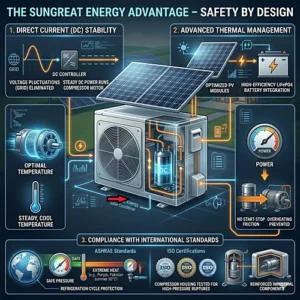
In a market flooded with cheap, high-risk cooling units, Sungreat Energy has taken a different approach. By integrating solar technology and high-grade industrial components, Sungreat Energy Solar Air Conditioners address the root causes of compressor failure.
1. Direct Current (DC) Stability
One of the primary causes of AC failure in regions like Punjab is voltage fluctuation from the grid. Sungreat Energy systems are designed to run on DC power from solar panels. This eliminates the need for constant “stepping up” or “stepping down” of voltage, which keeps the compressor motor running at a steady, cool temperature.
2. Advanced Thermal Management
Sungreat Energy units utilize high-efficiency LiFePO4 battery integration and optimized PV modules to ensure the system never “starves” for power. By maintaining a consistent power supply, the compressor avoids the “start-stop” friction that causes overheating in traditional units.
3. Compliance with International Standards
Sungreat Energy aligns with global safety benchmarks. These include:
-
ASHRAE Standards: Ensuring the refrigeration cycle operates within safe pressure limits even in extreme heat.
-
ISO Certifications: Guaranteeing that the materials used in the compressor housing are tested against high-pressure ruptures.
Part 4: How to Keep Your AC Safe (The Checklist)
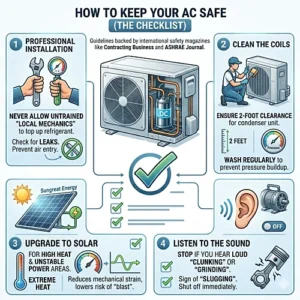
Regardless of the brand you use, safety requires vigilance. To prevent your AC from becoming a hazard, follow these guidelines backed by international safety magazines like Contracting Business and ASHRAE Journal:
-
Professional Installation: Never allow an untrained “local mechanic” to top up refrigerant without checking for leaks. Air entering the system is the #1 cause of explosions.
-
Clean the Coils: Ensure your external unit (the condenser) has at least 2 feet of clearance and is washed regularly to prevent pressure buildup.
-
Upgrade to Solar: If you live in an area with high heat and unstable power, a solar-integrated system from Sungreat Energy reduces the mechanical strain on the unit, significantly lowering the risk of a “blast.”
-
Listen to the Sound: If your compressor is making a loud “clunking” or “grinding” noise, shut it off immediately. This is often a sign of mechanical “slugging,” which can lead to a rupture.
Final Thoughts
An air conditioner should be a source of comfort, not a source of fear. While the science behind compressor blasts is complex—involving the “Fire Triangle” of oxygen, heat, and fuel—the solution is simple: Quality and Maintenance.
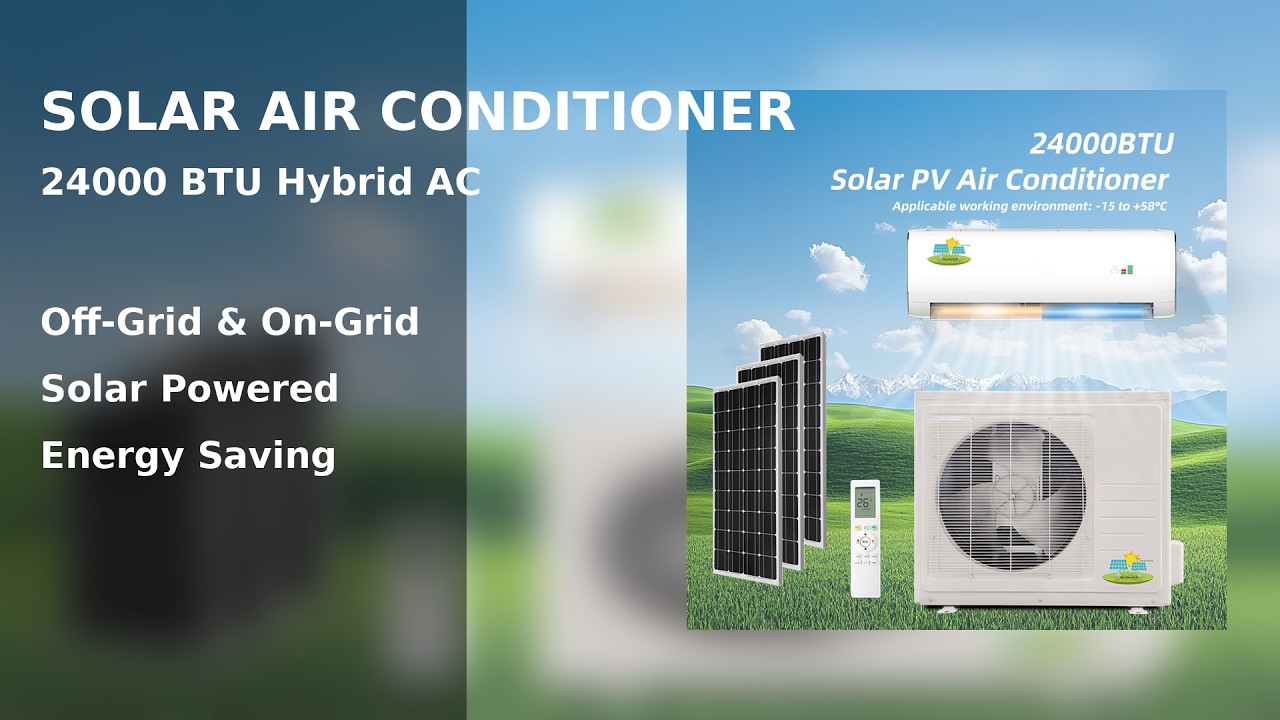
By choosing advanced, solar-ready technology like that offered by Sungreat Energy, and committing to regular professional service, you can ensure that your home stays cool and, more importantly, safe.
References & Further Reading
-
IChemE (Institution of Chemical Engineers): The fire and explosion hazards of hydraulic accumulators and pressurized systems. Link to IChemE
-
ASHRAE (American Society of Heating, Refrigerating and Air-Conditioning Engineers): Standard 15: Safety Standard for Refrigeration Systems. Link to ASHRAE
-
NFPA (National Fire Protection Association): Reports on HVAC-related fires and electrical safety. Link to NFPA
-
International Energy Agency (IEA): The Future of Cooling: Opportunities for energy-efficient air conditioning. Link to IEA