Solar energy isn’t just a new idea; it has been around for thousands of years. Long before the advent of the modern electrical grid, ancient civilizations were already looking to the sky to power their lives. What started as a clever localized method to stay warm during harsh winters has transformed into a sophisticated, worldwide clean energy industry.
Let’s journey through time to see exactly how humanity learned to harness the true potential of the sun.
1. Ancient Innovations: Passive Solar Design
Before electricity was even a concept, humans used architectural ingenuity to capture solar warmth. By the 5th century BC, the Greeks faced severe wood shortages for fuel. In response, they began designing entire cities with homes oriented toward the south, allowing the low winter sun to flood interiors and heat them naturally.

Later, the Romans elevated this practice. As documented by historical architectural records, they introduced clear glass windows to their public bathhouses and residences. This effectively trapped the sun’s thermal energy, creating an early, highly functional version of the greenhouse effect.
2. The Power of Reflection: Burning Mirrors
A few centuries later, cultures across the Mediterranean and Asia began manipulating light using optics. Early Chinese and Greek societies utilized curved metallic surfaces known as “burning mirrors” to concentrate sunlight to ignite fires for cooking and religious rituals.

While the famous legend of Archimedes using massive reflective shields to set fire to invading Roman ships remains a point of historical debate, the physics were real. By the Renaissance, inventors regularly used large parabolic mirrors to melt metals and distill materials.
3. The 19th Century: The Birth of the Solar Cell
In the 1800s, solar technology shifted from capturing basic heat to generating electricity.
-
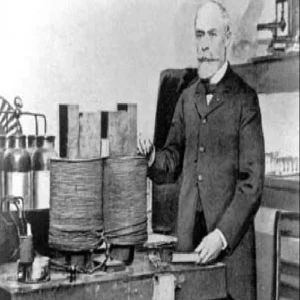
1839: Nineteen-year-old French physicist Edmond Becquerel discovered the photovoltaic effect while experimenting with silver chloride electrodes in an acidic solution, observing that light exposure directly increased electrical current (as detailed by the U.S. Energy Information Administration).
-
1883: American inventor Charles Fritts created the world’s first solid-state solar cells using selenium wafers coated with an ultra-thin layer of gold.
Fritts installed these on a New York City rooftop, achieving an efficiency of roughly 1%. While too inefficient to power a standard household, it proved to the scientific community that light-to-electricity conversion was possible.
4. The Space Age: Solar Goes High-Tech
For decades, solar energy remained an expensive laboratory novelty. The paradigm shifted completely in 1954 when scientists Daryl Chapin, Calvin Fuller, and Gerald Pearson at Bell Labs developed the first silicon photovoltaic (PV) cell. This cell boasted an efficiency of 6%, making it the true ancestor of modern solar panels.
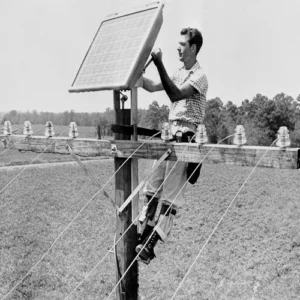
While still far too expensive for ordinary consumer use, the technology found its perfect proving ground in the Space Race. In 1958, the U.S. Navy launched the Vanguard I satellite, utilizing a tiny 1-watt solar array to power its radio transmitters. Its resounding success in the harsh environment of space proved that photovoltaic systems were reliable, durable, and highly scalable.
                  [ SOLAR TIMELINE AT A GLANCE ]

   5th Century BC          1839                   1954             2020s+
   Greeks design     Becquerel discovers     Bell Labs builds   Sleek commercial
   south-facing       the Photovoltaic        first 6% silicon   modules pass 22%
    structures             Effect                solar cell         efficiency
        |                    |                       |                  |
   -----+--------------------+-----------------------+------------------+-----
5. The Modern Era: Faster Than a Viral Meme
Triggered by the energy crises of the 1970s and accelerated by modern manufacturing breakthroughs, solar technology has advanced at an exponential pace. Production costs have plummeted by over 80% in the last few decades, transitioning solar from a niche alternative to an essential pillar of global infrastructure.
Today, we see diverse, highly optimized products integrated directly into our lives:
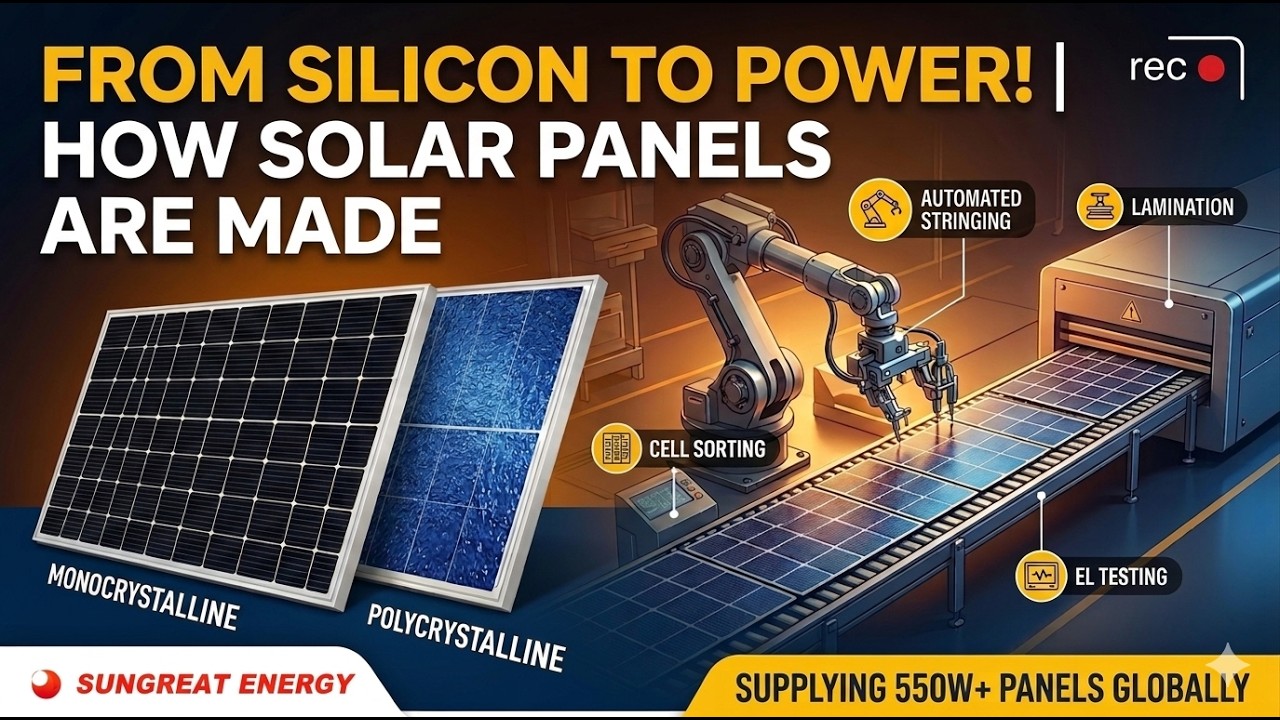
Sleek Rooftop Panels: Modern monocrystalline silicon panels regularly surpass 20% to 22% efficiency, offering immediate utility savings and seamless installation.
Solar Shingles: Highly advanced building-integrated photovoltaics (BIPV) allow solar cells to double as durable, protective roofing materials.
Massive Utility-Scale Farms: Gigawatt-level solar arrays span thousands of acres, feeding reliable, emissions-free power directly into municipal grids worldwide.
Exploring Modern Solutions
From ancient stone layouts to advanced silicon chemistry, our relationship with the sun has come full circle. To explore how this rich history has evolved into practical, cutting-edge technology for your home or business, explore the modern solar hardware arrays and clean energy products available through Sungreat Energy.
We are no longer just seeking shelter from the elements—we are commanding the light to power our future.
For getting more updates kindly visit www.sungreatenergy.com or you can send us message on or
#SolarHistory #RenewableEnergy #EnergyEvolution #SolarPower #Innovation #Sustainability #GreenTech #CleanEnergyHistory #SunPower