If you’ve ever stood inside a utility-scale Solar- farm at mid-day, you’ve likely noticed something striking: the ground underneath the panels isn’t pitch black — it is brightly illuminated. Sunlight bounces off sand, gravel, concrete, white roofs, and grass.
A conventional monofacial Sonnenkollektor ignores every photon of that reflected ground light because its rear face is opaque. A bifacial double-glass panel turns that reflected light into extra kilowatt-hours.
1. Die Kurzantwort
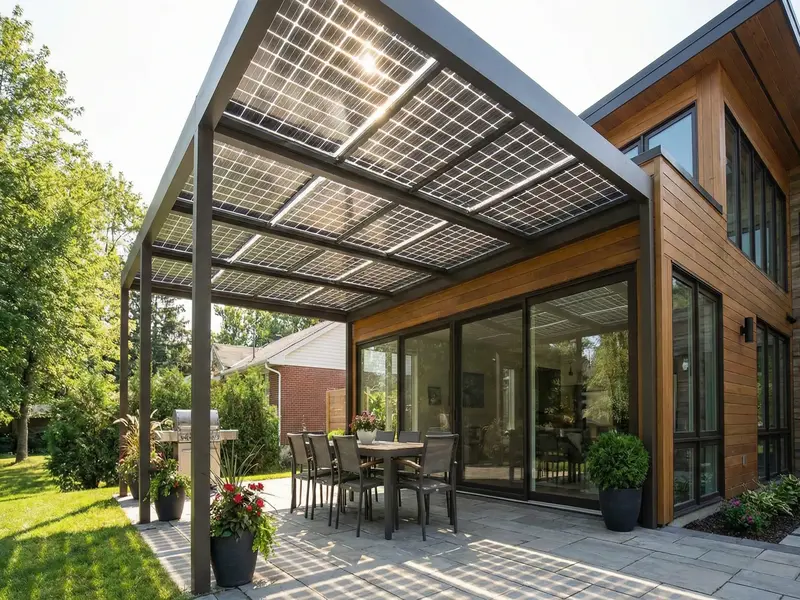
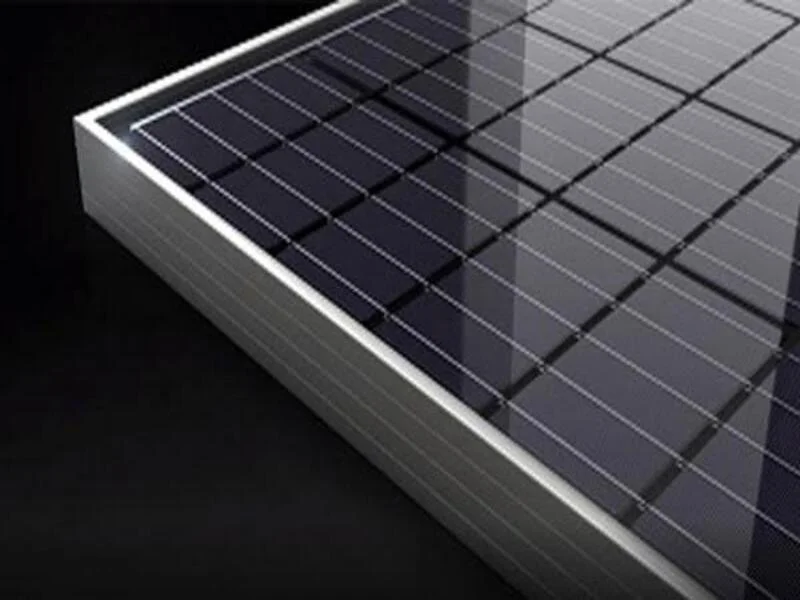
A bifacial double-glass solar panel generates power from both sides. The front side absorbs direct sunlight coming from the sky, while the rear side captures reflected and scattered light (albedo) from the ground or mounting surface.
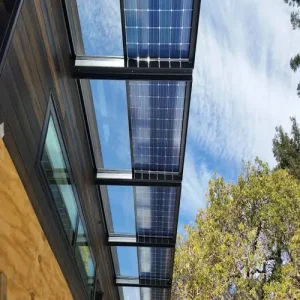
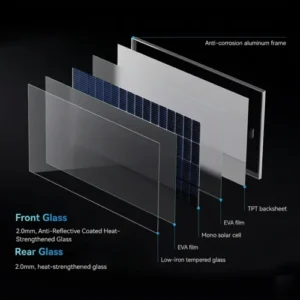
Instead of using a traditional polymer plastic backsheet (like TPT or PET), the rear of the module is sealed with a second sheet of tempered glass.
Schlüsselkonzept: Bifacial (2 Active Generating Faces) + Double-Glass (Glass Sandwich Construction)
2. How It’s Built
When you strip away marketing buzzwords, a double-glass bifacial solar module is designed for maximum light exposure and extreme environmental endurance:
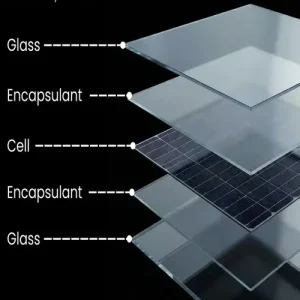
By replacing plastic backsheets with tempered glass, the panel loses the primary component prone to UV degradation, thermal cracking, and moisture intrusion over time.
3. Extra Power Comes From?
The amount of extra energy a bifacial panel produces — known as the bifacial gain — is not a fixed static number. It depends heavily on two engineering factors: Ground Albedo (reflectivity ratio) and Mounting Elevation.
According to field studies published by the Nationales Labor für erneuerbare Energien (NREL) and research from the Fraunhofer-Institut für Solare Energiesysteme (ISE), surface reflectivity directly dictates rear-side yield:
| Surface Material Below Array | Typical Surface Albedo | Average Rear-Side Bifacial Yield Gain |
|---|---|---|
| Dark Asphalt / Dark Roofing | 0.05 – 0.10 | 2% – 5% |
| Dark Soil / Bare Earth | 0.15 – 0.20 | 5% – 10% |
| Green Grass / Vegetation | 0.20 – 0.25 | 8% – 12% |
| Light Concrete / Weathered Gravel | 0.25 – 0.40 | 12% – 18% |
| White Gravel / Light Sand (Desert) | 0.40 – 0.60 | 18% – 25% |
| Reflective TPO Roof / Snow Cover | 0.60 - 0.85+ | 25 % – 30 %+ |
3.1 Why Racking Height Matters
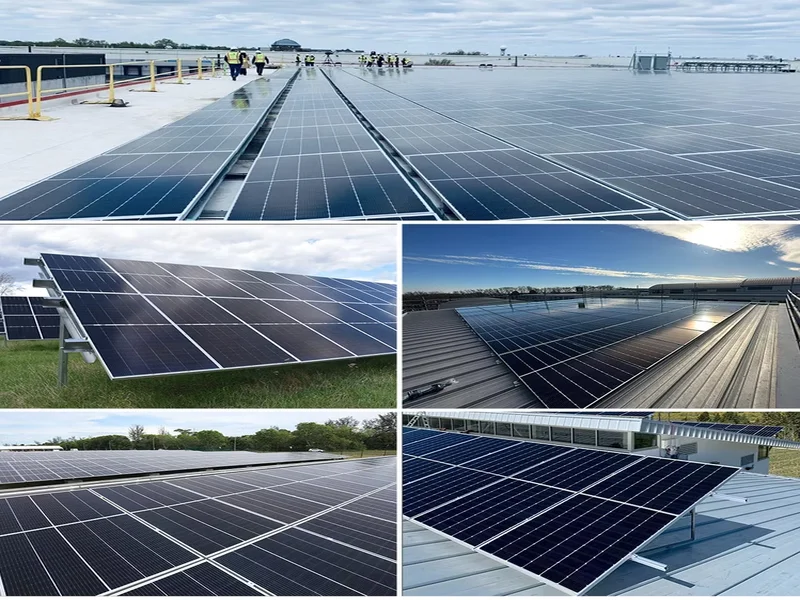
NREL Performance Modeling demonstrates that elevating the panel array by 1.0 to 1.5 meters off the ground allows reflected light from a broader area to spread evenly across the rear cells, avoiding self-shading bottlenecks under the array.
4. Vorteile
For engineering procurement contractors (EPCs) and equipment distributors, bifacial double-glass technology has shifted from a niche specification to the industry standard for commercial and utility applications.
5. When NOT to Choose Bifacial
Bifacial double-glass panels are not a universal fit for every project. Understanding where they don’t pay off helps avoid wasted capital:
If you are unsure whether your project site supports viable bifazial gains, reach out to our engineering team via the Engineering & Technical Support page for customized irradiance modeling.
6. Bifacial vs. Monofacial Panel
| Funktion/Metrik | Standard Monofacial Panel | Bifacial Double-Glass Panel |
|---|---|---|
| Power Generation Sides | Front face only | Front face + Rear reflective capture |
| Rear Encapsulation | Opaque plastic backsheet | Hitzeverstärktes Glas |
| Standard Performance Warranty | 25 Jahre | 30 Years (Linear) |
| Jährliche Degradationsrate | ~0.55 % pro Jahr | ~0.40% – 0.45% per year |
| Am besten geeigneter Anwendungsbereich | Residential pitched roofs | Ground-mount, carports, flat commercial roofs |
| Internationale Testkonformität | IEC 61215 Normen | IEC 61215 & IEC 61730 Standards |
| Resistance to UV / Humidity | Moderate (backsheet age risk) | Superior (dual glass hermetic seal) |
7. Die Quintessenz
A bifacial double-glass panel turns wasted ground reflections into usable clean energy. For ground-mount installations, desert projects, carports, and elevated commercial flat roofs, it offers one of the highest returns on investment in modern solar technology.
Curious to see how bifacial modules perform in active commercial solar deployments? Browse our real-world site data in our Project Case Studies.

Ready to Spec Bifacial Double-Glass Panels for Your Next Project?
At SunGreat Energy, we supply high-efficiency TOPCon and PERC bifacial double-glass panels engineered for maximum yield and long-term durability.
Request Full Specifications & Wholesale Quotes from SunGreat Energy Today →