




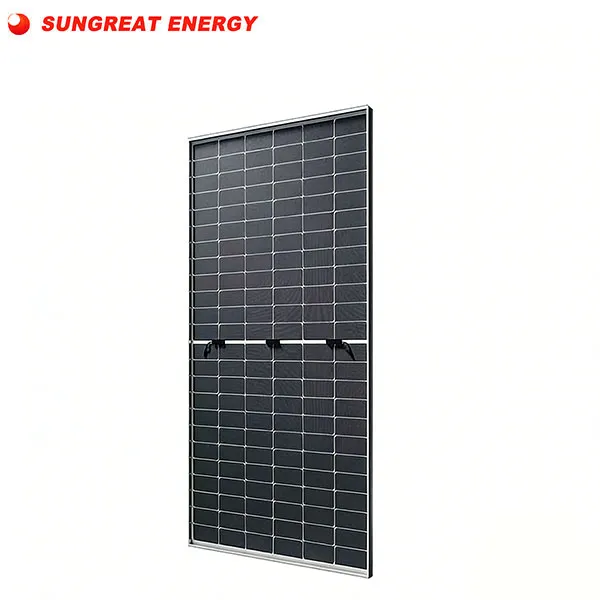
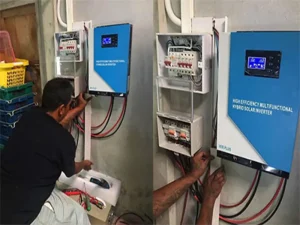
Thailand is rapidly tightening quality and safety rules across the new solar energy sector. In recent months, the Ministry of Industry and the Thai Industrial Standards Committee have moved multiple Thai Industrial Standards (TIS) from voluntary to mandatory controlled-product status. The measures cover Solarmodule, Lithiumbatterien for energy storage, PV system components, EV charging equipment, and related safety requirements.
These changes directly affect Thailand’s growing photovoltaic market, rooftop solar adoption, and the broader clean-energy supply chain. Here is a clear breakdown of the key developments and their practical implications.
1. Moving Forward Standards
1.1 PV System Components
Target Timeline: September 2026 – Early 2027 | Standard: TIS 61730 Part 2-2567
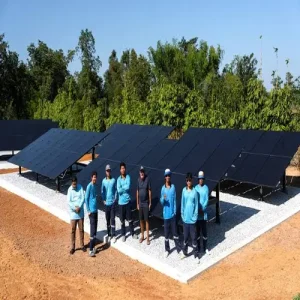
In May 2026, the Thai Industrial Standards Committee approved TIS 61730 Part 2-2567 for photovoltaic modules—harmonized with the international IEC 61730-2 safety qualification standard. The Thai Industrial Standards Institute (TISI) is preparing the formal announcement that will make these modules controlled goods. Officials expect the requirement to take legal effect in September 2026. After that date, Solarmodule produced, imported, or sold in Thailand must carry TIS certification.
Four additional products are also targeted for mandatory status within 2026:
Two further standards—for PV junction boxes (aligned with IEC 62790) and DC MC4 connectors—are scheduled for submission by September 2026.
TISI has already published a broader suite of standards covering the full system (Solarmodule, Wechselrichter, Konverter, Batterien, cables, design, installation, and testing, incorporating frameworks such as IEC 62109 for power converters). The Ministry of Industry aims to make the complete package compulsory by early 2027.
1.2 EV Equipment
Approved: 21 July 2026 | Rollout: June 2027 – Early 2028
On 21 July 2026, the same committee approved five additional EV-related TIS standards—aligned with international benchmarks like the IEC 61851 conductive charging series and UN vehicle safety regulations—as mandatory controlled products:
- Portable EV charging cables
- AC-Ladegeräte
- DC-Schnellladegeräte
- Side-impact occupant protection requirements
- Frontal-impact occupant protection requirements
Portable cables and residential AC chargers are expected to become mandatory by June 2027. DC fast chargers and the vehicle crash-protection standards are targeted for early 2028.
Closing the Storage Safety Gap: Consumer-grade portable power banks already face some mandatory safety rules. The new Lithiumbatterie requirements for stationary energy storage close an important gap between household and larger-scale applications.
2. Impact on Thailand’s Market
2.1 Consumer Confidence
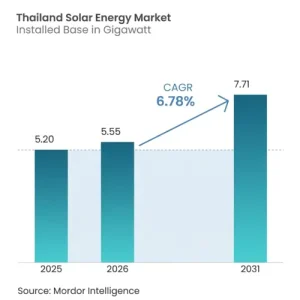
Rooftop Solar- is expanding quickly, supported by tax deductions of up to 200,000 baht for eligible household systems and a surplus electricity buy-back rate of approximately 2.20 baht per unit. Mandatory standards reduce the risk of fire, short circuits, and other safety incidents that could undermine public trust. Higher confidence should support continued growth in residential and commercial installations.
2.2 Local Opportunity
By requiring TIS certification, Thailand is limiting the entry of low-quality imports. This creates clearer incentives for local manufacturers and assemblers of Solarmodule, Kabel, Wechselrichter, energy-storage batteries, and charging equipment. The policy aligns with broader industrial goals of building a more complete domestic clean-energy value chain.
2.3 Support for Projects
The explicit inclusion of Lithiumbatterien for energy storage systems is particularly relevant for the photovoltaic sector. As Solar- penetration rises, grid stability and self-consumption become more important. Clear mandatory standards for ESS-Batterien help de-risk “Solar- + storage” projects and public or commercial charging hubs that integrate renewable generation.
2.4 Short-Term Challenges
Compliance will raise testing and certification costs for importers and some manufacturers. Capacity at accredited laboratories and the speed of transition rules will determine how smoothly the market adjusts. Some observers note that standards for large-scale ESS and EV traction Batterien have lagged behind module standards; the current package is intended to close that gap. End-of-life management is also receiving attention, with plans discussed for Sonnenkollektor und austauschbare Akkus recycling industrial estates.
3. Blick nach vorn
Strategic Outlook: Power Development Plan & Net Zero 2050

These mandatory TIS requirements form part of Thailand’s wider energy-transition framework, including higher clean-electricity targets in the forthcoming Power Development Plan and the national Net Zero 2050 ambition. For Solar- developers, EPCs, equipment suppliers, and investors, the practical next steps are clear:
- Verify Compliance Early: Bestätige das Module, Wechselrichter, Batterien, and balance-of-system components already hold or can obtain the relevant TIS marks.
- Track Regulatory Timelines: Monitor the exact gazette announcements for September 2026 and the 2027–2028 charger timelines.
- Adjust Project Pipelines: Factor certification lead times and potential cost impacts into project pipelines.
The overall direction is positive for a more professional, safer, and more sustainable photovoltaic market in Thailand. Quality will increasingly differentiate suppliers, and companies that prepare early will be best positioned to serve both the growing rooftop segment and larger hybrid projects.
Readers are encouraged to verify the latest official announcements via the references below, as implementation details may be refined in the formal ministerial regulations.