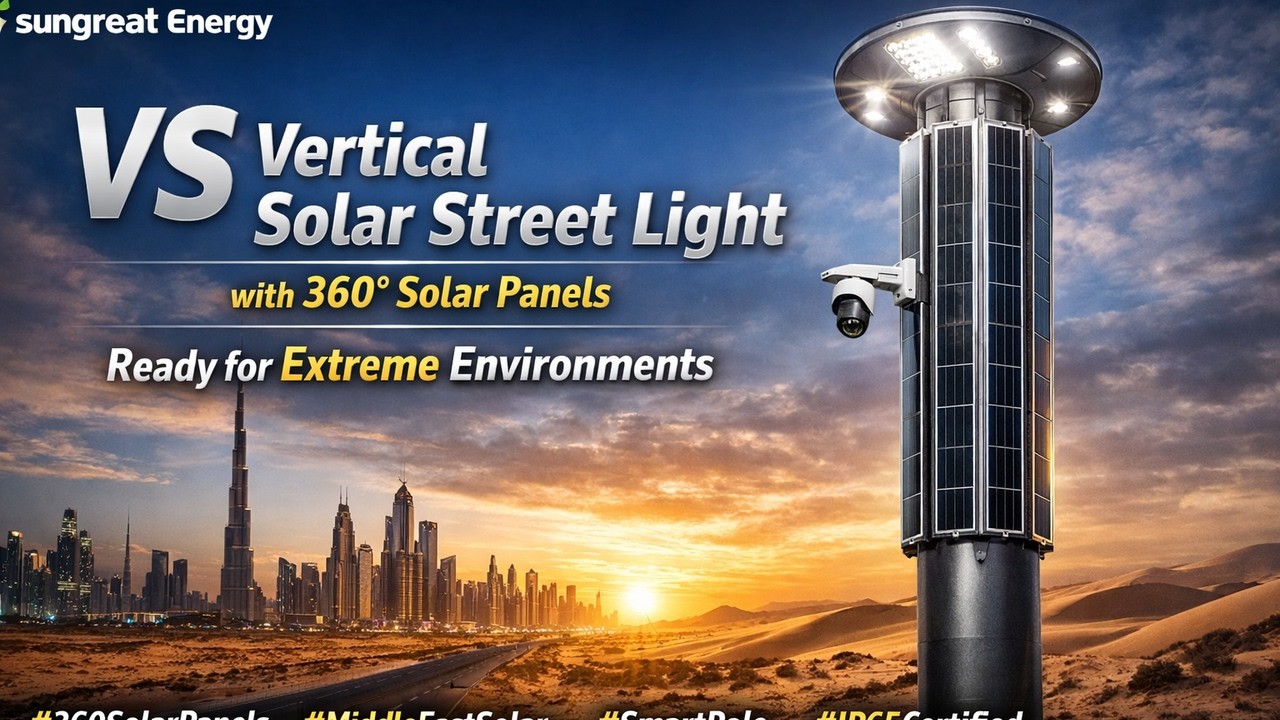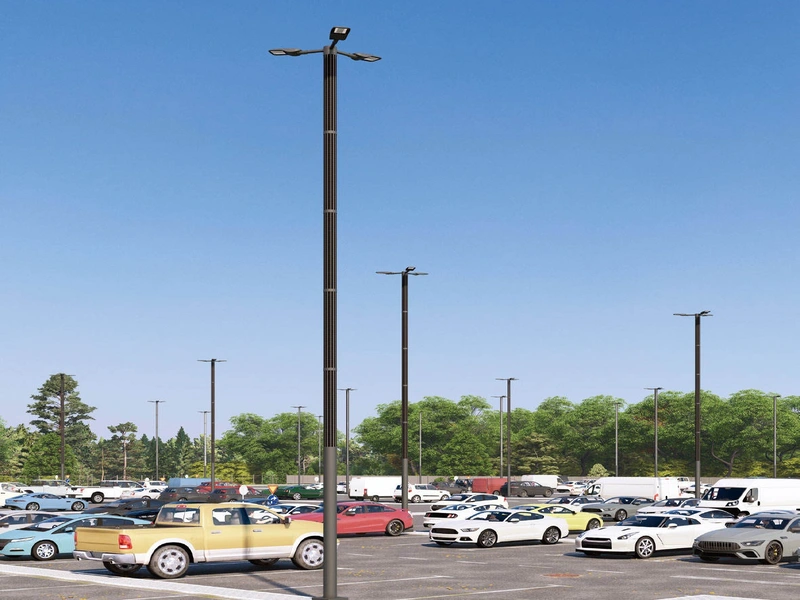


Elegir entre solar street lights and grid-powered LED street lights is one of the most important decisions in outdoor lighting projects. Both technologies use high-efficiency LEDs, but they differ significantly in power source, installation method, operating costs, reliability, and long-term ownership economics.
Solar Street Light vs. Grid-Powered LED Street Light Comparison
This guide delivers a clear, data-backed comparison to help municipalities, developers, and project managers make the right choice based on real site conditions rather than marketing claims.
1. Installation Complexity and Cost
1.1 Energía solar Luces Urbanas
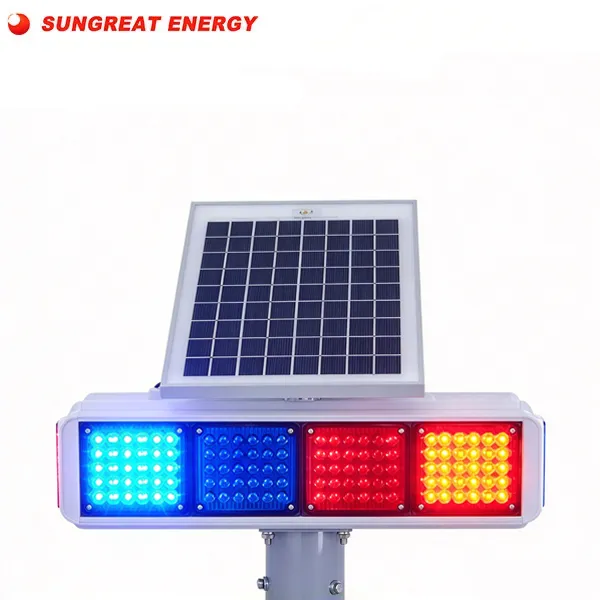
Installation is straightforward. Crews dig a foundation, set the pole, and mount the light. There is no underground cabling, no transformers, and usually no utility permits for power. A typical all-in-one unit can be installed in around 60 minutes by a small crew.
1.2 On Grid LED Street Lights
These require civil works: trenching, conduit installation, cable laying, backfilling, and connection to the electrical network. In areas without existing infrastructure, trenching and cabling can cost $20–$100+ per meter depending on soil conditions, labor rates, and urban complexity. This often becomes the largest single cost item in the project.
1.3 Verdict on Installation
Solar wins decisively on installation speed and cost when the grid is distant or trenching is expensive.
2. Costo total de propiedad (TCO)
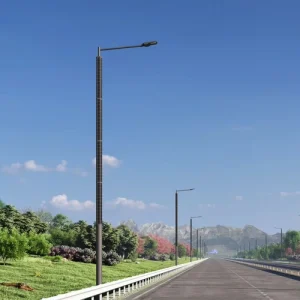
The biggest misconception is that solar is always more expensive. While the hardware costs more upfront, the full lifecycle picture frequently favors solar.
2.1 Factores clave de los costos
- Sistemas de red: Carry ongoing electricity costs and higher installation expenses.
- Sistemas solares: Shift cost to the battery (the main replaceable component) but eliminate energy bills and most underground works.
2.2 Illustrative 10–15 Year
- Electricity tariff: 0.12-0.18 dólares por kWh
- Solar battery replacement: Once every 10 years (quality LiFePO4)
- Trenching distance: Significant enough to matter
In many rural, peri-urban, and new-development scenarios, solar delivers 20–40% lower total cost of ownership. The payback on the higher hardware cost typically falls between 3–6 years.
However, when the site already has underground conduit nearby and electricidad is very cheap (under ~$0.08–$0.10/kWh), grid-powered LEDs can remain competitive or even cheaper over the long term.
Importante: Always model TCO using local electricity rates, actual trenching distances, and labor costs. Generic online claims are rarely accurate for your specific site.
3. Rendimiento y confiabilidad
3.1 Lighting Quality
Both systems can deliver excellent photometric performance when properly designed. Grid lights provide consistent output every night. Solar luces depend on daily solar charging and battery capacity. Modern systems with adequate autonomy (3–5+ days for most locations, up to 7+ days in high-end designs) and smart controllers maintain reliable performance in the majority of climates.
3.2 Design Matters
Undersized batteries are the most common reason for poor solar performance. A well-engineered system accounts for local solar irradiance, worst-month conditions, and desired rainy-day backup.
3.3 Outage Resilience
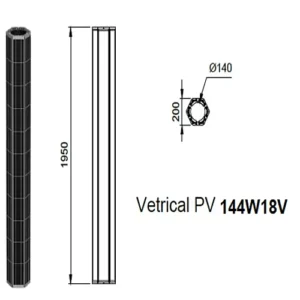
- Resiliencia ante interrupciones: Solar lights keep working during blackouts. This is a major safety advantage in regions with unreliable grids.
- Vida útil de los componentes:
- LED chips: 50,000–100,000 hours in both systems
- Solar panels: 20–25 years
- LiFePO4 batteries: 10+ years (or 6,000+ cycles) depending on quality and temperature management
- Grid drivers: Typically 5–10 years
4. Realidad del mantenimiento
4.1 Solar Maintenance
The primary task is battery replacement. Faults are isolated to individual poles, making diagnosis simple. Panel cleaning is occasional.
4.2 Grid Maintenance
Requires monitoring of drivers, photocells, and underground cables. A single cable fault can affect multiple lights and is usually more expensive and disruptive to repair.
Quality solar systems with LiFePO4 batteries and good thermal design have significantly reduced the historical maintenance gap.
5. Consideraciones estratégicas
5.1 Impacto Ambiental
Solar street lights produce zero operational carbon emissions and support sustainability targets, green building certifications, and ESG reporting. Grid lights generate emissions based on the local power mix.
5.2 Independencia Energética
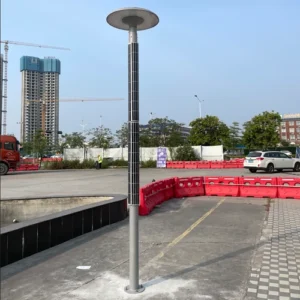
Solar also offers energy independence—valuable in areas with frequent outages or rising electricity prices.
6. Choosing System
When to Choose Solar Street Lights
- Remote or rural roads far from the grid
- Nuevos desarrollos residenciales o comerciales
- Projects where trenching is costly or disruptive
- Áreas con red eléctrica poco fiable
- Sustainability-driven or off-grid initiatives
- Locations with reasonable solar resource (generally average daily insolation above 3.5–4 kWh/m²)
When to Choose Grid-Powered LED Street Lights
- Dense urban streets with existing underground infrastructure
- Critical highways or roads requiring absolute lighting reliability regardless of weather
- Sites with very low electricity costs and easy grid access
- Projects needing extremely high lighting levels that would make solar systems oversized
Hybrid Systems: A Growing Middle Path
Híbrido systems combine solar generation with grid backup. They use free solar energy most of the time and draw from the grid only during extended poor weather or peak demand. These are increasingly popular where reliability is non-negotiable but energy savings and resilience are still desired.
7 Tendencias emergentes
- High-efficiency LEDs: 200+ lm/W ratings and better optics reduce the size of solar systems needed.
- Smarter controllers: Adaptive dimming and remote monitoring improve energy management.
- Advanced LiFePO4 batteries: Longer cycle life and better cold-weather performance.
- Diseños modulares: Make battery and component replacement much easier.
8. Recomendación final
There is no universal winner. The correct choice depends on site-specific factors: distance to grid, electricity tariff, solar resource, reliability requirements, and budget structure.
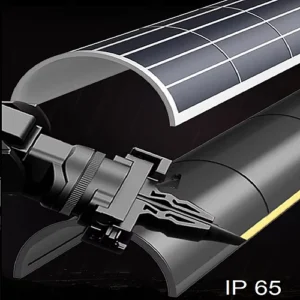
- Elige energía solar. when installation cost, energy independence, and long-term operating expenses matter most.
- Choose grid-powered LED when the infrastructure already exists, electricity is cheap, and absolute consistency is critical.
- Considere un híbrido when you need both high reliability and meaningful energy savings.
The most successful projects start with a proper site assessment and a full lifecycle cost model rather than a simple comparison of fixture prices. When designed correctly, modern solar street lights deliver excellent performance and compelling economics for a wide range of applications.
9. Take Control of Future
Stop paying for rising utility costs and start harvesting the sun. Your ticket to a reliable, sustainable, and cost-effective future.
Ready to find the right capacity for your project?
- Obtenga una cotización personalizada: [email protected]
- WhatsApp con nosotros: +86 157 7646 7829
10. Referencias internacionales
- International Energy Agency (IEA) – Defining energy access: 2020 methodology – Global framework outlining least-cost geospatial pathways for grid vs. off-grid electrification and infrastructure investments.
- MDPI Energies Journal – A Model to Improve the Implementation Standards of Street Lighting – Technical evaluation validating the feasibility and financial optimization of solar-energy-based outdoor municipal lighting systems.
- IEEE / Institute of Electrical and Electronics Engineers (via ResearchGate) – Implementation of a new solar-powered street lighting system: optimization and technical-economic analysis using artificial intelligence – Peer-reviewed case study analyzing field monitoring, energy parameters, and cost-saving metrics of PV-integrated public walkways.
- Preprints Platform – Design, Simulation, and Analysis of a Solar-Powered Street Lighting System – Scientific modeling of photovoltaic panel efficiencies, battery storage autonomy, and neural network power management for street lighting.
- E3S Web of Conferences – Powered Streetlighting Systems in Rural Community Area – Research assessment focusing on greenhouse gas emission reductions and carbon offsets achieved through renewable-based street lighting transitions.