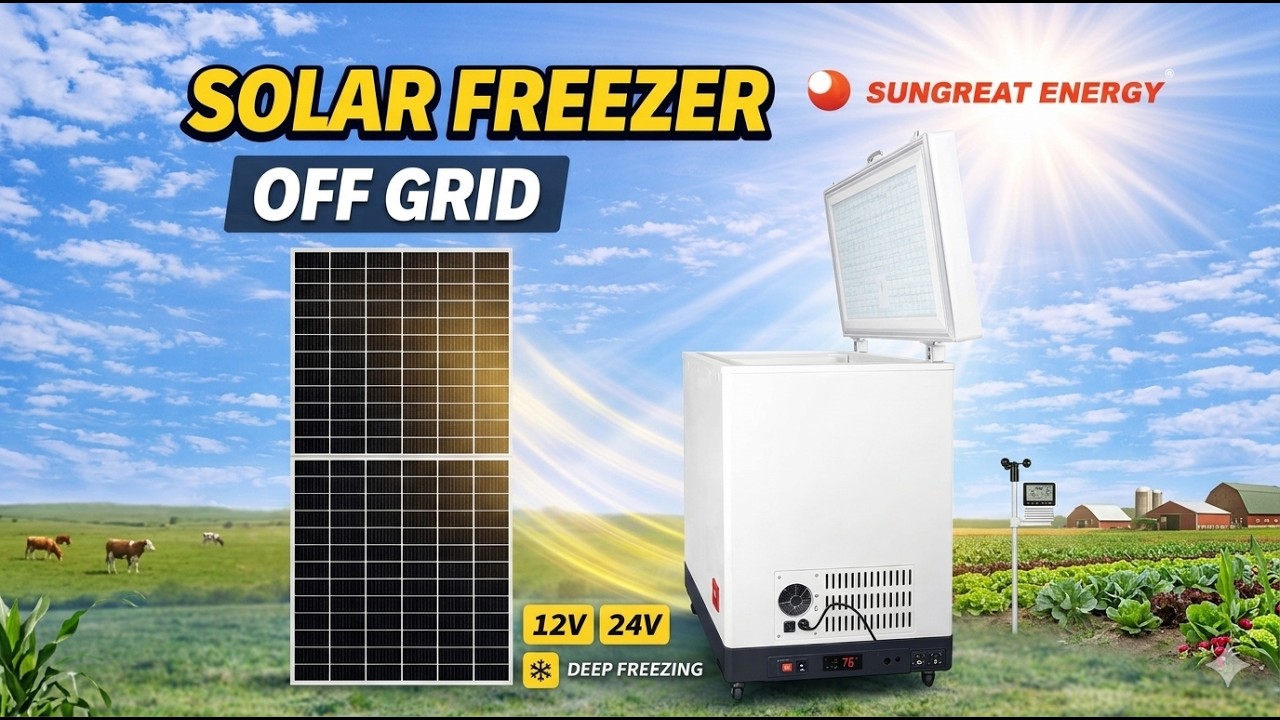





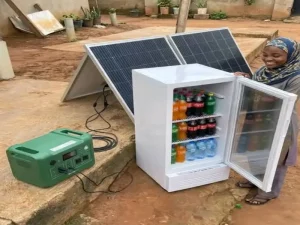
Before study of solar refrigerators we should know that refrigeration is a cornerstone of modern life, but for many off-grid communities and eco-conscious households, traditional fridges pose a significant challenge. They are energy-intensive and rely on a stable power grid, which is either unavailable or expensive—an energy access barrier extensively documented in the International Renewable Energy Agency (IRENA) Off-Grid Renewable Energy Solutions Report.
Escriba el refrigerador solar—a game-changer in sustainable cooling. But how exactly do these marvelous machines turn sunlight into chilled beverages and fresh produce? Let’s dive into the engineering that makes it possible.
1. Los componentes principales
Four Primary System Subsystems
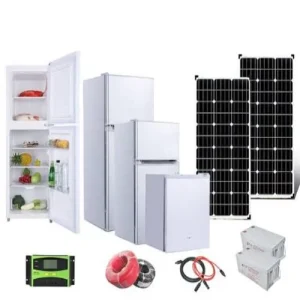
PV Generation, Charge Regulation, Storage & DC Cooling
A refrigerador solar isn’t just one appliance; it’s a carefully balanced system. To understand how it works, we have to look at the four primary parts that make the magic happen:
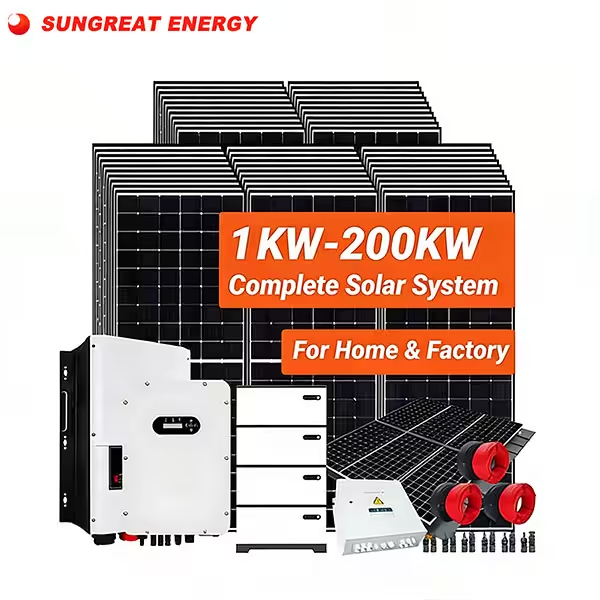
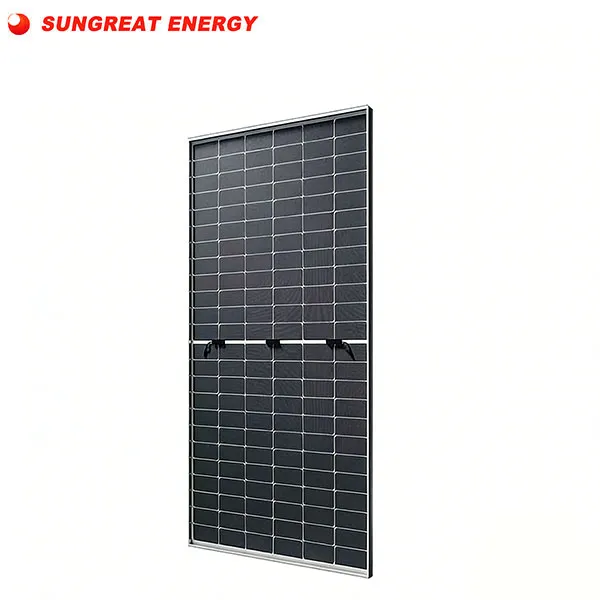
Los paneles solares 1.1
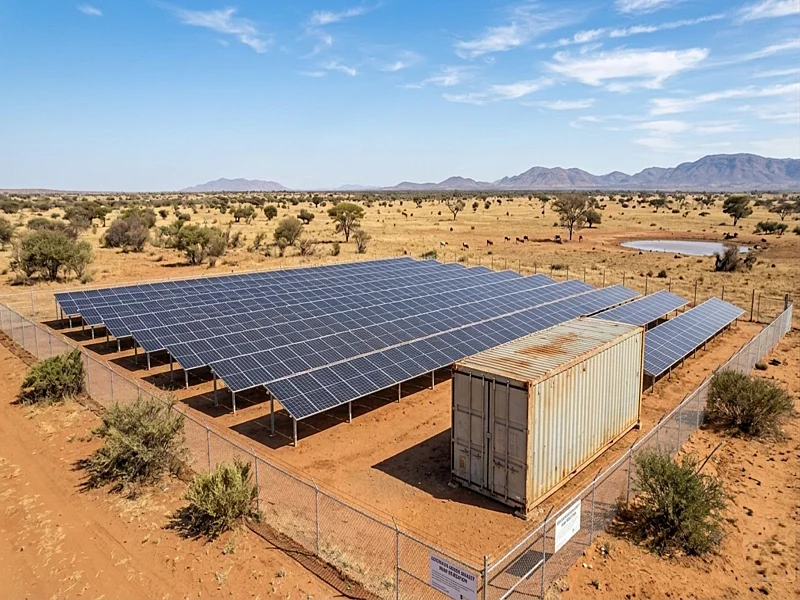
Estos son el Paneles solares acting as energy collectors. Typically installed on a roof or a ground mount, they are positioned to absorb the maximum amount of sunlight throughout the day.
1.2 Controlador de carga solar
Piensa en esto controlador de carga solar as the “brain.” It manages the electricity flowing from the panels to the battery and the fridge. It prevents overcharging and regulates voltage to ensure the system runs safely.
1.3 Banco de baterías
Since the sun doesn’t shine 24/7, you need a place to store that power. Deep-cycle batteries (often LiFePO₄ for maximum efficiency, aligning with off-grid autonomy benchmarks from the Laboratorio Nacional de Energías Renovables (NREL)) store energy during the day so your fridge stays cold all night or during cloudy spells.
1.4 Solar Refrigerator
Unlike a standard fridge that uses AC power, these solar-powered refrigerator/freezer units are specialized DC appliances. They are engineered to be ultra-energy-efficient, running directly off the DC power supplied by your battery bank—a design principle also standardized in World Health Organization (WHO) PQS Solar Refrigerator Specifications for mission-critical off-grid cold chains.
2. The Refrigeration Cycle
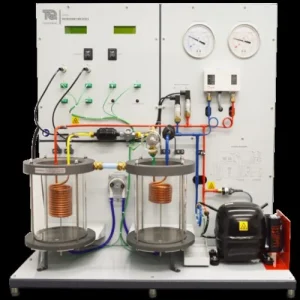
Vapor-Compression Thermodynamic Loop
4-Stage Heat Transfer & Phase-Change Process
So, how does electricity turn into ice? It comes down to thermodynamics and the vapor-compression refrigeration cycle, a process extensively studied in International Energy Agency (IEA) Solar Cooling Research. Here is the step-by-step breakdown:
- Absorption of Heat (Evaporation): Inside the fridge, there is a coil called the evaporator. It’s filled with a low-pressure refrigerant—a fluid with an incredibly low boiling point. As it flows through the coils, it sucks heat out of the air and your food. This heat causes the liquid refrigerant to evaporate into a cold gas.
- Compressing the Refrigerant: A specialized, solar-optimized DC compressor pulls in that low-pressure gas. It “squeezes” the gas, which dramatically increases its pressure and temperature, turning it into a hot, high-pressure vapor.
- Releasing Heat (Condensation): This hot gas travels through the condenser coils on the outside of the fridge. As it moves, it sheds its heat into the surrounding room air. Because it’s under high pressure, cooling down causes it to condense back into a liquid. (This is why the back of a fridge feels warm!)
- Expanding and Cooling: Finally, the high-pressure liquid hits an expansion valve. Like a spray nozzle, it forces the liquid through a tiny opening into a low-pressure area. This causes the temperature to plummet instantly, turning it back into a freezing cold liquid-gas mix that heads back to the evaporator to start the cycle again.
3. The Solar Advantage
Direct DC Efficiency vs. Conventional AC Refrigeration
System Sizing, Insulation & Energy Loss Comparison
Standard AC refrigerators are power-hungry. If you tried to run one off a small panel solar, you’d need a massive (and expensive) inverter and a giant battery bank.
Solar-powered refrigerators are built differently. They use high-efficiency DC compressors and superior insulation to keep the “cold in” longer—a thermal efficiency approach echoed in recent International Institute of Refrigeration (IIR) Off-Grid Solar Cooling Studies. This specialized design minimizes energy consumption, making them the perfect match for a solar-battery setup.
| Elemento | Standard AC Refrigerator | Dedicated DC Solar Refrigerator |
|---|---|---|
| Entrada de energía | Alternating Current (AC) via heavy inverter | Direct Current (DC) straight from battery bank |
| Tipo de compresor | Standard high-surge AC motor | Variable-speed, high-efficiency DC compressor |
| Espesor de aislamiento | Standard household wall thickness | Extra-thick high-density polyurethane insulation |
| Solar Array & Battery Size | Requires oversized panels, inverter & batteries | Compact, cost-effective PV and LiFePO₄ battery setup |
4. Why Go Solar?
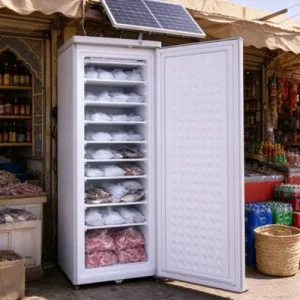
Key Operational & Economic Benefits
Autonomy, Clean Energy, Outage Resilience & ROI
- Independencia Energética: Break free from rising utility costs and unstable grids. It’s the perfect solution for cabins, boats, or remote job sites.
- Sostenibilidad: Power your life with 100% clean, renewable energy.
- Fiabilidad: With a properly sized battery bank, your food stays safe even through “dark weeks” or power outages.
- Ahorros a Largo Plazo: While the initial setup requires an investment, the lack of monthly power bills means the system eventually pays for itself.
Off-Grid Cooling Takeaway: Pairing high-efficiency DC compression with deep-cycle storage turns variable sunlight into dependable, round-the-clock cold preservation.
5. Asociarse con Sungreat Energy
Off-Grid Engineering & Custom Hardware Solutions
Lighting, Solar Refrigeration & Custom Infrastructure
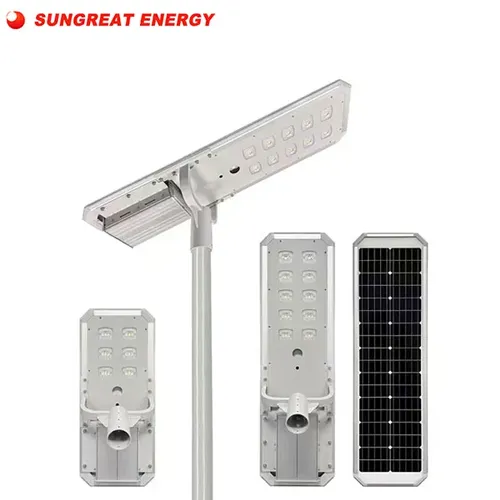
At Energía Sungreat, we specialize in the engineering required to keep your infrastructure running off the grid. Whether it’s lighting or solar refrigeration, we provide the hardware that stands the test of time.
Contáctenos
Shenzhen Sungreat Energy Technology Co., Ltd. — B21, Dongfang Yayuan, Baomin 2nd Road, Chentian Community, Xixiang Street, Baoan District, Shenzhen, China
6. Referencias internacionales
Global Research & Off-Grid Refrigeration Benchmarks
IEA, WHO PQS, NREL, IRENA & IIR Documentation
- International Energy Agency (IEA) – Solar Heating & Cooling Programmed: Solar Cooling Position Paper & Refrigeration Technologies — Thermodynamic principles of photovoltaic and thermally driven solar cooling systems. https://nachhaltigwirtschaften.at/resources/iea_pdf/iea_shc_solar_cooling_position_paper.pdf
- Organización Mundial de la Salud (OMS): PQS Performance Specification E003/PV01: Solar Power System for Compression-Cycle Refrigerator — International engineering and reliability benchmarks for DC solar-powered refrigeration equipment. https://extranet.who.int/prequal/key-resources/documents/pqs-performance-specification-e003rf054-refrigerator-or-combined
- Laboratorio Nacional de Energías Renovables (NREL): Designing and Modeling Off-Grid Solar Systems (REopt) — Engineering methodologies for off-grid photovoltaic array sizing, battery autonomy, and load resilience. https://docs.nlr.gov/docs/fy24osti/89248.pdf
- Agencia Internacional de Energías Renovables (IRENA): Off-Grid Renewable Energy Solutions: Global and Regional Status and Trends — Role of decentralized solar appliances in rural electrification and energy independence. https://www.irena.org/-/media/Files/IRENA/Agency/Publication/2018/Jul/IRENA_Off-grid_RE_Solutions_2018.pdf
- International Institute of Refrigeration (IIR): Achieving Off-Grid Refrigeration in Remote Areas: Solar-Powered Vapor Compression Systems — Research on high-efficiency DC compressors, thermal insulation, and off-grid cold storage reliability. https://iifiir.org/en/news/solar-powered-off-grid-cooling-an-innovative-prototype-for-remote-areas